Marisha Pessl - Night Film
Здесь есть возможность читать онлайн «Marisha Pessl - Night Film» весь текст электронной книги совершенно бесплатно (целиком полную версию без сокращений). В некоторых случаях можно слушать аудио, скачать через торрент в формате fb2 и присутствует краткое содержание. Год выпуска: 2014, Издательство: Random House Trade Paperbacks, Жанр: Современная проза, на английском языке. Описание произведения, (предисловие) а так же отзывы посетителей доступны на портале библиотеки ЛибКат.
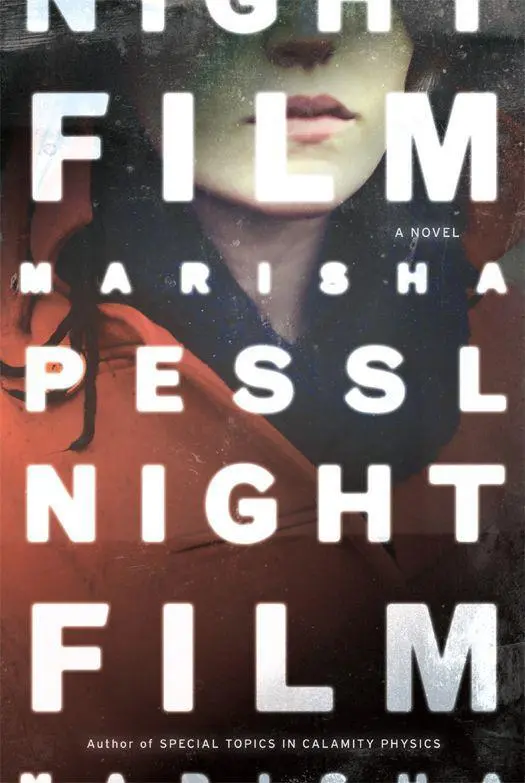
- Название:Night Film
- Автор:
- Издательство:Random House Trade Paperbacks
- Жанр:
- Год:2014
- ISBN:нет данных
- Рейтинг книги:5 / 5. Голосов: 1
-
Избранное:Добавить в избранное
- Отзывы:
-
Ваша оценка:
Night Film: краткое содержание, описание и аннотация
Предлагаем к чтению аннотацию, описание, краткое содержание или предисловие (зависит от того, что написал сам автор книги «Night Film»). Если вы не нашли необходимую информацию о книге — напишите в комментариях, мы постараемся отыскать её.
tells the haunting story of a journalist who becomes obsessed with the mysterious death of a troubled prodigy — the daughter of an iconic, reclusive filmmaker. On a damp October night, beautiful young Ashley Cordova is found dead in an abandoned warehouse in lower Manhattan. Though her death is ruled a suicide, veteran investigative journalist Scott McGrath suspects otherwise. As he probes the strange circumstances surrounding Ashley’s life and death, McGrath comes face-to-face with the legacy of her father: the legendary, reclusive cult-horror-film director Stanislas Cordova — a man who hasn’t been seen in public for more than thirty years.
For McGrath, another death connected to this seemingly cursed family dynasty seems more than just a coincidence. Though much has been written about Cordova’s dark and unsettling films, very little is known about the man himself.
Driven by revenge, curiosity, and a need for the truth, McGrath, with the aid of two strangers, is drawn deeper and deeper into Cordova’s eerie, hypnotic world.
The last time he got close to exposing the director, McGrath lost his marriage and his career. This time he might lose even more.
Night Film
Night Film — читать онлайн бесплатно полную книгу (весь текст) целиком
Ниже представлен текст книги, разбитый по страницам. Система сохранения места последней прочитанной страницы, позволяет с удобством читать онлайн бесплатно книгу «Night Film», без необходимости каждый раз заново искать на чём Вы остановились. Поставьте закладку, и сможете в любой момент перейти на страницу, на которой закончили чтение.
Интервал:
Закладка:
And then, staring off to my left, I saw it again, the warehouse.
I froze, horrified.
I’d run in a complete circle.
Popcorn’s compass had been playing tricks on me, deliberately leading me astray. But no — taking a few steps toward the hulking structure, I realized this one was cylindrical, a silo, the exterior painted yellow.
I turned my back to it, breaking into a sprint.
Within fifteen minutes, I’d reached a paved road. It had to be the lower section of The Peak’s driveway, which meant I was going in the right direction. Reassured, I veered away from it, keeping under the cover of forest but following its general direction. Within minutes, I could discern far ahead the dark blur of the military fence.
I sprinted toward it, flooded with relief.
There were no discernible electrical wires. I took a chance, running my hands along the rusted links, waiting for a shock.
I felt nothing.
I grabbed the chain link and began to climb. I was six feet off the ground when I noticed, far off to my right, two roofs protruding through the foliage, each with a blackened spike.
The Peak gatehouses.
I recognized them because I’d driven up here years ago. I’d climbed out of my car and took a snapshot of the entrance, so desperate to get inside here. Now so desperate to get out. I recalled what the Spider had told us, how he’d taken that underground tunnel, which linked the mansion to a gatehouse, in order to help the Crowthorpe townspeople enter the property.
It meant —if the Spider had been telling the truth — access to that maze of tunnels underneath the property was right there, yards away, so goddamn close. I could see it with my own eyes.
After a split second’s hesitation, I was clambering back down the fence and back into The Peak, my mind screaming in protest. I leapt into the overgrown grass, moving along the fence, heading straight for those two cottages flanking the wrought-iron gate.
The first one had no entrance. The second had a narrow black door, a window at the top. There was no discernible light inside, no evident camera, the paint was flaking, the glass too filthy to see through.
I needed one quick look at the entrance to those tunnels, to substantiate Villarde’s story —and then I’d get the hell out of here.
It was locked, so I smashed the window with a rock, unlocked it, and slipped inside. It was a minuscule room, with a window overlooking the approach to the gate, a desk with an old computer, an office chair glazed with dust. The floor was bare — except for a small black carpet in the corner.
I walked over to it and pulled back the rug.
There it was: a small wooden hatch. I slid aside the metal bars, grabbed the rings, and heaved it open, staring into the raw black hole.
Concrete stairs, barely a foot wide, led sharply downward. I moved down a few, crouching to take a look.
The tunnel extending in front of me was black. Only a few feet of brick walls were visible before cutting out into a darkness so absolute it looked as if this part of the world had been left unfinished — a raw edge of the Earth, which gave way not to simple darkness, but to outer space.
Staring into it, my head urged me to get the hell out now, close the hatch, climb back over that fence while I still had the chance.
But what did I have on Cordova? What did I actually know?
I tried to mentally grab hold of a few hard facts to stay afloat. I had in my pocket a few items, which might incriminate the man, but could very well amount to nothing as far as the law was concerned. I had stories, eyewitness accounts, testimonies, the truth that Ashley was dead. But was it enough to bury him? I’d hardly speared Cordova, my great white whale. He could go on with his black magic, his live horrors. Ashley was dead, so there was no need for an exchange, but had he stopped? What had I seen with my own eyes?
As I considered this, the decaying brick walls of the tunnel seemed to constrict imperceptibly around me.
Just what, exactly, was I escaping unscathed back to ?
An empty apartment. No one would be waiting for me when I made it back to Perry Street. Life would go on as before. I’d go on as before. Simply to think this was suddenly unbearable.
What in the hell was I waiting for ? When in life was the truth right in front of you? Because it was here, beyond the pitch darkness. Even if I couldn’t see it now, it was somewhere in front of me.
Do I dare? I took three more steps down. The air was frigid, an iciness that ate at my bones. I yanked off my backpack, rummaged in the pocket for my flashlight, tried turning it on, but it still didn’t work. I removed a Ziploc bag containing a box of matches, heaved my backpack on, and lit a match.
The tiny orange flame trembled as I held it out before me.
I almost laughed out loud. The dark was shoved back just a few inches. The redbrick walls were crumbling, the ceiling low, thick with mold. It looked like a shriveled artery to hell. I checked my watch.
Seven-fifty-eight. I was making incredible time.
I moved back up, grabbing the hatch. I pulled it closed over my head with an irrevocable thud. Had I just sealed myself inside my own coffin?

The match abruptly blew out. I lit another and began to walk.
When that one extinguished, I slipped on through the darkness as quickly as I could. There were a hundred matches in the box. I had to ration them. I remembered the Spider mentioning the distance between the gatehouse and the mansion was two miles. If I walked four miles an hour, within fifteen minutes I’d be halfway. I waited for my eyes to adjust, but after a time I realized the swirling black liquid I was staring into was my eyes adjusted.
My footsteps were a metronome for my breathing.
Beyond that, my hiking boots crunching down the grimy floor, there were no other sounds, just a marked pressure — of being sealed, as if this passage were cutting under a body of water.
When I couldn’t stand the dark any longer, when I actually began to feel confused as to whether or not I was actually moving, I stopped and lit another match.
The constricted corridor had shrunken around me, and was now less than four feet wide, extending identically in both directions. I realized that seeing the fragile light was infinitely more disturbing than just plunging forward in total darkness. I might as well put my head all the way under. Just don’t stop swimming. When that light burned out, I dropped the match and kept on, my right hand running along the crumbling bricks as a guide. It kept me tethered to the world, to reality, because this darkness was so total it became physical, a thick black curtain. It turned me upside down, made me wonder if I was actually submerged in black water and I’d forgotten which was the way to air and light. Gravity seemed to be frail down here.
I tripped on something bulky, instantly gripped with an irrational dread. It was a body, a severed limb. I kicked it a second time. It sounded like a bed sheet.
I fumbled to light another match.
A red piece of silk lay on the ground, covered in dust.
I picked it up. It was a woman’s dress — cranberry red, old-fashioned — with long sleeves and a black plastic belt. Nearly all of the front buttons were missing. I studied the neck and glimpsed the pale purple label of Cordova’s longtime costume designer —Larkin —seconds before the match burned out.
Читать дальшеИнтервал:
Закладка:
Похожие книги на «Night Film»
Представляем Вашему вниманию похожие книги на «Night Film» списком для выбора. Мы отобрали схожую по названию и смыслу литературу в надежде предоставить читателям больше вариантов отыскать новые, интересные, ещё непрочитанные произведения.








Обсуждение, отзывы о книге «Night Film» и просто собственные мнения читателей. Оставьте ваши комментарии, напишите, что Вы думаете о произведении, его смысле или главных героях. Укажите что конкретно понравилось, а что нет, и почему Вы так считаете.