John Banville - The Blue Guitar
Здесь есть возможность читать онлайн «John Banville - The Blue Guitar» весь текст электронной книги совершенно бесплатно (целиком полную версию без сокращений). В некоторых случаях можно слушать аудио, скачать через торрент в формате fb2 и присутствует краткое содержание. Год выпуска: 2015, Издательство: Knopf, Жанр: Современная проза, на английском языке. Описание произведения, (предисловие) а так же отзывы посетителей доступны на портале библиотеки ЛибКат.
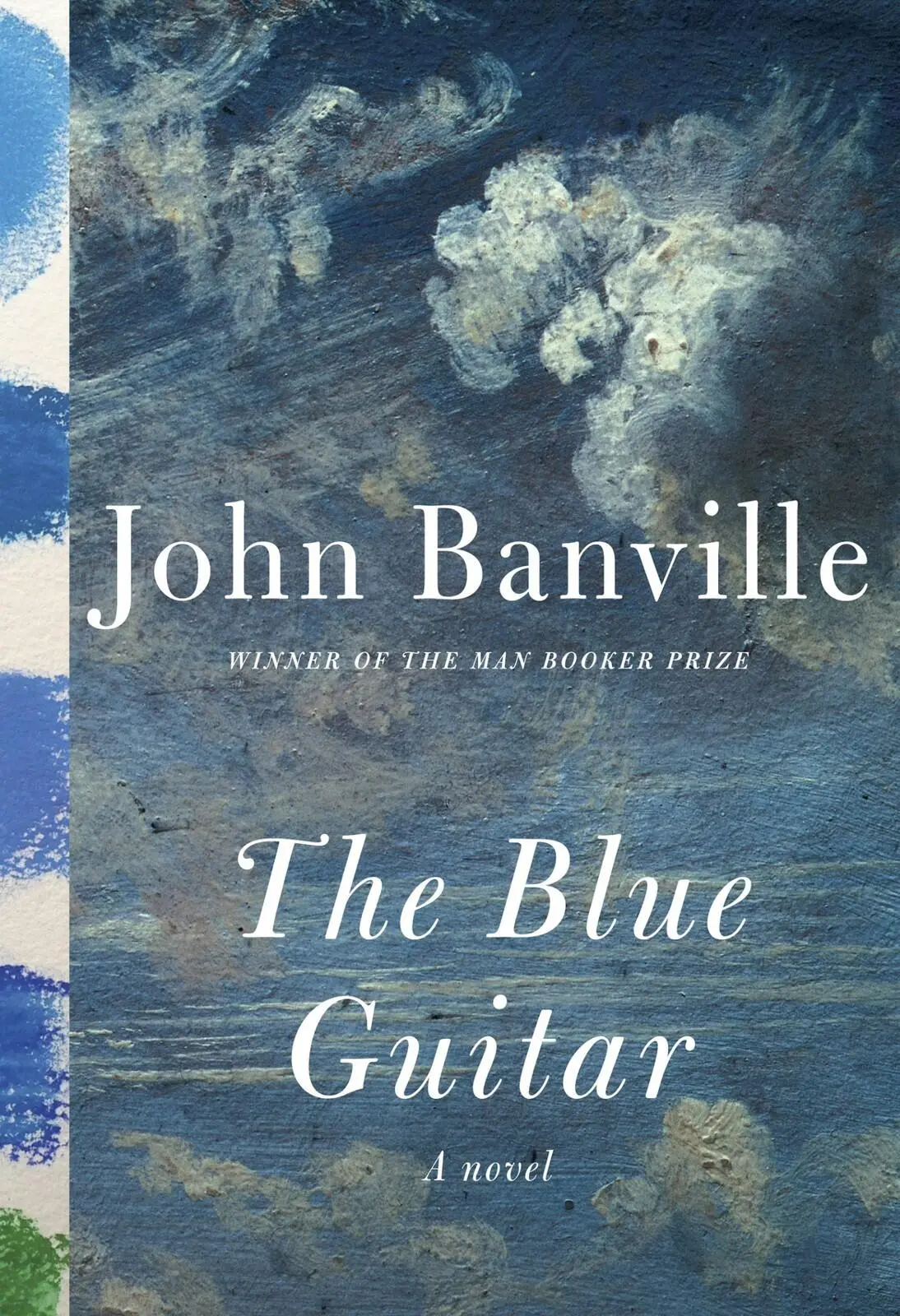
- Название:The Blue Guitar
- Автор:
- Издательство:Knopf
- Жанр:
- Год:2015
- ISBN:нет данных
- Рейтинг книги:4 / 5. Голосов: 1
-
Избранное:Добавить в избранное
- Отзывы:
-
Ваша оценка:
The Blue Guitar: краткое содержание, описание и аннотация
Предлагаем к чтению аннотацию, описание, краткое содержание или предисловие (зависит от того, что написал сам автор книги «The Blue Guitar»). Если вы не нашли необходимую информацию о книге — напишите в комментариях, мы постараемся отыскать её.
and
a new novel-at once trenchant, witty, and shattering-about the intricacies of artistic creation and theft, and about the ways in which we learn to possess one another, and to hold on to ourselves. Equally self-aggrandizing and self-deprecating, our narrator, Oliver Otway Orme, is a painter of some renown, and a petty thief who does not steal for profit and has never before been caught. But he's pushing fifty, feels like a hundred, and things have not been going so well lately. Having recognized the "man-killing crevasse" that exists between what he sees and any representation he might make of it-any attempt to make what he sees his own-he's stopped painting. And his last purloined possession-aquired the last time he felt the "secret shiver of bliss" in thievery-has been discovered. The fact that it was the wife of the man who was, perhaps, his best friend, has compelled him to run away: from his mistress, his home, his wife, from whatever remains of his impulse to paint and from the tragedy that haunts him, and to sequester himself in the house where he was born, trying to uncover in himself the answer to how and why things have turned out as they did. Excavating memories of family, of places he's called home, and of the way he has apprehended the world around him ("no matter what else is going on, one of my eyes is always swivelling towards the world beyond"), Ollie reveals the very essence of a man who, in some way, has always been waiting to be rescued from himself.
The Blue Guitar — читать онлайн бесплатно полную книгу (весь текст) целиком
Ниже представлен текст книги, разбитый по страницам. Система сохранения места последней прочитанной страницы, позволяет с удобством читать онлайн бесплатно книгу «The Blue Guitar», без необходимости каждый раз заново искать на чём Вы остановились. Поставьте закладку, и сможете в любой момент перейти на страницу, на которой закончили чтение.
Интервал:
Закладка:
“What am I going to do, Olly?” he cried again, more desperate than ever.
I still had that sense of buoyant falling, which intensified now, due to the brandy having its inevitable effect, into a growing and wholly inappropriate lightheartedness. How could he be so sure, I asked again, that what he suspected of Polly was really the case? Wasn’t it possible he was imagining the whole thing? The mind when it starts to doubt, I said, knows no limits, and will credit the most outlandish fantasies. I should have shut up, of course, instead of which I kept on tugging at that loose end of yarn. It was as if I wanted it all to come unravelled, wanted Marcus to pause, and think, and turn and stare at me, his eyes widening in astonishment and gathering fury as the terrible truth dawned on him. Some desperate part of me wanted him to know! Yet how perverse to dread one’s fate while at the same time reaching out eagerly to draw it close.
At this point Marcus did pause, did turn to me, and with another lugubrious hiccup put a hand on my arm and asked in a voice thick with emotion if I realised how much my friendship meant to him, what a privilege it was, and what a comfort. I mumbled that I, of course, in my turn, was glad to have him for a friend, very glad, very very very glad. I had a feeling now as of everything inside me slowly shrivelling. Encouraged, Marcus embarked on an extended soliloquy in praise of me as trusted companion, stout soul and, incidentally, world-beating painter, all the while looming into my face with eager sincerity. I wanted, oh, how I wanted, like the buttonholed wedding guest, to make myself turn aside from that glittering eye, but it held me fast. Yes, he declared, more fervently still, I was the best friend a man could hope for. As he spoke, his face seemed to swell and swell, as if it were being steadily inflated from inside. At last, with a mighty effort, I managed to tear myself away from his brimming, soulful stare. His hand was still on my arm — I could feel the heat of it through the sleeve of my coat, and almost shuddered. Now he broke off his peroration and leaned his head far back and sucked a final drop from the bottle. It was clear he had a great deal more to say, and would certainly say it, with ever-increasing passion and sincerity, if I didn’t find a means of distracting him.
“You were telling me,” I said, with demurely lowered eyes and fiddling at one of the sofa buttons, “you were telling me about the fight with Polly.”
Some distraction.
“Was I?” he said. He heaved a fluttery sigh. “Oh, yes. The fight.”
Well, he said, putting on his spectacles again — I am always fascinated by the intricate way he has of looping them on to his ears — after he had slapped Polly and she had gone off upstairs he had stalked about the workshop for some time, disputing with himself and kicking things, then had followed her, angrier than ever, and confronted her in their bedroom. She was sitting on the side of the bed with the child in her arms. Was there, he demanded, someone else? He hadn’t imagined there was, not for a second, and had only said it to provoke her, and expected her to laugh at him and tell him he was mad. But to his consternation she did not deny it, only sat there looking up at him and saying not a word. “The same look again,” he said, renewed tears springing to his eyes, “the same look, only worse, that she gave me in the workshop when I hit her!” He hadn’t thought her capable of such blank remoteness, such calm and icy indifference. Then he corrected himself: no, he had seen her look like that once before, a little like that, in the early stages of her pregnancy, when the baby had begun to kick and be a real presence. That was a case too, he said, of someone coming into her life, of a third party — those were his words, a third party — getting inside her — those too, his very words — and absorbing all her concentration, all her care; in short, all her love. At the time he had felt excluded, excluded, yes, but not rejected, not like now, when she sat on the bed like that with her cold and frightening gaze fixed on him and the realisation came to him that he had lost her.
“Lost?” I said, and attempted a chiding laugh, even as a hand with freezing fingers was laying itself on my heart. “Oh, come now.”
He nodded, sure of what he knew, and screwed his legs around each other more tightly still, and thrust his hands between his knees and again made that thin mewling sound, like an animal in pain.
The rain had stopped and the last big drops were dripping down the window-panes in glistening, zigzag runnels. The clouds were breaking, and craning forwards a little and looking high up I could see a patch of pure autumnal blue, the blue that Poussin loved, vibrant and delicate, and despite everything my heart lifted another notch or two, as it always lifts when the world opens wide its innocent blue gaze like that. I think the loss of my capacity to paint, let’s call it that, was the result, in large part, of a burgeoning and irresistible and ultimately fatal regard for that world, I mean the objective day-to-day world of mere things. Before, I had always looked past things in an effort to get at the essence I knew was there, deeply hidden but not beyond access to one determined and clear-sighted enough to penetrate down to it. I was like a man come to meet a loved one at a railway station who hurries through the alighting crowd, bobbing and dodging, willing to see no face save the one he longs to see. Don’t mistake me, it wasn’t spirit I was after, ideal forms, Euclidean lines, no, none of that. Essence is solid, as solid as the things it is the essence of. But it is essence. As the crisis deepened, it wasn’t long before I recognised and accepted what appeared to me a simple and self-evident truth, namely, that there was no such thing as the thing itself, only effects of things, the generative swirl of relation. You would beg to differ? I said, striking a defiant pose, hand on hip. Try isolating the celebrated thing-in-itself, then, I said to a throng of imaginary objectors, and see what you get. Go ahead, kick that stone: all you’ll end up with is a sore toe. I would not be budged. No things in themselves, only their effects! Such was my motto, my manifesto, my — forgive me — my aesthetic. But what a pickle it put me in, for what else was there to paint but the thing, as it stood before me, stolid, impenetrable, un-get-roundable? Abstraction wouldn’t solve the problem. I tried it, and saw it was mere sleight of hand, meremost sleight of mind. And so it kept asserting itself, the inexpressible thing, kept pressing forwards, until it filled my vision and became as good as real. Now I realised that in seeking to strike through surfaces to get at the core, the essence, I had overlooked the fact that it is in the surface that essence resides: and there I was, back to the start again. So it was the world, the world in its entirety, I had to tackle. But world is resistant, it lives turned away from us, in blithe communion with itself. World won’t let us in.
Don’t misunderstand me, my effort wasn’t to reproduce the world, or even to represent it. The pictures I painted were intended as autonomous things, things to match the world’s things, the unmanageable thereness of which had somehow to be managed. That’s what Freddie Hyland meant, whether he knew it or not, when he spoke to me that day of the inwardness he had spotted in those dashed-off sketches of mine. I was striving to take the world into myself and make it over, to make something new of it, something vivid and vital, and essence be hanged. A boa constrictor, that was me, a huge, wide-open mouth slowly, slowly swallowing, trying to swallow, gagging on enormity. Painting, like stealing, was an endless effort at possession, and endlessly I failed. Stealing other people’s goods, daubing scenes, loving Polly: all the one, in the end.
Читать дальшеИнтервал:
Закладка:
Похожие книги на «The Blue Guitar»
Представляем Вашему вниманию похожие книги на «The Blue Guitar» списком для выбора. Мы отобрали схожую по названию и смыслу литературу в надежде предоставить читателям больше вариантов отыскать новые, интересные, ещё непрочитанные произведения.



Обсуждение, отзывы о книге «The Blue Guitar» и просто собственные мнения читателей. Оставьте ваши комментарии, напишите, что Вы думаете о произведении, его смысле или главных героях. Укажите что конкретно понравилось, а что нет, и почему Вы так считаете.