Theodore Odrach - Wave of Terror
Здесь есть возможность читать онлайн «Theodore Odrach - Wave of Terror» весь текст электронной книги совершенно бесплатно (целиком полную версию без сокращений). В некоторых случаях можно слушать аудио, скачать через торрент в формате fb2 и присутствует краткое содержание. Год выпуска: 2008, Издательство: Chicago Review Press, Жанр: prose_military, Историческая проза, на английском языке. Описание произведения, (предисловие) а так же отзывы посетителей доступны на портале библиотеки ЛибКат.
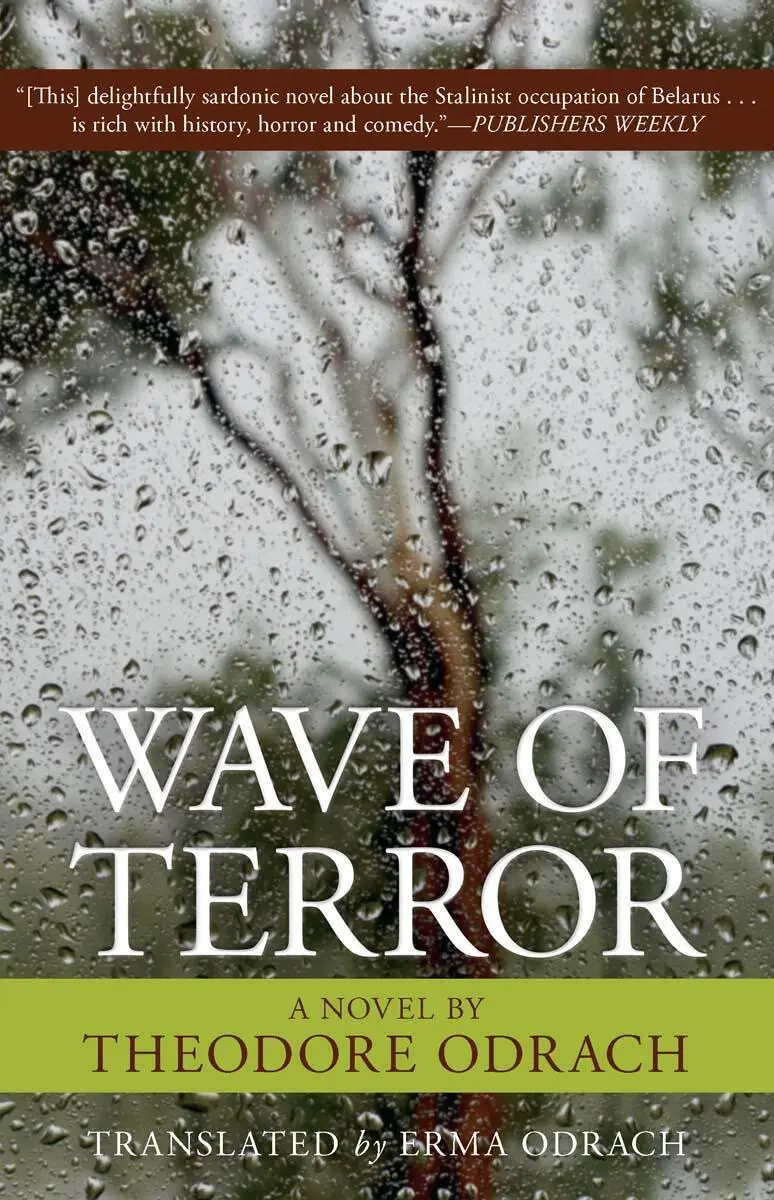
- Название:Wave of Terror
- Автор:
- Издательство:Chicago Review Press
- Жанр:
- Год:2008
- ISBN:нет данных
- Рейтинг книги:4 / 5. Голосов: 2
-
Избранное:Добавить в избранное
- Отзывы:
-
Ваша оценка:
Wave of Terror: краткое содержание, описание и аннотация
Предлагаем к чтению аннотацию, описание, краткое содержание или предисловие (зависит от того, что написал сам автор книги «Wave of Terror»). Если вы не нашли необходимую информацию о книге — напишите в комментариях, мы постараемся отыскать её.
Wave of Terror — читать онлайн бесплатно полную книгу (весь текст) целиком
Ниже представлен текст книги, разбитый по страницам. Система сохранения места последней прочитанной страницы, позволяет с удобством читать онлайн бесплатно книгу «Wave of Terror», без необходимости каждый раз заново искать на чём Вы остановились. Поставьте закладку, и сможете в любой момент перейти на страницу, на которой закончили чтение.
Интервал:
Закладка:
CHAPTER 26
Everything appeared to go well on this beautiful sunny June day. To begin with, early that morning, Sobakin, in his full NKVD uniform, carrying his overstuffed satchel, unexpectedly and hurriedly left for the Zovty Prison. In the Bohdanovich household, things had settled down considerably. Marusia woke around nine, made breakfast and went about her usual household chores. No one dared mention Sergei, and even Lonia’s name was not whispered. It was almost as if the normal flow of life had been restored, at least on the surface.
Just before the clock struck noon there came a knock on the front door. It was the postman with a telegram addressed to Marusia. She ran to tell her mother the good news. “Mother, Mother, it’s from the Oblispolkom about my application for a teaching position. I’m being called in for an appointment today at two.”
Efrosinia, knitting a shawl, put her needles down “Have you given this enough thought? Is this what you really want? To become a teacher?”
“Mother, it’s about time I did something with my life. Besides, we can certainly use the money. And with all these things happening around us, we still have to go on. And Father’s not …”
“Father!” Efrosinia cut her off. “Don’t start with your father again. Just look at him. As usual, he’s snoring away. Such a hypochondriac! You see how he got out of it again? You see? Didn’t I tell you he’d find a way? Mark my words, he’ll never make it to Lvov, he’ll never go for Lonia. He’s full of excuses, nothing but excuses. Now he claims he can’t buy a train ticket because in order to buy a ticket he needs a special pass from the NKVD, but before he can get this pass, he says, he must apply to NKVD headquarters, and it could take weeks for them to process it.”
Turning on her husband who was stretched out on the sofa, “Get up, old man, I’ve just about reached my limit with you! Get up before I do something I might regret!” She was about to grab him by the arm, but clutching her head, she burst into tears. “Lonia, my poor Lonia, what a high price you have to pay for having such a father.”
“Oh, Mother!” Marusia stamped her foot. “Enough already! You’ve got to stop tormenting yourself like this. You’re driving us all crazy, and it’s not doing anyone any good.”
She took her mother’s arm, sat her down in an armchair and gave her a glass of water. Then she massaged her shoulders and back until she calmed down. When Efrosinia began to sink into drowsiness, Marusia slipped a pillow behind her mother’s head, lifted her legs onto a footstool and covered her with a blanket. Then she took her letter and rushed out to go to the Oblispolkom . It was almost two o’clock.
She felt today was the day she would achieve something. Having a job would be a way not only to help her parents financially, but also to escape the pressures in her life; namely, to get away from Simon Stepanovich. She felt confident about her prospects of getting work, because not only was she well-educated, but she spoke Russian, and fluently at that. She tried to clear everything from her mind that might affect her optimism.
The Oblispolkom was an imposing stone building covering a big chunk of the block, five stories high and surrounded by a narrow, empty courtyard. The large, rectangular windows on the lower level were protected by iron bars. There was a continual flow of people through the front gates; pigeons roosted under the eaves above the main entrance. Marusia was intimidated and even a little frightened by this impressive and important place. On the second floor, she stopped before a massive brown wooden door marked People’s Commissariat of Education. She knocked, turned the oversized brass knob, and entered timidly.
Yeliseyenko, Superintendent of the National Division of Education, sat at his desk, jotting something in a notebook. His flaxen hair was oiled and combed back from his pale, puffy face. He wore hornrimmed glasses. Marusia silently tiptoed to put her envelope on the corner of his desk and sat down in a chair opposite him. Yeliseyenko looked up unsmiling. “Well, Maria Valentynovna. We’ve looked over your application with great interest. So, you want to be a teacher? And you specified you wanted to teach in a village. Hmm … interesting. Well, your credentials certainly qualify you.” He took a folder from his desk drawer and scanning the papers, asked, “How is your Belorussian?”
Astonished, Marusia laughed nervously. “Uh … I don’t really know Belorussian. But I know Russian. I can certainly teach in Russian.”
“Teach in Russian?” Yeliseyenko shook his head. “Regrettably, we have no openings for Russian teachers at the moment, especially in the villages. We do, however, need Belorussian teachers, for as you well know, we are now part of the Belorussian Soviet Socialist Republic. Of course, should you decide to apply to an urban institution, there might be an opening there somewhere.” Then looking questioningly at her, “If I may ask, where did you learn Russian?”
She shifted in her seat and said apologetically, “Unfortunately, I didn’t learn Russian in school because when I went to school our land was occupied by the Poles, so naturally all my schooling was conducted in Polish. I picked it up here and there, wherever I could.”
Yeliseyenko smiled. He found her attempt at Russian most humorous. “Yes,” he said, “Russian is the language now most commonly used, and your attachment to it is commendable. I realize you’re eager to make a favorable impression, and, I might add, your ingenuousness is certainly appreciated. However, the truth of the matter is your speech is flawed. For example, your diction is off and your inflections are improper.” As Yeliseyenko continued, he lapsed, perhaps unconsciously, into Ukrainian, and without a trace of an accent.
Marusia was dumbfounded: the Superintendent of Education, a man of position, was speaking to her in, of all languages, Ukrainian, just like a moujik ! How could this be? She was shocked to learn he was not a Russian as she had assumed, but a Ukrainian like herself. She couldn’t understand why a man who had managed to climb so high up the Party ladder would deliberately undermine himself like that. Was the Ukrainian so deeply ingrained in him that no matter how hard he tried, he just couldn’t quash it? Or maybe he wasn’t undermining himself at all, maybe he just wanted to make fun of her, to reduce her to the mere provincial she really was. She became increasingly uneasy. She had worked so hard and for so many hours to perfect her Russian, to sound authentic, and now it was all for nothing. But she refused to believe she had given herself away so easily. Confused and embarrassed, she spoke up. “Excuse me, comrade, I’m at a loss here. It seems strange that you just spoke to me in Ukrainian, which, from what I understand, is a Russian dialect. I was led to believe Russian was the official language now, to be used in all facets of life. Have I been mistaken?”
Yeliseyenko got up and, running his fingers through his hair, walked across the room to the window. Marusia was surprised to see how short he was, perhaps a head shorter than herself. He opened the window wide-the air was fresh and clean and the clatter of horses filled the room. After a few minutes, he turned and began what appeared to be a carefully crafted propaganda speech, in Russian.
“Well, Marusia, you don’t seem to understand the aim of the Soviet Union. First of all, Ukraine is a recognized republic and therefore, naturally, has its own language and culture, which must be maintained and preserved. Ukrainian is not a dialect of Russian as you seem to think, but a separate language. We also have other great nations in our midst such as Azerbaizan, Georgia, Chechnya, and so on. And all these nations have their unique cultures and languages that must first and foremost be protected. I might add, they have all, including Ukraine and Belorussia, happily and voluntarily joined together to form the USSR, the greatest democratic nation on earth. And of course, being a member of this great union bestows the highest of honors.”
Читать дальшеИнтервал:
Закладка:
Похожие книги на «Wave of Terror»
Представляем Вашему вниманию похожие книги на «Wave of Terror» списком для выбора. Мы отобрали схожую по названию и смыслу литературу в надежде предоставить читателям больше вариантов отыскать новые, интересные, ещё непрочитанные произведения.






Обсуждение, отзывы о книге «Wave of Terror» и просто собственные мнения читателей. Оставьте ваши комментарии, напишите, что Вы думаете о произведении, его смысле или главных героях. Укажите что конкретно понравилось, а что нет, и почему Вы так считаете.