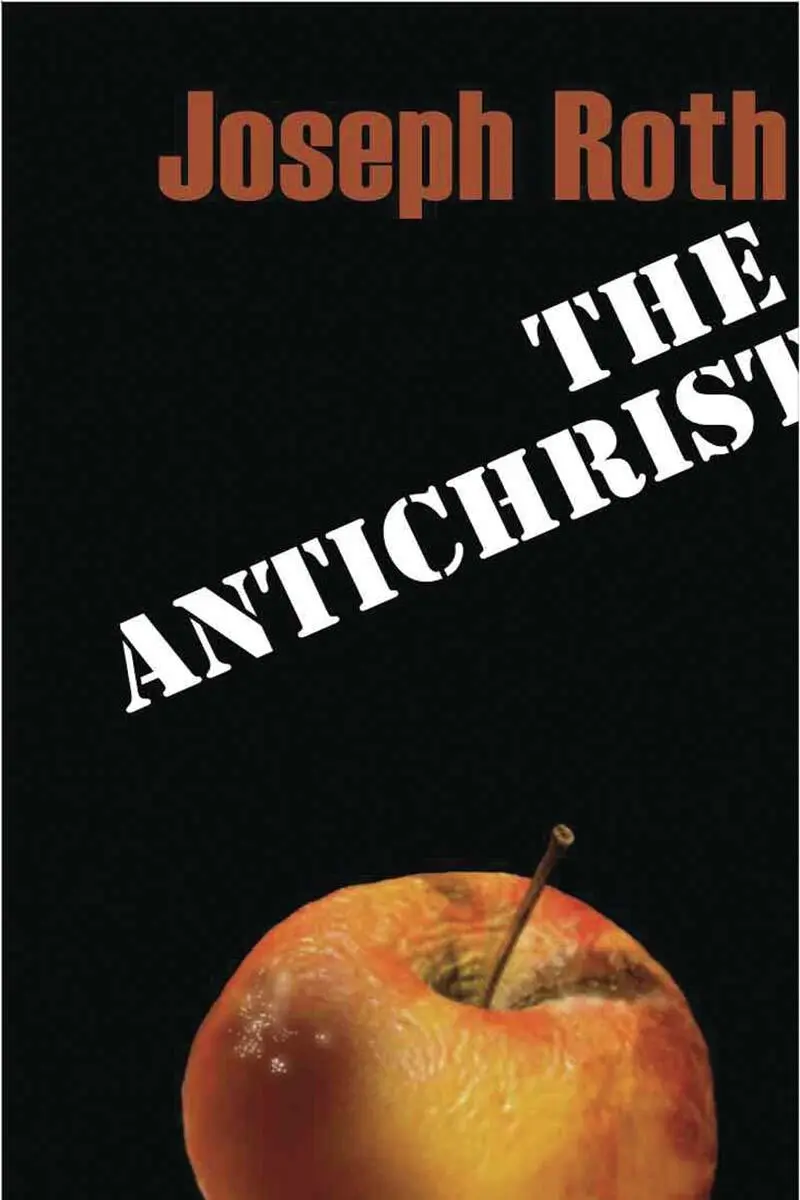
Joseph Roth - The Antichrist
Здесь есть возможность читать онлайн «Joseph Roth - The Antichrist» весь текст электронной книги совершенно бесплатно (целиком полную версию без сокращений). В некоторых случаях можно слушать аудио, скачать через торрент в формате fb2 и присутствует краткое содержание. Год выпуска: 2010, Издательство: Peter Owen Publishers, Жанр: Классическая проза, на английском языке. Описание произведения, (предисловие) а так же отзывы посетителей доступны на портале библиотеки ЛибКат.
- Название:The Antichrist
- Автор:
- Издательство:Peter Owen Publishers
- Жанр:
- Год:2010
- ISBN:нет данных
- Рейтинг книги:3 / 5. Голосов: 1
-
Избранное:Добавить в избранное
- Отзывы:
-
Ваша оценка:
The Antichrist: краткое содержание, описание и аннотация
Предлагаем к чтению аннотацию, описание, краткое содержание или предисловие (зависит от того, что написал сам автор книги «The Antichrist»). Если вы не нашли необходимую информацию о книге — напишите в комментариях, мы постараемся отыскать её.
s protaganist, J.R., a journalist hired by an inscrutable media mogul hellbent on exposing evidence of the "Antichrist" throughout the world. This mission leads J.R. to authoritarian political regimes such as Red Earth (the Soviet Union) but also other poisonous terrains like The Land of Shadows (Hollywood) — it becomes all too clear that it is Roth's mission to chart the whole of civilization's slide into moral and political chaos. But herein lies the extraordinary strength and appeal of this work, as Roth is powerfully and even hilariously prescient. Mixing the diatribe with his trademark sardonic wit, he miraculously predicts the advent of the Holocaust, globalization, multimedia — even the paparazzi. Combining beautiful but savage writing with visual imagery out of a Coen Brothers movie, this is an invaluable addition to the Roth canon in English.
The Antichrist — читать онлайн бесплатно полную книгу (весь текст) целиком
Ниже представлен текст книги, разбитый по страницам. Система сохранения места последней прочитанной страницы, позволяет с удобством читать онлайн бесплатно книгу «The Antichrist», без необходимости каждый раз заново искать на чём Вы остановились. Поставьте закладку, и сможете в любой момент перейти на страницу, на которой закончили чтение.
Интервал:
Закладка:
If they had been capable of hearing Death’s answer, it would have been something like the following: ‘Your threat is childish and your pride is foolish. It is my purpose to take from this earth not his face but his life and what you loved — his breath. He is extinguished, like a lamp. I have taken wick and oil. You may keep the vessel. I am not concerned with it. It was his flame that you loved and his light! Why are you now flaunting the miserable vessel that held them? I have already extinguished many great lights, and monuments were built to them. And that is wiser than what you do! For a monument does not deny but rather confirms the law according to which I act. And since it confirms me it conquers me as well. Because a monument, however insignificant, is the sign that the living remember the dead, and it is a terrestrial, inadequate but reverent form of resurrection. However, you don’t cause the dead man to be resurrected; you only make his corpse last. You prevent it from decaying. Why shouldn’t a corpse turn into dust and ashes? Did men come from paraffin and wax to become paraffin and wax once again? If you have as much respect for the dead man as you say, don’t you understand that he should not be exhibited the way a barber displays wax busts with wigs? Why do you so proudly show off for me — for Death? You have snatched nothing from me. Instead, you have detracted from your own dignity — your own dignity as well as the dignity of your dead.’
But, as I said, the sweepers were unable to hear the voice of Death.
Neither was he speaking to them. He was talking to himself with a compassion-filled voice.
In the vicinity of the city lived a righteous man, and I was advised to seek him out. He was surely one of the thirty-six righteous men — of whom it was written that on their account, and on their account alone, the world will continue to exist-who live scattered around the earth, their significance and influence unrecognized by mankind, expert in interpreting the language of animals, the song of the birds and the silence of the fish.
So I went to this righteous man.
He lived meagrely but so alone that the confinement of his room was no longer confinement but rather a wide expanse. He was surrounded with the regal splendour of solitude in which all earthly misery was lost like a speck of dust in a strong, sweeping wind.
They had treated him unjustly, for it is written that the righteous must suffer.
In this, however, the righteous man is like God, and this grace was granted him that he might serve not only as an image of God, as we all are but as an exalted image of our Creator. The righteous man is never unjust, and he treats you and I the same as he treats the unjust. It is only because we are, in truth, incapable of recognizing a righteous man that we say he forgives his enemies.
The righteous man who is the topic of this discourse had been thrown into prison. And it was claimed that he had wanted to eliminate the liberty of the people; he, who hated slavery and loved liberty, and who lived only to ensure that there would exist only free men and no more slaves.
It only became evident that he was one of the thirty-six righteous when his righteousness was not recognized and he was thrown into prison under the accusation of being unrighteous.
Accordingly, he bore imprisonment, hunger and beatings with the dignity of the righteous. He was lonely in prison. He was surrounded always by the strong armour of solitude, which is stronger even than iron.
This armour of solitude came between him and the violence that struck him, so that sometimes he almost wished that the blows were truly painful.
I spoke with this man. I told him that I could see the signs of the Antichrist in his great, vast and beautiful country; that I feared the Antichrist alone had triumphed.
‘He hasn’t triumphed,’ said the righteous man. ‘He has only left here, there and everywhere so strong an imprint of his evil fingers that we are tempted to believe that all new creations are the work of his hands. But it isn’t true. They bear the impression of his fingers only where he touched them.
‘But there is something else that you cannot see,’ the righteous man went on, ‘because you are a new guest to our country. The Antichrist didn’t emerge with the new era in this country but many years ago under the old regime. Clever as he was, he first tempted the standard-bearers, not the rebels. Not those who sought reforms but those whose jobs were to preserve the status quo. First he took up residence in the churches and then in the houses of the masters. For that is the method by which you may unmistakably know him, and it is an error, a mistake of the world, when it believes he can be recognized because he provokes and incites the humiliated and enslaved. That would be foolish — and the Antichrist is cunning. He doesn’t inspire the oppressed to rebel but inspires the masters to oppress. He doesn’t make rebels, rather he makes tyrants. He knows that if first he introduces tyranny, rebellion will soon come on its own. Thus his gain is twofold. For he forces the just, who would otherwise resist him, into his service. He doesn’t persuade the slaves that they should be masters, rather he first makes the masters his slaves. Then, when they have entered into his service he forces them to debase the powerless, the poor, the hardworking, the humble and the righteous into slavery. The wretched and the humble then revolt against the powerful, and the reasonable and the just rise up against stupidity and injustice. The just put weapons into the hands of the wretched. They must do it, for they are the righteous ones.
‘It is therefore false for the people of the world to say that the Antichrist leads the rebels. On the contrary; he leads those who wish for the status quo. Because his nature prevents it he cannot approach the sufferers as easily as he can approach the powerful. He who suffers is better equipped against evil than he who rules, gives orders and enjoys. The world is founded upon justice. This is the special cunning of the Antichrist, that he disguises himself in the mask of a rebel to prevent immediate recognition by his opponents, so that they seek him in the ranks of the rebels while he is actually raging and wreaking havoc among the ranks of the masters.
‘It is written that the righteous must suffer. It is true that all those who suffer are not necessarily righteous, but if one day I were given the mission of finding righteous men I would search for them in the endless ranks of the suffering. It is they who are first tasked with restoring justice in this world. And while they are striving to re-establish the justice that has been distorted by the Antichrist and his slaves, the tyrants, they must be placed under the suspicion that they are driven by the Antichrist. It is precisely by this that I recognize them as righteous. For their suffering is twofold. They suffer under the violence of the unjust and under the reproach of the just.’
‘But they won’t recognize God,’ I said, ‘and they claim that they themselves are gods.’
‘They must never have known God,’ replied the righteous man. ‘A human power had intervened between God and themselves, and just as the Antichrist first made tyrants of the masters before he led their victims to revolt, so he first made liars of the priests before he compelled the believers to deny God. Since the priests had blanketed God with lies, those who deny Him — or, as they call themselves, the godless ones — aren’t denying God but actually the false image that has been handed down to them.
‘Weren’t they told that God wanted murder, injustice, tyranny, gold and the whip? And, what is still worse, that he was, nevertheless, the God of Love? And didn’t the mediators of God cause the bells, the golden tongues of faith, to be rung to celebrate the hour at which the black jaws of cannon, the mouths of death, were opened?’
Читать дальшеИнтервал:
Закладка:
Похожие книги на «The Antichrist»
Представляем Вашему вниманию похожие книги на «The Antichrist» списком для выбора. Мы отобрали схожую по названию и смыслу литературу в надежде предоставить читателям больше вариантов отыскать новые, интересные, ещё непрочитанные произведения.








Обсуждение, отзывы о книге «The Antichrist» и просто собственные мнения читателей. Оставьте ваши комментарии, напишите, что Вы думаете о произведении, его смысле или главных героях. Укажите что конкретно понравилось, а что нет, и почему Вы так считаете.