Conrad Aiken - Great Circle
Здесь есть возможность читать онлайн «Conrad Aiken - Great Circle» весь текст электронной книги совершенно бесплатно (целиком полную версию без сокращений). В некоторых случаях можно слушать аудио, скачать через торрент в формате fb2 и присутствует краткое содержание. Год выпуска: 2015, ISBN: 2015, Издательство: Open Road Media, Жанр: Классическая проза, на английском языке. Описание произведения, (предисловие) а так же отзывы посетителей доступны на портале библиотеки ЛибКат.
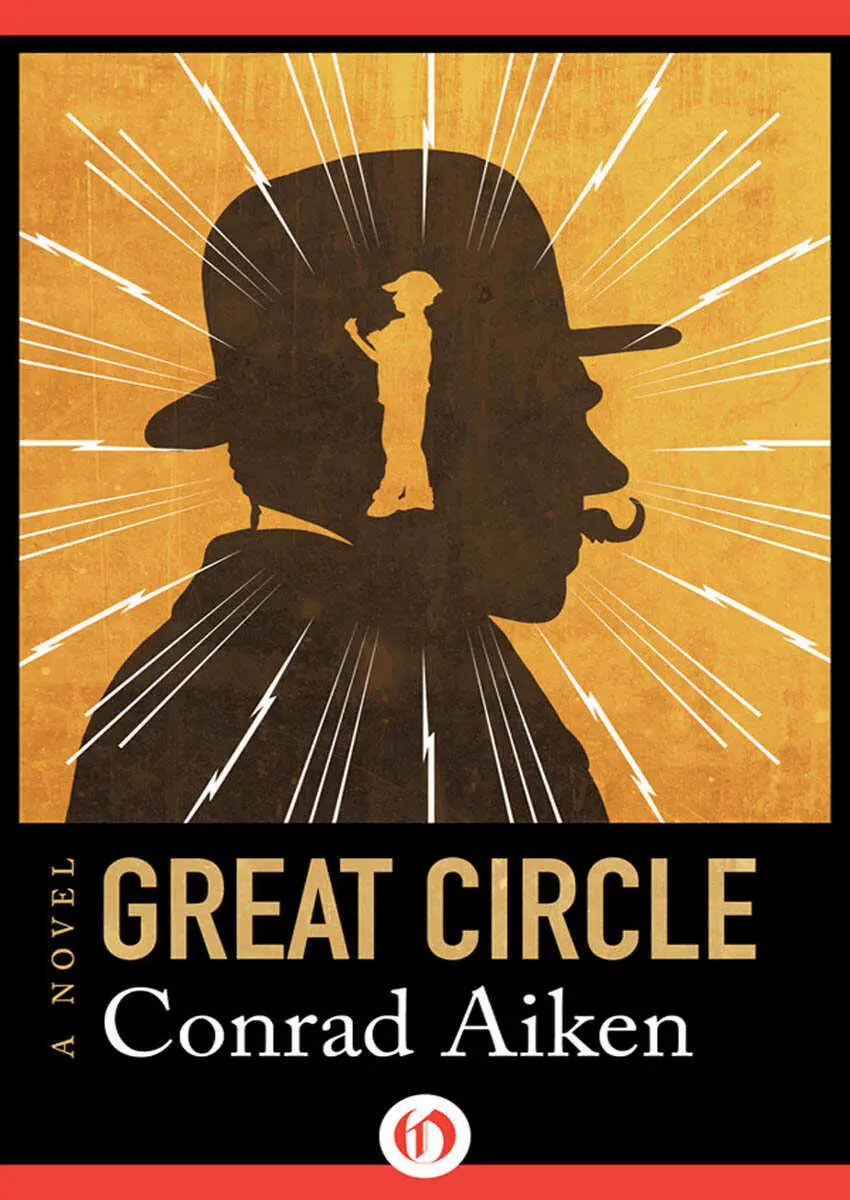
- Название:Great Circle
- Автор:
- Издательство:Open Road Media
- Жанр:
- Год:2015
- ISBN:9781504011402
- Рейтинг книги:3 / 5. Голосов: 1
-
Избранное:Добавить в избранное
- Отзывы:
-
Ваша оценка:
Great Circle: краткое содержание, описание и аннотация
Предлагаем к чтению аннотацию, описание, краткое содержание или предисловие (зависит от того, что написал сам автор книги «Great Circle»). Если вы не нашли необходимую информацию о книге — напишите в комментариях, мы постараемся отыскать её.
A masterful portrait of an average man at the edge of a shocking precipice,
is a triumph of psychological realism. One of Sigmund Freud’s favorite novels, it is a probing exploration of the secrets of consciousness.
Great Circle — читать онлайн бесплатно полную книгу (весь текст) целиком
Ниже представлен текст книги, разбитый по страницам. Система сохранения места последней прочитанной страницы, позволяет с удобством читать онлайн бесплатно книгу «Great Circle», без необходимости каждый раз заново искать на чём Вы остановились. Поставьте закладку, и сможете в любой момент перейти на страницу, на которой закончили чтение.
Интервал:
Закладка:
— You saw it all coming. You were already aware of the insecurity of your position — perhaps you even wanted all this to happen. Perhaps you were precipitating it. God knows your way of living can’t have made Bertha like you any better, can it. I’m surprised she hasn’t rebelled or broken out before.
— Now be fair about this, Bill, be fair. I admit it wasn’t too good. But I think you go a little too far when you suggest that I wanted this to happen. Does a man deliberately want to cut himself in two? Jesus. Does he deliberately seek to be abandoned? Jesus. Does he carve out his own heart and throw it to the dogs? Jesus. No, I decline the gambit, thank you. Just because I vaguely foresaw and feared the thing doesn’t mean I wanted it. I know I’ve been a damned fool. Why did I get into that rotten affair with Molly? God knows. But even that might not have done any harm if it hadn’t been for the party in Prescott Street, when we all got drunk and took our clothes off and did a Russian ballet, and so on and so on, and that damned fool little Mary Thurston running all over town telling about it, just because some idiot of a Ph.D. student, a philosopher, thought he was a satyr and tore her shirt off. Those are the damned trifles that ruin our lives. Precarious, precarious. But nothing to the precariousness of the mind. I still believe I shall go insane. All of a sudden, my mind stops — goes blank — I can’t either think or feel. I forget the simplest things, names, events — things I’ve known all my life. I carry my laundry into the Western Union telegraph office. Wild fits of shyness come over me, the kind I used to have when I was a kid, and I stand foolish and speechless, leering like an idiot, forgetting where I am and what I’m there for. The other day at the bank I found I couldn’t write — my hand began to shake — God knows why — and I couldn’t even sign my own name. The cashier looked at me in astonishment. I really thought I’d gone mad. I looked out of the window, trying to think of something, saw the sunlight, saw the window of my old room in Gray’s Hall, with my initials still carved on the window sill after all these fifteen years, and the pen shook in my hand, and then I tried again, pretending for the cashier’s benefit that I’d merely been doing a little calculation. Calculation! Good God, I was calculating for my very life. Then I managed by making a series of separate feverish little tremulous strokes to get a few quivering marks on to the paper, which bore no resemblance to my signature at all. Mr. Howe looked at it in surprise, but made no comment. I suspect he thought I was trying deliberately to disguise my handwriting so that the check wouldn’t be charged to my own account. Now what the hell was that all about. I walked out shaking like the well-known aspen leaf, or a stricken doe, or something, and went straight to Molly’s apartment, without even knowing what I was doing. Her door was unlocked and I walked in. She was taking a bath, and yelled at me in alarm from the tub, not knowing who it was. I opened the door and looked at her. She threw a sponge at me. Then I went back to the sitting room and stared at the cactus on the window sill, which had just given birth to a purple blossom. It was very beautiful. She came in and said she was surprised at me. She was obviously rather pleased. We sat down on the couch, she in her kimono, and she expected me to make love to her. Instead, I cried, and she was the most astonished woman you ever saw in your life. When that was over, she gave me a gin and ginger ale, and I told her my dream about the sea. I’m always dreaming about the sea. We all know what that means, don’t we? I’m going to be born again one of these days. Oh, yes, we rise again. Back to the womb, and forth once more we swim, like the mighty hero of the Kalevala , after nine months in submarine caves. We all crowded to the railing on the port side, where the captain was pointing to the masthead of a sunken ship, a masthead from which a pennant still fluttered. It was a sunken galleon. I knew that, even before the tide went out and revealed it to us all — the tide went out in no time, and there, behold, was a little island, submerged at all but low tide, and on its shore was the little galleon. We got out of the ship and walked up the shingle beach to the galleon, and I climbed up on to its deck and it was very strange, it was a little museum of seashells and pearls and precious stones, the decks were lined with glass cases, and all of them filled with beautiful — indescribably beautiful — cowry shells and razor shells and wentletraps and corals and ambergris and black pearls and God knows what. I was enthralled. And to think — I reflected — that these poor fellows, four hundred years ago, after collecting these rare and lovely things from parts of the world and all the oceans, should at last have been overtaken by fate and their marvelous collection buried here with them and forgotten. I examined great scarlet shells like butterflies, and blue shells like dragon-flies, and red sponges, and flying fishes with wings of opal and gold. Never have I seen such concentrated beauty. It was all my childhood dream of treasure-trove come true. All those dreams of finding nests of buried gold coins, marbles made of moonstone, jackstones of silver — you know what I mean. I climbed down again to the beach and walked round to the stern of the ship — and there, what do you think? was a skeleton standing with his hands folded on a rusted musket, standing upright as if to guard the ship with its treasure, and staring with empty sockets at the name of the ship, which I saw, when I looked up, was Everest . Ever rest. Now what do you make of that, Watson. But I had no time to loiter — the tide was rising swiftly again, the captain called us, and back we went to our own ship, and no sooner were we on the decks once more than the tide had risen, the little galleon, with its melancholy guard, was engulfed, and all that remained was the fluttering pennant. And so we sailed away. I told this dream to Molly — oh, yes, I know what it means, I daresay the old fellow is my father — and before she could comment on it I told her we were going to the Greek’s for lunch, and so I helped her to dress, handing her odds and ends of clothing, and I picked the damned little cactus flower, which made her really furious — she stamped her foot and I thought she was going to have a cry herself — but she recovered and we went to town in a yellow taxi. And that was that. And, oh, yes, we went afterwards to a hockey game at the Garden, and she was bored to death, though I gave her a hot dog and a bag of peanuts to keep her happy. I think she thought I’d gone crazy.
— You wanted her to think so.
— Of course I did. But also I didn’t. Now just how do we dissect that out. But I’d prefer to have a drink. I’ll have a drink. This is to Michelangelo, Shakespeare, and Melville, bisexual wonders of the transient world, magicians of the epicene, bastards of heaven and hell. Here’s to you, Mike, old boy. May your shadow never grow less, nor your fifth leg shorter. And so they went to hell all three to learn the fraud of Calvary. Good old Mike — I know all about him. His best friend was a homosexual, a minor artist who is now forgotten, and none of whose works survive, one of the lesser Florentines, a small man with a beard, a courageous coward, an exquisite, with a taste for scarlet in dress and a passion for perfumes and silks. A gentle fellow, he carried himself well, square-shouldered and erect, and his sword he managed with a grace, though he never put it to use. He had red lips and green eyes and a thick Florentine cad’s curl swept away from the fine feminine forehead, and his nose was proud and and of good breeding, and his accent in the reading aloud of poetry was of the very subtlest and finest. He was older than Michelangelo and richer, and his purse was open to his friend, for he could be, though a miser by nature, generous with those he loved. But this fellow betrayed him. Yes, he betrayed him. He left his hat in the hall, and his sword too, and his scarlet-lined cloak. So Michelangelo studied Plato, and modeled the titubant Bacchus, which is commonly considered his most ignoble work. And why was all this? Ah, Bill, you may well ask. Unable to draw Michelangelo to himself as he wanted to do, he took the next best course — viz., to wit, i.e., he took Michelangelo’s mistress. Surely you understand that? And so we have a rare kind of incest, we have — and a sort most painful to the heart. Now if you had a brother, Bill, and you had also a sweetheart, and this brother, behind your back, slept with your sweetheart — would you be unhappy? But I’m tired.
Читать дальшеИнтервал:
Закладка:
Похожие книги на «Great Circle»
Представляем Вашему вниманию похожие книги на «Great Circle» списком для выбора. Мы отобрали схожую по названию и смыслу литературу в надежде предоставить читателям больше вариантов отыскать новые, интересные, ещё непрочитанные произведения.







Обсуждение, отзывы о книге «Great Circle» и просто собственные мнения читателей. Оставьте ваши комментарии, напишите, что Вы думаете о произведении, его смысле или главных героях. Укажите что конкретно понравилось, а что нет, и почему Вы так считаете.