Conrad Aiken - Great Circle
Здесь есть возможность читать онлайн «Conrad Aiken - Great Circle» весь текст электронной книги совершенно бесплатно (целиком полную версию без сокращений). В некоторых случаях можно слушать аудио, скачать через торрент в формате fb2 и присутствует краткое содержание. Год выпуска: 2015, ISBN: 2015, Издательство: Open Road Media, Жанр: Классическая проза, на английском языке. Описание произведения, (предисловие) а так же отзывы посетителей доступны на портале библиотеки ЛибКат.
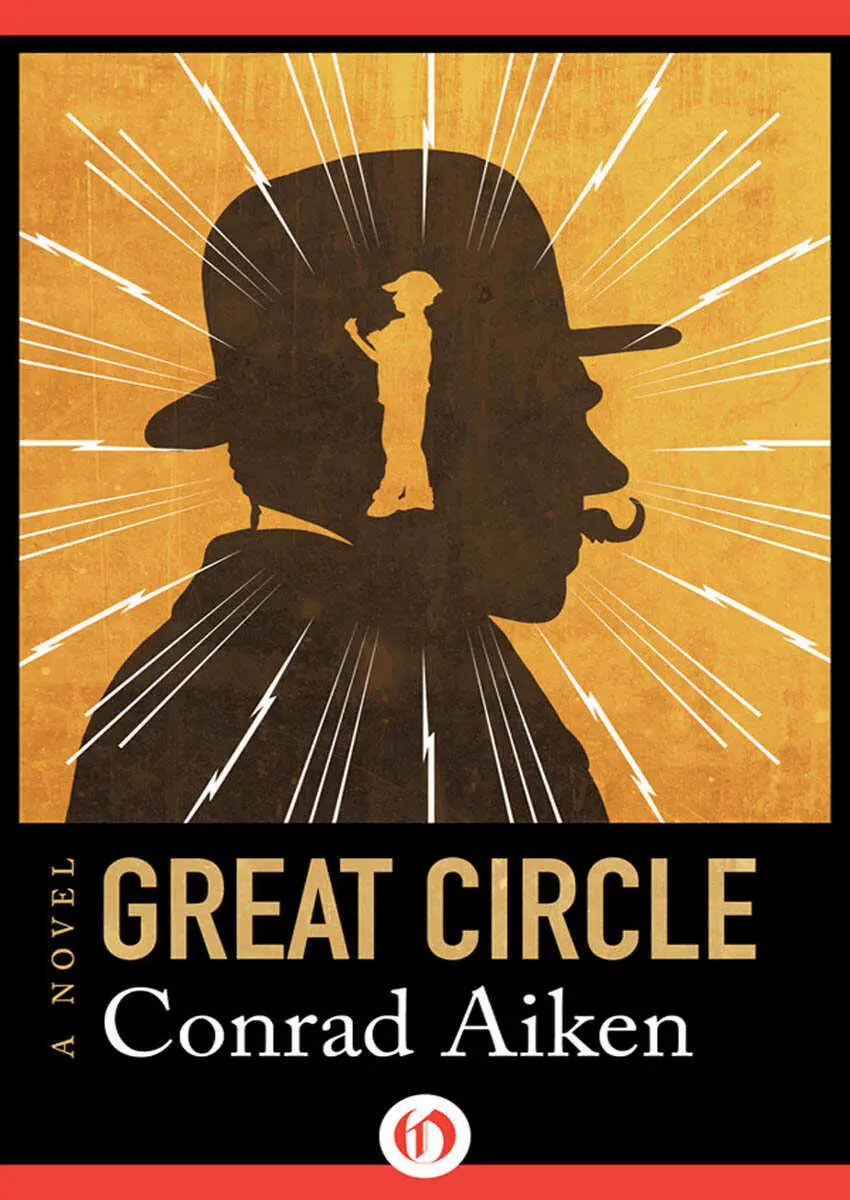
- Название:Great Circle
- Автор:
- Издательство:Open Road Media
- Жанр:
- Год:2015
- ISBN:9781504011402
- Рейтинг книги:3 / 5. Голосов: 1
-
Избранное:Добавить в избранное
- Отзывы:
-
Ваша оценка:
Great Circle: краткое содержание, описание и аннотация
Предлагаем к чтению аннотацию, описание, краткое содержание или предисловие (зависит от того, что написал сам автор книги «Great Circle»). Если вы не нашли необходимую информацию о книге — напишите в комментариях, мы постараемся отыскать её.
A masterful portrait of an average man at the edge of a shocking precipice,
is a triumph of psychological realism. One of Sigmund Freud’s favorite novels, it is a probing exploration of the secrets of consciousness.
Great Circle — читать онлайн бесплатно полную книгу (весь текст) целиком
Ниже представлен текст книги, разбитый по страницам. Система сохранения места последней прочитанной страницы, позволяет с удобством читать онлайн бесплатно книгу «Great Circle», без необходимости каждый раз заново искать на чём Вы остановились. Поставьте закладку, и сможете в любой момент перейти на страницу, на которой закончили чтение.
Интервал:
Закладка:
THY JOHN.
2. A.M.
I copied it out on the yellow paper that I used for Latin, and folded the copy, and hid it in the wildflower book. 2 A.M. What had they been talking about all that time. And what did this mean about the children. The salvation of the children. I looked out of the window and saw Mother and Porper coming slowly across the field by the Walker house, Porper holding her hand. I stood and watched them. Mother had on a raincoat over her bathing suit. She was walking slowly, looking down at the ground without saying anything, and Porper was skipping on one leg. I would meet them at the porch, or by the tennis court and give her the letter and then go on, running, towards the Point, as if to be in time to join Susan and Uncle Tom—
— the timelessness, the spacelessness, but also the wonderful and ever-renewed sense of the nearness and brightness and largeness, the vividness of small things, the extraordinary intenseness of grass-blades and cloverleaves and acorns, the warmth of sand in the hand, the sound of leaves tapping against the wooden walls of the playhouse — the queer new sense of brilliant exposure to all this, each year as we came back to it, as if one had forgotten what it was to see a cloud driven with unchanging shape from west to east across the blue sky, or to try to stare at the sun until one saw purple and green blots, to lie in the warm uneven grass as if one were a part of it, the grasshoppers and crickets crawling and tickling on one’s bare legs or getting into one’s clothes and making spots of tobacco juice — to come back to this, to be once more surprised by this and reimmersed in this, as if one again became a part of the wind, the sun, the earth—
— Look, Susan, if you almost close your eyes, but not quite, like this, and look at the sun, you see — wait a minute, and I’ll tell you what I see—
— Oh, anybody can do that, I’ve done that millions of times, you only do it because you saw Gwendolyn doing it that day at the Long Beach.
— I don’t either. Don’t be such a nitwit. What day do you mean.
— You know perfectly well what day I mean.
— You mean that time when we went across the long bridge to see how many new planks had been put in after the winter.
— Of course, you silly.
— Well, I didn’t even know what she was doing. Now it looks like a thick great jungle of hairy trees. All crisscross and savage and with a bright light coming through them. Gosh, isn’t it funny, how huge they look, and they’re only your eyelashes.
— That’s exactly what Gwendolyn said.
— Oh, shut up, will you. You try to spoil everything.
— It was the same day we went to look at the place where we had the clambake last year. You know as well as I do. And we met Gwendolyn on the beach, she was with Dorothy Peters, and Dorothy took off her clothes in the sand dunes and you said you’d seen her.
— I did not.
— Well, anyway, you said so.
— Have you tried looking through your fingers to see the red blood in them.
— And Gwendolyn was lying against the side of a dune with her eyes squeezed up, just like that, telling us what she saw. She said it was like a kaleidoscope.
— Kaleidoscope.
— Isn’t that what I said.
— I said kaleidoscope .
— So did I.
— You think so. That’s all you know.
— And you stood there looking down at Gwendolyn with that silly expression on your face—
— Will you shut up? Unless you can learn to talk a little sense once in a while.
— What else am I talking, I’d like to know.
— You’re talking nonsense, of course.
— But why you can get so excited about that stuck-up prig of a Gwendolyn, I’m sure I don’t know.
— Who said I was excited about her.
— Why any idiot could see it.
— Oh, could they.
— If you could have seen yourself—
— Shut up.
— Oh, I don’t care.
— Well, then, shut up .
— Nice manners older brothers seem to have.
— Will you shut up?
I closed my eyes, and felt the sun hot on my eyelids, and thought how queer it was that the redness I could see was nothing but my own blood. Susan knew too much. She was beginning to be a nuisance. What she said about my imitating Gwendolyn was perfectly true, the nitwit. But what did it matter. I was going to keep away from Gwendolyn for all the rest of the summer, and that would make everybody think there was nothing in it. Just the same, when I thought of the box of candy—
— Well if Uncle David thinks I’ll hang round here all afternoon for the pleasure of getting my feet dirty hoeing the tennis court, he’s got another guess coming. I’m going down to see if I can find Sanford. And if I find him I’ll take him out for a row in the dory. You can tell Uncle David to put that in his pipe and smoke it.
— Good-by, and good riddance.
— Keep the change.
Would Father really be coming back to Duxbury, and what did he mean about Mother’s being alone. Was she going away somewhere. And would we stay with Father in Cambridge, unless they bought the new house in Milton. And here it was August already, and no signs of a picnic! I climbed half way up the windmill, and then came down again. The leg nearest the house was getting looser, and ought to be fixed. Uncle Tom said it would have to be bedded in concrete — they would dig a hole and pour concrete in it. In a strong wind, when the windmill was pumping, you could see the whole leg lift up a little, sometimes almost a half an inch.
— Uncle Tom, I thought I’d ask Sanford to come out for a row with me, Uncle David doesn’t seem to be coming back to do the tennis court, and I thought maybe I’d take a bucket along and get some clams for supper. Do you think it would be a good idea.
— Well, I’m afraid as a matter of fact, Andy, your Aunt Norah has already ordered some, from Gerald Soule. Still, if you want to get a few more—
— You bet I will.
— Not too many, mind you.
— Are you fixing the box kite so we can take Porper for a ride in his cart with it. Do you remember the time when it carried him right across the tennis court, and into the field, and upset him?
— Yes, I thought we’d get it out and fix it. All it needs is this one cross strut — and I believe there are some left-over battens down in the bicycle house—
He was pulling his chin and staring at the box kite on the grass, and humming to himself in that queer mournful way without any tune in it, the red cloth of the box kite flickering stiffly in the wind, and I ran then down the hill past the playhouse, and jumped with a long jump over the wall covered with poison ivy and walked through the blackberry jungle, feeling the thorns catch hold of my sneakers and try to rip them.
When I got to the Soules’, Molly was swinging in the swing by herself, as usual, and said Sanford had gone to Plymouth in a motorboat with his mother. He wouldn’t be back till supper time. And not then, if they got stuck in the mud.
— Whose boat is it.
— Mr. Pigeon’s.
— Pigeons for ducks.
— My mother was invited to go, but she couldn’t.
— Didn’t they invite you, Molly?
— No, Sanford doesn’t like me. Would you like to try my swing?
— No, thanks, I’ve got to go. I’ve got to dig some clams.
— Could I come with you?
— Sure, if you like. If we have time, I might take you out in my dory.
We went across the golf links, keeping an eye out for balls, but there weren’t any, and then walked down the drive past Powder Point Hall. Molly kept wanting to hold my hand and then letting it go again. She said that her mother worked in the afternoons at Powder Point Hall, washing dishes, and wanted to stop and look in the windows to see if she could see her, but a lot of ladies were coming down the side steps and I walked quickly ahead, so that she came running after me and took hold of my hand again. We went past the Horse Monument and through the woods, where I showed her our houses, and she would have liked to stay there, but I took her down to the beach near the hunting box and told her to wait there without moving till I fetched the bucket and spade. I told her I was responsible for her, because she was small, and made her promise. If she would promise I might take her back to the houses afterwards.
Читать дальшеИнтервал:
Закладка:
Похожие книги на «Great Circle»
Представляем Вашему вниманию похожие книги на «Great Circle» списком для выбора. Мы отобрали схожую по названию и смыслу литературу в надежде предоставить читателям больше вариантов отыскать новые, интересные, ещё непрочитанные произведения.



Обсуждение, отзывы о книге «Great Circle» и просто собственные мнения читателей. Оставьте ваши комментарии, напишите, что Вы думаете о произведении, его смысле или главных героях. Укажите что конкретно понравилось, а что нет, и почему Вы так считаете.