Joseph Roth - The Silent Prophet
Здесь есть возможность читать онлайн «Joseph Roth - The Silent Prophet» весь текст электронной книги совершенно бесплатно (целиком полную версию без сокращений). В некоторых случаях можно слушать аудио, скачать через торрент в формате fb2 и присутствует краткое содержание. Год выпуска: 2003, Издательство: The Overlook Press, Жанр: Классическая проза, на английском языке. Описание произведения, (предисловие) а так же отзывы посетителей доступны на портале библиотеки ЛибКат.
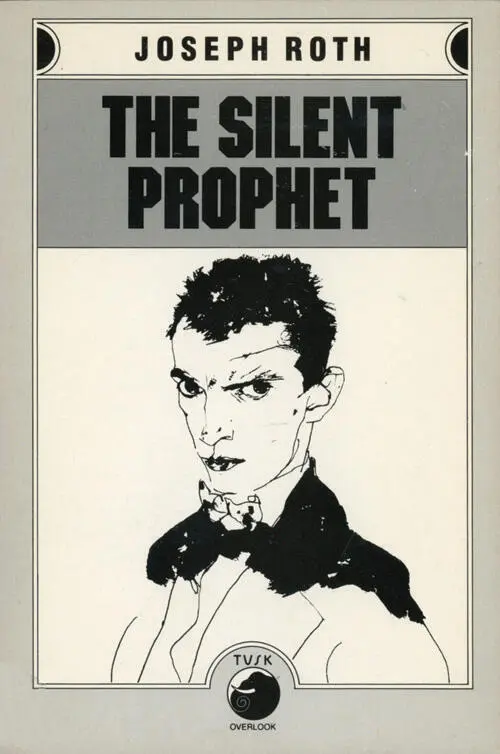
- Название:The Silent Prophet
- Автор:
- Издательство:The Overlook Press
- Жанр:
- Год:2003
- ISBN:нет данных
- Рейтинг книги:3 / 5. Голосов: 1
-
Избранное:Добавить в избранное
- Отзывы:
-
Ваша оценка:
The Silent Prophet: краткое содержание, описание и аннотация
Предлагаем к чтению аннотацию, описание, краткое содержание или предисловие (зависит от того, что написал сам автор книги «The Silent Prophet»). Если вы не нашли необходимую информацию о книге — напишите в комментариях, мы постараемся отыскать её.
The Silent Prophet — читать онлайн бесплатно полную книгу (весь текст) целиком
Ниже представлен текст книги, разбитый по страницам. Система сохранения места последней прочитанной страницы, позволяет с удобством читать онлайн бесплатно книгу «The Silent Prophet», без необходимости каждый раз заново искать на чём Вы остановились. Поставьте закладку, и сможете в любой момент перейти на страницу, на которой закончили чтение.
Интервал:
Закладка:
Jubilation arose. ‘Long live the Revolution!’ cried the crowd. And Berzejev whispered shyly: ‘You are a demagogue.’
‘I believe every word I say,’ retorted Friedrich.
As soon as they marched into a captured place, he had the arrested bourgeois brought before him. They stood in a line, he studied their faces. A quiet illusion took possession of him. He found resemblances between these strangers and the faces of bourgeois acquaintances. He hated the whole class, as one hates a particular kind of animal. One looked like the writer he had met at Hilde’s, another like Dr Süsskind, who tended to turn up over and over again, a third like the Prussian colonel, a fourth like the Social Democrat party leader. He let them all go again. Once there fell into his hands a harmless bank director whose face seemed familiar. But he could not remember exactly. ‘What’s your name?’ he asked. ‘Kargan,’ whispered the man. ‘Are you a brother of the Trieste Kargan?’ ‘A cousin!’ ‘When you write to him,’ said Friedrich, ‘give him my regards.’ The man feared a trap. ‘I never write to him,’ he said. ‘How large is your fortune?’ asked Friedrich. ‘All lost!’ stammered the man. ‘I had a flourishing business,’ he went on. ‘Fifty employees in the bank! And a small factory!’ ‘In feudal times,’ said Friedrich to Berzejev, ‘a man who ruled over fifty employees was a man. That one there’s a slug, the cousin of my mother’s uncle.’ He noted how the large tears ran down the director’s cheeks.
Once, in the street, he encountered a man who still retained a few remnants of a former elegance. Friedrich stopped. ‘Come on, let him go!’ said Berzejev. ‘I can’t,’ said Friedrich, ‘I must recall whom he looks like.’ The man began to run. They pursued him, held him fast. Friedrich scrutinized him closely. ‘Now I know!’ he exclaimed, and turned the stranger loose. ‘He looks like the operetta composer, L. Do you recall the photograph in the illustrated magazines? He has the same waltzing expression.’ And satisfied, he began to sing: ‘There are things one must forget, they are too beautiful to be true. …’
Of course, he did not know that he himself was gradually beginning to become a feature of the illustrated and non-illustrated newspapers of the bourgeois world, the greater part of which was not nearly annihilated. He did not know that the correspondents of ten great powers telegraphed his name whenever they had nothing else to report and that he was seized on by the mighty machinery of public opinion, that mechanism which manufactures sensations, the raw material of world history. He read no newspapers. He did not know that every third day he featured in the series of men who formed a constant column in the press under the title ‘The bloody executioners’, alongside the columns about boxers, composers of operettas, long-distance runners, child prodigies and aviators. He underrated — like all the more judicious of his comrades — the mysterious technique of the defence mechanism of society, which lay in making the extraordinary ordinary by exaggeration or by going into detail, and by letting it be established through a thousand ‘well-informed sources’ that the riddles of history consisted of real events. He did not know that this world had grown too old for ecstasy, and that technique could master the material of legend to transform eternal verities into current affairs. He forgot that there were gramophones to reproduce the thunders of history, and that the cinema could recall blood-baths as well as horse-races.
He was naïve, for he was a revolutionary.
2
Thanks to the extraordinary length of time the war had taken to run its course, many letters had stayed so long in the post that they did not reach their destination for years. The letter that Friedrich had written to Hilde in the winter of 1915 was received by her in the spring of 1919, at a time when she had long ceased to be Fräulein Hilde von Maerker and was now the wife of Herr Leopold Derschatta, or von Derschatta, which he was no longer entitled to call himself after the Austrian revolution. Nevertheless, he was called Herr Generaldirektor since no one is willingly deprived of his rank in the Middle European countries, and since one feels just as respected for the title that may be spoken by others as for that which one bears oneself.
Herr von Derschatta had in fact been a Director General during the last two years of the war, having been sent back from the field as a lieutenant in the reserve, with a minor gunshot wound of the elbow which he had quite unnecessarily exposed to the enemy above the parapet. His enemies — for a Director General always has enemies — maintained that he knew what he was doing. But let us pay no attention to his enemies! Their calumnies are unimportant. Even if we assume that the gunshot wound had been no accident, what help was a gunshot wound to anyone? How many did a gunshot wound save from returning to the field? No, Herr von Derschatta, who had become a railway station commandant like Hilde’s father at the outbreak of war, although he should not have remained behind the front at his age, and who only went into the field as the result of an oversight for which a major at the War Office later had to make amends — this Herr von Derschatta needed no gunshot wound. He had protection. His family, who came from Moravia, had produced government officials for generations, ministerial advisers, officers, and only one single Derschatta had shown talent and become an actor — and he bore another name. Connections with one of the oldest families in the land originated with great-grandfather Derschatta, who had been a simple steward of a count’s estates. What a piece of luck for the great-grandson! For the descendant of that count was now a powerful man in the government and whoever called himself his friend did not have to dread the war. When Herr von Derschatta left hospital with his arm finally healed, he had resolved not to visit the front again. He betook himself, his arm still in the black bandage for appearance’s sake, to the office where his friend ruled. He strode without stopping — as if he represented his own fate — though long, empty and echoing passages and other narrow corridors in which whole swarms of civilian rabble waited for passports, permits and identification papers, he saluted lackadaisically whenever an usher jumped to his feet who — thanks to a vocational capacity for presentiment — immediately divined that here there wandered a lieutenant with connections, and, after some enquiries, reached his friend’s door. He remained in friendly conversation for exactly ten minutes: ‘Excellency,’ he said, ‘may I be permitted. …’
‘I know already,’ Excellency replied, ‘I received the letter from Herr Papa. What’s new? What’s Fini up to?’
‘Your Excellency is very kind,’ said Herr von Derschatta.
‘As always, as always!’ opined His Excellency. ‘A splendid young woman!’
And as the lieutenant rose, the Count, as if by chance, as if he were thinking aloud about something that had nothing at all to do with his guest, let fall the words: ‘All settled tomorrow.’
Thereby the Count meant nothing other than the Potato Board, whose task it was to check free enterprise in potatoes and to prevent profiteering. The Potato Board at that time was still run by an expert, one of the richest farmers, who, despite his fitness for service in the field, had already been thrice designated as indispensable and who, unluckily for him, had not looked up his protector in the Food Ministry for six months. Out of sight, out of mind! When the military had recently claimed the greengrocer, he was — to the surprise even of the military — no longer regarded as indispensable. It was Herr von Derschatta who had become indispensable instead. And with the manifest reason that in such serious times a Potato Board must be subordinate to the War Minister no less than to the Minister for Food, the lieutenant, as a member of the Army, was allocated to establish a lasting liaison between the War Minister and the fruit of the earth.
Читать дальшеИнтервал:
Закладка:
Похожие книги на «The Silent Prophet»
Представляем Вашему вниманию похожие книги на «The Silent Prophet» списком для выбора. Мы отобрали схожую по названию и смыслу литературу в надежде предоставить читателям больше вариантов отыскать новые, интересные, ещё непрочитанные произведения.


Обсуждение, отзывы о книге «The Silent Prophet» и просто собственные мнения читателей. Оставьте ваши комментарии, напишите, что Вы думаете о произведении, его смысле или главных героях. Укажите что конкретно понравилось, а что нет, и почему Вы так считаете.