Charles Dickens - The Pickwick Papers
Здесь есть возможность читать онлайн «Charles Dickens - The Pickwick Papers» весь текст электронной книги совершенно бесплатно (целиком полную версию без сокращений). В некоторых случаях можно слушать аудио, скачать через торрент в формате fb2 и присутствует краткое содержание. Жанр: Классическая проза, Юмористическая проза, на английском языке. Описание произведения, (предисловие) а так же отзывы посетителей доступны на портале библиотеки ЛибКат.
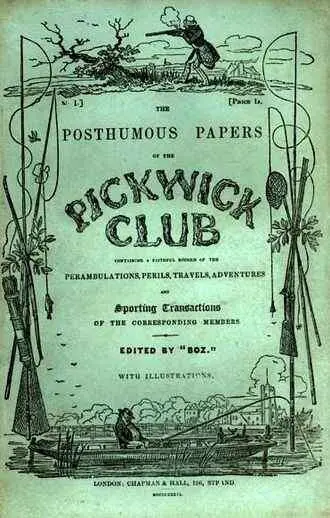
- Название:The Pickwick Papers
- Автор:
- Жанр:
- Год:неизвестен
- ISBN:нет данных
- Рейтинг книги:4 / 5. Голосов: 1
-
Избранное:Добавить в избранное
- Отзывы:
-
Ваша оценка:
The Pickwick Papers: краткое содержание, описание и аннотация
Предлагаем к чтению аннотацию, описание, краткое содержание или предисловие (зависит от того, что написал сам автор книги «The Pickwick Papers»). Если вы не нашли необходимую информацию о книге — напишите в комментариях, мы постараемся отыскать её.
Mr Samuel Pickwick is the founder and chairman of the absurd Pickwick Club which consists of Tupman, Snodgrass and Winkle who go through various amusing and often quite ridiculous adventures that are scantily interconnected and never amount to a complex sequence of events until perhaps Pickwick’s disastrous misunderstanding with Mrs Bardell.
The Pickwick Papers — читать онлайн бесплатно полную книгу (весь текст) целиком
Ниже представлен текст книги, разбитый по страницам. Система сохранения места последней прочитанной страницы, позволяет с удобством читать онлайн бесплатно книгу «The Pickwick Papers», без необходимости каждый раз заново искать на чём Вы остановились. Поставьте закладку, и сможете в любой момент перейти на страницу, на которой закончили чтение.
Интервал:
Закладка:
When the man had shut the green gate after him, he walked, as we have said twice already, with a brisk pace up the courtyard; but he no sooner caught sight of Mr. Weller than he faltered, and stopped, as if uncertain, for the moment, what course to adopt. As the green gate was closed behind him, and there was no other outlet but the one in front, however, he was not long in perceiving that he must pass Mr. Samuel Weller to get away. He therefore resumed his brisk pace, and advanced, staring straight before him. The most extraordinary thing about the man was, that he was contorting his face into the most fearful and astonishing grimaces that ever were beheld. Nature’s handiwork never was disguised with such extraordinary artificial carving, as the man had overlaid his countenance with in one moment.
‘Well!’ said Mr. Weller to himself, as the man approached. ‘This is wery odd. I could ha’ swore it was him.’
Up came the man, and his face became more frightfully distorted than ever, as he drew nearer.
‘I could take my oath to that ‘ere black hair and mulberry suit,’ said Mr. Weller; ‘only I never see such a face as that afore.’
As Mr. Weller said this, the man’s features assumed an unearthly twinge, perfectly hideous. He was obliged to pass very near Sam, however, and the scrutinising glance of that gentleman enabled him to detect, under all these appalling twists of feature, something too like the small eyes of Mr. Job Trotter to be easily mistaken.
‘Hallo, you Sir!’ shouted Sam fiercely.
The stranger stopped.
‘Hallo!’ repeated Sam, still more gruffly.
The man with the horrible face looked, with the greatest surprise, up the court, and down the court, and in at the windows of the houses — everywhere but at Sam Weller — and took another step forward, when he was brought to again by another shout.
‘Hallo, you sir!’ said Sam, for the third time.
There was no pretending to mistake where the voice came from now, so the stranger, having no other resource, at last looked Sam Weller full in the face.
‘It won’t do, Job Trotter,’ said Sam. ‘Come! None o’ that ‘ere nonsense. You ain’t so wery ‘andsome that you can afford to throw avay many o’ your good looks. Bring them ‘ere eyes o’ yourn back into their proper places, or I’ll knock ’em out of your head. D’ye hear?’
As Mr. Weller appeared fully disposed to act up to the spirit of this address, Mr. Trotter gradually allowed his face to resume its natural expression; and then giving a start of joy, exclaimed, ‘What do I see? Mr. Walker!’
‘Ah,’ replied Sam. ‘You’re wery glad to see me, ain’t you?’
‘Glad!’ exclaimed Job Trotter; ‘oh, Mr. Walker, if you had but known how I have looked forward to this meeting! It is too much, Mr. Walker; I cannot bear it, indeed I cannot.’ And with these words, Mr. Trotter burst into a regular inundation of tears, and, flinging his arms around those of Mr. Weller, embraced him closely, in an ecstasy of joy.
‘Get off!’ cried Sam, indignant at this process, and vainly endeavouring to extricate himself from the grasp of his enthusiastic acquaintance. ‘Get off, I tell you. What are you crying over me for, you portable engine?’
‘Because I am so glad to see you,’ replied Job Trotter, gradually releasing Mr. Weller, as the first symptoms of his pugnacity disappeared. ‘Oh, Mr. Walker, this is too much.’
‘Too much!’ echoed Sam, ‘I think it is too much — rayther! Now, what have you got to say to me, eh?’
Mr. Trotter made no reply; for the little pink pocket–handkerchief was in full force.
‘What have you got to say to me, afore I knock your head off?’ repeated Mr. Weller, in a threatening manner.
‘Eh!’ said Mr. Trotter, with a look of virtuous surprise.
‘What have you got to say to me?’
‘I, Mr. Walker!’
‘Don’t call me Valker; my name’s Veller; you know that vell enough. What have you got to say to me?’
‘Bless you, Mr. Walker — Weller, I mean — a great many things, if you will come away somewhere, where we can talk comfortably. If you knew how I have looked for you, Mr. Weller—’
‘Wery hard, indeed, I s’pose?’ said Sam drily.
‘Very, very, Sir,’ replied Mr. Trotter, without moving a muscle of his face. ‘But shake hands, Mr. Weller.’
Sam eyed his companion for a few seconds, and then, as if actuated by a sudden impulse, complied with his request. ‘How,’ said Job Trotter, as they walked away, ‘how is your dear, good master? Oh, he is a worthy gentleman, Mr. Weller! I hope he didn’t catch cold, that dreadful night, Sir.’
There was a momentary look of deep slyness in Job Trotter’s eye, as he said this, which ran a thrill through Mr. Weller’s clenched fist, as he burned with a desire to make a demonstration on his ribs. Sam constrained himself, however, and replied that his master was extremely well.
‘Oh, I am so glad,’ replied Mr. Trotter; ‘is he here?’
‘Is yourn?’ asked Sam, by way of reply.
‘Oh, yes, he is here, and I grieve to say, Mr. Weller, he is going on worse than ever.’
‘Ah, ah!’ said Sam.
‘Oh, shocking — terrible!’
‘At a boarding–school?’ said Sam.
‘No, not at a boarding–school,’ replied Job Trotter, with the same sly look which Sam had noticed before; ‘not at a boarding–school.’
‘At the house with the green gate?’ said Sam, eyeing his companion closely.
‘No, no — oh, not there,’ replied Job, with a quickness very unusual to him, ‘not there.’
‘What was you a–doin’ there?’ asked Sam, with a sharp glance. ‘Got inside the gate by accident, perhaps?’
‘Why, Mr. Weller,’ replied Job, ‘I don’t mind telling you my little secrets, because, you know, we took such a fancy for each other when we first met. You recollect how pleasant we were that morning?’
‘Oh, yes,’ said Sam, impatiently. ‘I remember. Well?’
‘Well,’ replied Job, speaking with great precision, and in the low tone of a man who communicates an important secret; ‘in that house with the green gate, Mr. Weller, they keep a good many servants.’
‘So I should think, from the look on it,’ interposed Sam.
‘Yes,’ continued Mr. Trotter, ‘and one of them is a cook, who has saved up a little money, Mr. Weller, and is desirous, if she can establish herself in life, to open a little shop in the chandlery way, you see.’
‘Yes.’
‘Yes, Mr. Weller. Well, Sir, I met her at a chapel that I go to; a very neat little chapel in this town, Mr. Weller, where they sing the number four collection of hymns, which I generally carry about with me, in a little book, which you may perhaps have seen in my hand — and I got a little intimate with her, Mr. Weller, and from that, an acquaintance sprung up between us, and I may venture to say, Mr. Weller, that I am to be the chandler.’
‘Ah, and a wery amiable chandler you’ll make,’ replied Sam, eyeing Job with a side look of intense dislike.
‘The great advantage of this, Mr. Weller,’ continued Job, his eyes filling with tears as he spoke, ‘will be, that I shall be able to leave my present disgraceful service with that bad man, and to devote myself to a better and more virtuous life; more like the way in which I was brought up, Mr. Weller.’
‘You must ha’ been wery nicely brought up,’ said Sam.
‘Oh, very, Mr. Weller, very,’ replied Job. At the recollection of the purity of his youthful days, Mr. Trotter pulled forth the pink handkerchief, and wept copiously.
‘You must ha’ been an uncommon nice boy, to go to school vith,’ said Sam.
‘I was, sir,’ replied Job, heaving a deep sigh; ‘I was the idol of the place.’
Читать дальшеИнтервал:
Закладка:
Похожие книги на «The Pickwick Papers»
Представляем Вашему вниманию похожие книги на «The Pickwick Papers» списком для выбора. Мы отобрали схожую по названию и смыслу литературу в надежде предоставить читателям больше вариантов отыскать новые, интересные, ещё непрочитанные произведения.








Обсуждение, отзывы о книге «The Pickwick Papers» и просто собственные мнения читателей. Оставьте ваши комментарии, напишите, что Вы думаете о произведении, его смысле или главных героях. Укажите что конкретно понравилось, а что нет, и почему Вы так считаете.