Charles Dickens - The Pickwick Papers
Здесь есть возможность читать онлайн «Charles Dickens - The Pickwick Papers» весь текст электронной книги совершенно бесплатно (целиком полную версию без сокращений). В некоторых случаях можно слушать аудио, скачать через торрент в формате fb2 и присутствует краткое содержание. Жанр: Классическая проза, Юмористическая проза, на английском языке. Описание произведения, (предисловие) а так же отзывы посетителей доступны на портале библиотеки ЛибКат.
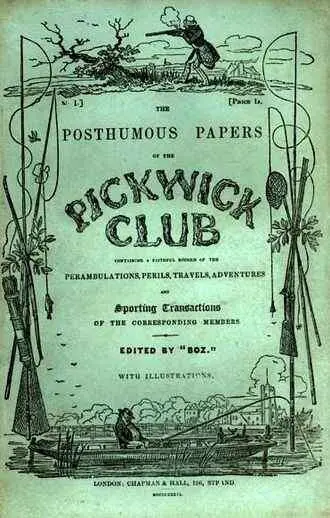
- Название:The Pickwick Papers
- Автор:
- Жанр:
- Год:неизвестен
- ISBN:нет данных
- Рейтинг книги:4 / 5. Голосов: 1
-
Избранное:Добавить в избранное
- Отзывы:
-
Ваша оценка:
The Pickwick Papers: краткое содержание, описание и аннотация
Предлагаем к чтению аннотацию, описание, краткое содержание или предисловие (зависит от того, что написал сам автор книги «The Pickwick Papers»). Если вы не нашли необходимую информацию о книге — напишите в комментариях, мы постараемся отыскать её.
Mr Samuel Pickwick is the founder and chairman of the absurd Pickwick Club which consists of Tupman, Snodgrass and Winkle who go through various amusing and often quite ridiculous adventures that are scantily interconnected and never amount to a complex sequence of events until perhaps Pickwick’s disastrous misunderstanding with Mrs Bardell.
The Pickwick Papers — читать онлайн бесплатно полную книгу (весь текст) целиком
Ниже представлен текст книги, разбитый по страницам. Система сохранения места последней прочитанной страницы, позволяет с удобством читать онлайн бесплатно книгу «The Pickwick Papers», без необходимости каждый раз заново искать на чём Вы остановились. Поставьте закладку, и сможете в любой момент перейти на страницу, на которой закончили чтение.
Интервал:
Закладка:
‘It is a very noble ambition,’ said Mr. Pickwick.
‘When I inform Mrs. Leo Hunter, that that remark fell from your lips, sir, she will indeed be proud,’ said the grave man. ‘You have a gentleman in your train, who has produced some beautiful little poems, I think, sir.’
‘My friend Mr. Snodgrass has a great taste for poetry,’ replied Mr. Pickwick.
‘So has Mrs. Leo Hunter, Sir. She dotes on poetry, sir. She adores it; I may say that her whole soul and mind are wound up, and entwined with it. She has produced some delightful pieces, herself, sir. You may have met with her “Ode to an Expiring Frog,” sir.’
‘I don’t think I have,’ said Mr. Pickwick.
‘You astonish me, Sir,’ said Mr. Leo Hunter. ‘It created an immense sensation. It was signed with an “L” and eight stars, and appeared originally in a lady’s magazine. It commenced—
‘“Can I view thee panting, lying.
On thy stomach, without sighing;
Can I unmoved see thee dying
On a log
Expiring frog!”’
‘Beautiful!’ said Mr. Pickwick.
‘Fine,’ said Mr. Leo Hunter; ‘so simple.’
‘Very,’ said Mr. Pickwick.
‘The next verse is still more touching. Shall I repeat it?’
‘If you please,’ said Mr. Pickwick.
‘It runs thus,’ said the grave man, still more gravely.
‘“Say, have fiends in shape of boys,
With wild halloo, and brutal noise,
Hunted thee from marshy joys,
With a dog,
Expiring frog!”’
‘Finely expressed,’ said Mr. Pickwick. ‘All point, Sir,’ said Mr. Leo Hunter; ‘but you shall hear Mrs. Leo Hunter repeat it. She can do justice to it, Sir. She will repeat it, in character, Sir, to–morrow morning.’
‘In character!’
‘As Minerva. But I forgot — it’s a fancy–dress dejeune.’
‘Dear me,’ said Mr. Pickwick, glancing at his own figure — ‘I can’t possibly—’
‘Can’t, sir; can’t!’ exclaimed Mr. Leo Hunter. ‘Solomon Lucas, the Jew in the High Street, has thousands of fancy–dresses. Consider, Sir, how many appropriate characters are open for your selection. Plato, Zeno, Epicurus, Pythagoras — all founders of clubs.’
‘I know that,’ said Mr. Pickwick; ‘but as I cannot put myself in competition with those great men, I cannot presume to wear their dresses.’
The grave man considered deeply, for a few seconds, and then said—
‘On reflection, Sir, I don’t know whether it would not afford Mrs. Leo Hunter greater pleasure, if her guests saw a gentleman of your celebrity in his own costume, rather than in an assumed one. I may venture to promise an exception in your case, sir — yes, I am quite certain that, on behalf of Mrs. Leo Hunter, I may venture to do so.’
‘In that case,’ said Mr. Pickwick, ‘I shall have great pleasure in coming.’
‘But I waste your time, Sir,’ said the grave man, as if suddenly recollecting himself. ‘I know its value, sir. I will not detain you. I may tell Mrs. Leo Hunter, then, that she may confidently expect you and your distinguished friends? Good–morning, Sir, I am proud to have beheld so eminent a personage — not a step sir; not a word.’ And without giving Mr. Pickwick time to offer remonstrance or denial, Mr. Leo Hunter stalked gravely away.
Mr. Pickwick took up his hat, and repaired to the Peacock, but Mr. Winkle had conveyed the intelligence of the fancy–ball there, before him.
‘Mrs. Pott’s going,’ were the first words with which he saluted his leader.
‘Is she?’ said Mr. Pickwick.
‘As Apollo,’ replied Winkle. ‘Only Pott objects to the tunic.’
‘He is right. He is quite right,’ said Mr. Pickwick emphatically.
‘Yes; so she’s going to wear a white satin gown with gold spangles.’
‘They’ll hardly know what she’s meant for; will they?’ inquired Mr. Snodgrass.
‘Of course they will,’ replied Mr. Winkle indignantly. ‘They’ll see her lyre, won’t they?’
‘True; I forgot that,’ said Mr. Snodgrass.
‘I shall go as a bandit,’ interposed Mr. Tupman.
‘What!’ said Mr. Pickwick, with a sudden start.
‘As a bandit,’ repeated Mr. Tupman, mildly.
‘You don’t mean to say,’ said Mr. Pickwick, gazing with solemn sternness at his friend — ‘you don’t mean to say, Mr. Tupman, that it is your intention to put yourself into a green velvet jacket, with a two–inch tail?’
‘Such is my intention, Sir,’ replied Mr. Tupman warmly. ‘And why not, sir?’
‘Because, Sir,’ said Mr. Pickwick, considerably excited — ‘because you are too old, Sir.’
‘Too old!’ exclaimed Mr. Tupman.
‘And if any further ground of objection be wanting,’ continued Mr. Pickwick, ‘you are too fat, sir.’
‘Sir,’ said Mr. Tupman, his face suffused with a crimson glow, ‘this is an insult.’
‘Sir,’ replied Mr. Pickwick, in the same tone, ‘it is not half the insult to you, that your appearance in my presence in a green velvet jacket, with a two–inch tail, would be to me.’
‘Sir,’ said Mr. Tupman, ‘you’re a fellow.’
‘Sir,’ said Mr. Pickwick, ‘you’re another!’
Mr. Tupman advanced a step or two, and glared at Mr. Pickwick. Mr. Pickwick returned the glare, concentrated into a focus by means of his spectacles, and breathed a bold defiance. Mr. Snodgrass and Mr. Winkle looked on, petrified at beholding such a scene between two such men.
‘Sir,’ said Mr. Tupman, after a short pause, speaking in a low, deep voice, ‘you have called me old.’
‘I have,’ said Mr. Pickwick.
‘And fat.’
‘I reiterate the charge.’
‘And a fellow.’
‘So you are!’
There was a fearful pause.
‘My attachment to your person, sir,’ said Mr. Tupman, speaking in a voice tremulous with emotion, and tucking up his wristbands meanwhile, ‘is great — very great — but upon that person, I must take summary vengeance.’
‘Come on, Sir!’ replied Mr. Pickwick. Stimulated by the exciting nature of the dialogue, the heroic man actually threw himself into a paralytic attitude, confidently supposed by the two bystanders to have been intended as a posture of defence.
‘What!’ exclaimed Mr. Snodgrass, suddenly recovering the power of speech, of which intense astonishment had previously bereft him, and rushing between the two, at the imminent hazard of receiving an application on the temple from each — ‘what! Mr. Pickwick, with the eyes of the world upon you! Mr. Tupman! who, in common with us all, derives a lustre from his undying name! For shame, gentlemen; for shame.’
The unwonted lines which momentary passion had ruled in Mr. Pickwick’s clear and open brow, gradually melted away, as his young friend spoke, like the marks of a black–lead pencil beneath the softening influence of india–rubber. His countenance had resumed its usual benign expression, ere he concluded.
‘I have been hasty,’ said Mr. Pickwick, ‘very hasty. Tupman; your hand.’
The dark shadow passed from Mr. Tupman’s face, as he warmly grasped the hand of his friend.
‘I have been hasty, too,’ said he.
‘No, no,’ interrupted Mr. Pickwick, ‘the fault was mine. You will wear the green velvet jacket?’
‘No, no,’ replied Mr. Tupman.
‘To oblige me, you will,’ resumed Mr. Pickwick.
‘Well, well, I will,’ said Mr. Tupman.
It was accordingly settled that Mr. Tupman, Mr. Winkle, and Mr. Snodgrass, should all wear fancy–dresses. Thus Mr. Pickwick was led by the very warmth of his own good feelings to give his consent to a proceeding from which his better judgment would have recoiled — a more striking illustration of his amiable character could hardly have been conceived, even if the events recorded in these pages had been wholly imaginary.
Читать дальшеИнтервал:
Закладка:
Похожие книги на «The Pickwick Papers»
Представляем Вашему вниманию похожие книги на «The Pickwick Papers» списком для выбора. Мы отобрали схожую по названию и смыслу литературу в надежде предоставить читателям больше вариантов отыскать новые, интересные, ещё непрочитанные произведения.


Обсуждение, отзывы о книге «The Pickwick Papers» и просто собственные мнения читателей. Оставьте ваши комментарии, напишите, что Вы думаете о произведении, его смысле или главных героях. Укажите что конкретно понравилось, а что нет, и почему Вы так считаете.