Charles Dickens - The Pickwick Papers
Здесь есть возможность читать онлайн «Charles Dickens - The Pickwick Papers» весь текст электронной книги совершенно бесплатно (целиком полную версию без сокращений). В некоторых случаях можно слушать аудио, скачать через торрент в формате fb2 и присутствует краткое содержание. Жанр: Классическая проза, Юмористическая проза, на английском языке. Описание произведения, (предисловие) а так же отзывы посетителей доступны на портале библиотеки ЛибКат.
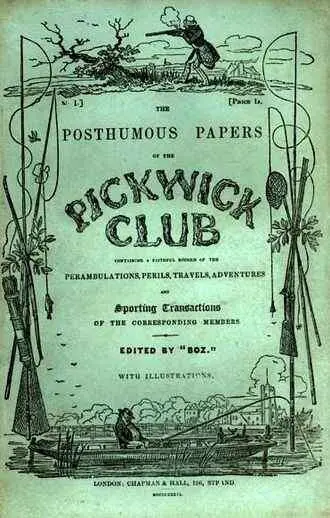
- Название:The Pickwick Papers
- Автор:
- Жанр:
- Год:неизвестен
- ISBN:нет данных
- Рейтинг книги:4 / 5. Голосов: 1
-
Избранное:Добавить в избранное
- Отзывы:
-
Ваша оценка:
The Pickwick Papers: краткое содержание, описание и аннотация
Предлагаем к чтению аннотацию, описание, краткое содержание или предисловие (зависит от того, что написал сам автор книги «The Pickwick Papers»). Если вы не нашли необходимую информацию о книге — напишите в комментариях, мы постараемся отыскать её.
Mr Samuel Pickwick is the founder and chairman of the absurd Pickwick Club which consists of Tupman, Snodgrass and Winkle who go through various amusing and often quite ridiculous adventures that are scantily interconnected and never amount to a complex sequence of events until perhaps Pickwick’s disastrous misunderstanding with Mrs Bardell.
The Pickwick Papers — читать онлайн бесплатно полную книгу (весь текст) целиком
Ниже представлен текст книги, разбитый по страницам. Система сохранения места последней прочитанной страницы, позволяет с удобством читать онлайн бесплатно книгу «The Pickwick Papers», без необходимости каждый раз заново искать на чём Вы остановились. Поставьте закладку, и сможете в любой момент перейти на страницу, на которой закончили чтение.
Интервал:
Закладка:
‘“Jinkins, to wit,” said Tom.
‘“Lor, sir!” exclaimed the widow.
‘“Oh, don’t tell me,” said Tom, “I know him.”
‘“I am sure nobody who knows him, knows anything bad of him,” said the widow, bridling up at the mysterious air with which Tom had spoken.
‘“Hem!” said Tom Smart.
‘The widow began to think it was high time to cry, so she took out her handkerchief, and inquired whether Tom wished to insult her, whether he thought it like a gentleman to take away the character of another gentleman behind his back, why, if he had got anything to say, he didn’t say it to the man, like a man, instead of terrifying a poor weak woman in that way; and so forth.
‘“I’ll say it to him fast enough,” said Tom, “only I want you to hear it first.”
‘“What is it?” inquired the widow, looking intently in Tom’s countenance.
‘“I’ll astonish you,” said Tom, putting his hand in his pocket.
‘“If it is, that he wants money,” said the widow, “I know that already, and you needn’t trouble yourself.” ‘“Pooh, nonsense, that’s nothing,” said Tom Smart, “I want money. ‘Tain’t that.”
‘“Oh, dear, what can it be?” exclaimed the poor widow.
‘“Don’t be frightened,” said Tom Smart. He slowly drew forth the letter, and unfolded it. “You won’t scream?” said Tom doubtfully.
‘“No, no,” replied the widow; “let me see it.”
‘“You won’t go fainting away, or any of that nonsense?” said Tom.
‘“No, no,” returned the widow hastily.
‘“And don’t run out, and blow him up,” said Tom; “because I’ll do all that for you. You had better not exert yourself.”
‘“Well, well,” said the widow, “let me see it.”
‘“I will,” replied Tom Smart; and, with these words, he placed the letter in the widow’s hand.
‘Gentlemen, I have heard my uncle say, that Tom Smart said the widow’s lamentations when she heard the disclosure would have pierced a heart of stone. Tom was certainly very tender–hearted, but they pierced his, to the very core. The widow rocked herself to and fro, and wrung her hands.
‘“Oh, the deception and villainy of the man!” said the widow.
‘“Frightful, my dear ma’am; but compose yourself,” said Tom Smart.
‘“Oh, I can’t compose myself,” shrieked the widow. “I shall never find anyone else I can love so much!”
‘“Oh, yes you will, my dear soul,” said Tom Smart, letting fall a shower of the largest–sized tears, in pity for the widow’s misfortunes. Tom Smart, in the energy of his compassion, had put his arm round the widow’s waist; and the widow, in a passion of grief, had clasped Tom’s hand. She looked up in Tom’s face, and smiled through her tears. Tom looked down in hers, and smiled through his.
‘I never could find out, gentlemen, whether Tom did or did not kiss the widow at that particular moment. He used to tell my uncle he didn’t, but I have my doubts about it. Between ourselves, gentlemen, I rather think he did.
‘At all events, Tom kicked the very tall man out at the front door half an hour later, and married the widow a month after. And he used to drive about the country, with the clay–coloured gig with the red wheels, and the vixenish mare with the fast pace, till he gave up business many years afterwards, and went to France with his wife; and then the old house was pulled down.’
‘Will you allow me to ask you,’ said the inquisitive old gentleman, ‘what became of the chair?’
‘Why,’ replied the one–eyed bagman, ‘it was observed to creak very much on the day of the wedding; but Tom Smart couldn’t say for certain whether it was with pleasure or bodily infirmity. He rather thought it was the latter, though, for it never spoke afterwards.’
‘Everybody believed the story, didn’t they?’ said the dirty–faced man, refilling his pipe.
‘Except Tom’s enemies,’ replied the bagman. ‘Some of ’em said Tom invented it altogether; and others said he was drunk and fancied it, and got hold of the wrong trousers by mistake before he went to bed. But nobody ever minded what they said.’
‘Tom Smart said it was all true?’
‘Every word.’
‘And your uncle?’
‘Every letter.’
‘They must have been very nice men, both of ’em,’ said the dirty–faced man.
‘Yes, they were,’ replied the bagman; ‘very nice men indeed!’
Chapter 15
In which is given a faithful Portraiture of two distinguished Persons; and an accurate Description of a public Breakfast in their House and Grounds: which public Breakfast leads to the Recognition of an old Acquaintance, and the Commencement of anoth
Mr. Pickwick’s conscience had been somewhat reproaching him for his recent neglect of his friends at the Peacock; and he was just on the point of walking forth in quest of them, on the third morning after the election had terminated, when his faithful valet put into his hand a card, on which was engraved the following inscription:—
Mrs. Leo Hunter
The Den. Eatanswill.
‘Person’s a–waitin’,’ said Sam, epigrammatically.
‘Does the person want me, Sam?’ inquired Mr. Pickwick.
‘He wants you partickler; and no one else ‘ll do, as the devil’s private secretary said ven he fetched avay Doctor Faustus,’ replied Mr. Weller.
‘ He. Is it a gentleman?’ said Mr. Pickwick.
‘A wery good imitation o’ one, if it ain’t,’ replied Mr. Weller.
‘But this is a lady’s card,’ said Mr. Pickwick.
‘Given me by a gen’l’m’n, howsoever,’ replied Sam, ‘and he’s a–waitin’ in the drawing–room — said he’d rather wait all day, than not see you.’
Mr. Pickwick, on hearing this determination, descended to the drawing–room, where sat a grave man, who started up on his entrance, and said, with an air of profound respect:—
‘Mr. Pickwick, I presume?’
‘The same.’
‘Allow me, Sir, the honour of grasping your hand. Permit me, Sir, to shake it,’ said the grave man.
‘Certainly,’ said Mr. Pickwick. The stranger shook the extended hand, and then continued—
‘We have heard of your fame, sir. The noise of your antiquarian discussion has reached the ears of Mrs. Leo Hunter — my wife, sir; I am Mr. Leo Hunter’ — the stranger paused, as if he expected that Mr. Pickwick would be overcome by the disclosure; but seeing that he remained perfectly calm, proceeded—
‘My wife, sir — Mrs. Leo Hunter — is proud to number among her acquaintance all those who have rendered themselves celebrated by their works and talents. Permit me, sir, to place in a conspicuous part of the list the name of Mr. Pickwick, and his brother–members of the club that derives its name from him.’
‘I shall be extremely happy to make the acquaintance of such a lady, sir,’ replied Mr. Pickwick.
‘You shall make it, sir,’ said the grave man. ‘To–morrow morning, sir, we give a public breakfast — a fête champêtre — to a great number of those who have rendered themselves celebrated by their works and talents. Permit Mrs. Leo Hunter, Sir, to have the gratification of seeing you at the Den.’
‘With great pleasure,’ replied Mr. Pickwick.
‘Mrs. Leo Hunter has many of these breakfasts, Sir,’ resumed the new acquaintance—’“feasts of reason,” sir, “and flows of soul,” as somebody who wrote a sonnet to Mrs. Leo Hunter on her breakfasts, feelingly and originally observed.’
‘Was he celebrated for his works and talents?’ inquired Mr. Pickwick.
‘He was Sir,’ replied the grave man, ‘all Mrs. Leo Hunter’s acquaintances are; it is her ambition, sir, to have no other acquaintance.’
Читать дальшеИнтервал:
Закладка:
Похожие книги на «The Pickwick Papers»
Представляем Вашему вниманию похожие книги на «The Pickwick Papers» списком для выбора. Мы отобрали схожую по названию и смыслу литературу в надежде предоставить читателям больше вариантов отыскать новые, интересные, ещё непрочитанные произведения.


Обсуждение, отзывы о книге «The Pickwick Papers» и просто собственные мнения читателей. Оставьте ваши комментарии, напишите, что Вы думаете о произведении, его смысле или главных героях. Укажите что конкретно понравилось, а что нет, и почему Вы так считаете.