Герман Мелвилл - Typee
Здесь есть возможность читать онлайн «Герман Мелвилл - Typee» весь текст электронной книги совершенно бесплатно (целиком полную версию без сокращений). В некоторых случаях можно слушать аудио, скачать через торрент в формате fb2 и присутствует краткое содержание. Год выпуска: 2014, Издательство: epubBooks Classics, Жанр: Классическая проза, на английском языке. Описание произведения, (предисловие) а так же отзывы посетителей доступны на портале библиотеки ЛибКат.
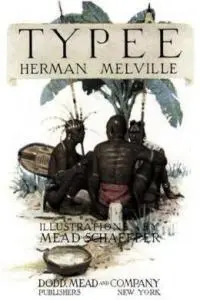
- Название:Typee
- Автор:
- Издательство:epubBooks Classics
- Жанр:
- Год:2014
- ISBN:нет данных
- Рейтинг книги:4 / 5. Голосов: 1
-
Избранное:Добавить в избранное
- Отзывы:
-
Ваша оценка:
Typee: краткое содержание, описание и аннотация
Предлагаем к чтению аннотацию, описание, краткое содержание или предисловие (зависит от того, что написал сам автор книги «Typee»). Если вы не нашли необходимую информацию о книге — напишите в комментариях, мы постараемся отыскать её.
Typee — читать онлайн бесплатно полную книгу (весь текст) целиком
Ниже представлен текст книги, разбитый по страницам. Система сохранения места последней прочитанной страницы, позволяет с удобством читать онлайн бесплатно книгу «Typee», без необходимости каждый раз заново искать на чём Вы остановились. Поставьте закладку, и сможете в любой момент перейти на страницу, на которой закончили чтение.
Интервал:
Закладка:
The old rover now began to reveal his true character, though he was hardly suspected at the time. “If I get you off to a ship,” said he, “you will surely give a poor fellow something for saving you.” In short, before they left the house, he made Toby promise that he would give him five Spanish dollars if he succeeded in getting any part of his wages advanced from the vessel, aboard of which they were going; Toby, moreover, engaging to reward him still farther, as soon as my deliverance was accomplished.
A little while after this they started again, accompanied by many of the natives, and going up the valley, took a steep path near its head, which led to Nukuheva. Here the Happars paused, and watched them as they ascended the mountain, one group of bandit–looking fellows shaking their spears and casting threatening glances at the poor Typee, whose heart as well as heels seemed much the lighter when he came to look down upon them.
On gaining the heights once more, their way led for a time along several ridges covered with enormous ferns. At last they entered upon a wooded tract, and here they overtook a party of Nukuheva natives, well armed, and carrying bundles of long poles. Jimmy seemed to know them all very well, and stopped for awhile, and had a talk about the “Wee–Wees,” as the people of Nukuheva call the Monsieurs.
The party with the poles were King Mowanna’s men, and by his orders they had been gathering them in the ravines for his allies, the French.
Leaving these fellows to trudge on with their loads, Toby and his companions now pushed forward again, as the sun was already low in the west. They came upon the valleys of Nukuheva on one side of the bay, where the highlands slope off into the sea. The men–of–war were still lying in the harbour, and as Toby looked down upon them, the strange events which had happened so recently seemed all a dream.
They soon descended towards the beach, and found themselves in Jimmy’s house before it was well dark. Here he received another welcome from his Nukuheva wives, and after some refreshments in the shape of cocoa–nut milk and poee–poee, they entered a canoe (the Typee, of course, going along) and paddled off to a whale–ship which was anchored near the shore. This was the vessel in want of men. Our own had sailed some time before. The captain professed great pleasure at seeing Toby, but thought from his exhausted appearance that he must be unfit for duty. However, he agreed to ship him, as well as his comrade as soon as he should arrive.
Toby begged hard for an armed boat, in which to go round to Typee and rescue me, notwithstanding the promise of Jimmy. But this the captain would not hear of, and told him to have patience, for the sailor would be faithful to his word. When, too, he demanded the five silver dollars for Jimmy, the captain was unwilling to give them. But Toby insisted upon it, as he now began to think that Jimmy might be a mere mercenary, who would be sure to prove faithless if not well paid. Accordingly he not only gave him the money, but took care to assure him, over and over again, that as soon as he brought me aboard he would receive a still larger sum.
Before sunrise the next day, Jimmy and the Typee started in two of the ship’s boats, which were manned by tabooed natives. Toby, of course, was all eagerness to go along, but the sailor told him that if he did, it would spoil all; so, hard as it was, he was obliged to remain.
Towards evening he was on the watch, and descried the boats turning the headland and entering the bay. He strained his eyes, and thought he saw me; but I was not there. Descending from the mast almost distracted, he grappled Jimmy as he struck the deck, shouting in a voice that startled him, “Where is Tommo?” The old fellow faltered, but soon recovering, did all he could to soothe him, assuring him that it had proved to be impossible to get me down to the shore that morning; assigning many plausible reasons, and adding that early on the morrow he was going to visit the bay again in a French boat, when, if he did not find me on the beach—as this time he certainly expected to—he would march right back into the valley, and carry me away at all hazards. He, however, again refused to allow Toby to accompany him.
Now, situated as Toby was, his sole dependence for the present was upon Jimmy, and therefore he was fain to comfort himself as well as he could with what the old sailor told him.
The next morning, however, he had the satisfaction of seeing the French boat start with Jimmy in it. To–night, then, I will see him, thought Toby; but many a long day passed before he ever saw Tommo again. Hardly was the boat out of sight, when the captain came forward and ordered the anchor weighed; he was going to sea.
Vain were all Toby’s ravings,—they were disregarded; and when he came to himself, the sails were set, and the ship fast leaving the land.
…“Oh! said he to me at our meeting, what sleepless nights were mine. Often I started from my hammock, dreaming you were before me, and upbraiding me for leaving you on the island.”
There is little more to be related. Toby left his vessel at New Zealand, and after some further adventures, arrived home in less than two years after leaving the Marquesas. He always thought of me as dead—and I had every reason to suppose that he, too, was no more; but a strange meeting was in store for us, which made Toby’s heart all the lighter.
Appendix
The author of this volume arrived at Tahiti the very day that the iniquitous designs of the French were consummated by inducing the subordinate chiefs, during the absence of their queen, to ratify an artfully–drawn treaty, by which she was virtually deposed. Both menaces and caresses were employed on this occasion, and the 32–pounders which peeped out of the port–holes of the frigate were the principal arguments adduced to quiet the scruples of the more conscientious islanders.
And yet this piratical seizure of Tahiti, with all the woe and desolation which resulted from it, created not half so great a sensation, at least in America, as was caused by the proceedings of the English at the Sandwich Islands. No transaction has ever been more grossly misrepresented than the events which occurred upon the arrival of Lord George Paulet at Oahu. During a residence of four months at Honolulu, the metropolis of the group, the author was in the confidence of an Englishman who was much employed by his lordship; and great was the author’s astonishment on his arrival at Boston, in the autumn of 1844, to read the distorted accounts and fabrications which had produced in the United States so violent an outbreak of indignation against the English. He deems it, therefore, a mere act of justice towards a gallant officer briefly to state the leading circumstances connected with the event in question.
It is needless to rehearse all the abuse that for some time previous to the spring of 1843 had been heaped upon the British residents, especially upon Captain Charlton, Her Britannic Majesty’s consul–general, by the native authorities of the Sandwich Islands. High in the favour of the imbecile king at this time was one Dr. Judd, a sanctimonious apothecary–adventurer, who, with other kindred and influential spirits, were animated by an inveterate dislike to England. The ascendancy of a junta of ignorant and designing Methodist elders in the councils of a half–civilised king, ruling with absolute sway over a nation just poised between barbarism and civilisation, and exposed by the peculiarities of its relations with foreign states to unusual difficulties, was not precisely calculated to impart a healthy tone to the policy of the government.
At last matters were brought to such an extremity, through the iniquitous maladministration of affairs, that the endurance of further insults and injuries on the part of the British consul was no longer to be borne. Captain Charlton, insultingly forbidden to leave the islands, clandestinely withdrew, and arriving at Valparaiso, conferred with Rear–Admiral Thomas, the English commander–in–chief on the Pacific station. In consequence of this communication, Lord George Paulet was despatched by the admiral in the Carysfort frigate, to inquire into and correct the alleged abuses. On arriving at his destination, he sent his first lieutenant ashore with a letter to the king, couched in terms of the utmost courtesy, and soliciting the honour of an audience. The messenger was denied access to His Majesty, and Paulet was coolly referred to Dr. Judd, and informed that the apothecary was invested with plenary powers to treat with him. Rejecting this insolent proposition, his lordship again addressed the king by letter, and renewed his previous request; but he encountered another repulse. Justly indignant at this treatment, he penned a third epistle, enumerating the grievances to be redressed, and demanding a compliance with his requisitions, under penalty of immediate hostilities.
Читать дальшеИнтервал:
Закладка:
Похожие книги на «Typee»
Представляем Вашему вниманию похожие книги на «Typee» списком для выбора. Мы отобрали схожую по названию и смыслу литературу в надежде предоставить читателям больше вариантов отыскать новые, интересные, ещё непрочитанные произведения.




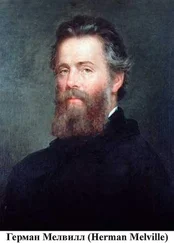


Обсуждение, отзывы о книге «Typee» и просто собственные мнения читателей. Оставьте ваши комментарии, напишите, что Вы думаете о произведении, его смысле или главных героях. Укажите что конкретно понравилось, а что нет, и почему Вы так считаете.