Теодор Драйзер - Jennie Gerhardt
Здесь есть возможность читать онлайн «Теодор Драйзер - Jennie Gerhardt» весь текст электронной книги совершенно бесплатно (целиком полную версию без сокращений). В некоторых случаях можно слушать аудио, скачать через торрент в формате fb2 и присутствует краткое содержание. Год выпуска: 2014, Издательство: epubBooks Classics, Жанр: Классическая проза, на английском языке. Описание произведения, (предисловие) а так же отзывы посетителей доступны на портале библиотеки ЛибКат.
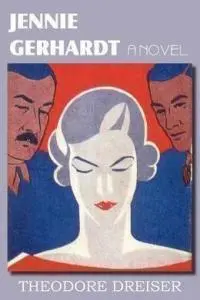
- Название:Jennie Gerhardt
- Автор:
- Издательство:epubBooks Classics
- Жанр:
- Год:2014
- ISBN:нет данных
- Рейтинг книги:5 / 5. Голосов: 1
-
Избранное:Добавить в избранное
- Отзывы:
-
Ваша оценка:
Jennie Gerhardt: краткое содержание, описание и аннотация
Предлагаем к чтению аннотацию, описание, краткое содержание или предисловие (зависит от того, что написал сам автор книги «Jennie Gerhardt»). Если вы не нашли необходимую информацию о книге — напишите в комментариях, мы постараемся отыскать её.
Jennie Gerhardt — читать онлайн бесплатно полную книгу (весь текст) целиком
Ниже представлен текст книги, разбитый по страницам. Система сохранения места последней прочитанной страницы, позволяет с удобством читать онлайн бесплатно книгу «Jennie Gerhardt», без необходимости каждый раз заново искать на чём Вы остановились. Поставьте закладку, и сможете в любой момент перейти на страницу, на которой закончили чтение.
Интервал:
Закладка:
By one of those curious coincidences of thought, Robert also had reached the conclusion that something should be done. He did not, for one moment, imagine that he could directly work upon Lester—he did not care to try—but he did think that some influence might be brought to bear on Jennie. She was probably amenable to reason. If Lester had not married her already, she must realize full well that he did not intend to do so. Suppose that some responsible third person were to approach her, and explain how things were, including, of course, the offer of an independent income? Might she not be willing to leave Lester, and end all this trouble? After all, Lester was his brother, and he ought not to lose his fortune. Robert had things very much in his own hands now, and could afford to be generous. He finally decided that Mr. O'Brien, of Knight, Keatley & O'Brien, would be the proper intermediary, for O'Brien was suave, good–natured, and well–meaning, even if he was a lawyer. He might explain to Jennie very delicately just how the family felt, and how much Lester stood to lose if he continued to maintain his connection with her. If Lester had married Jennie, O'Brien would find it out. A liberal provision would be made for her—say fifty or one hundred thousand, or even one hundred and fifty thousand dollars. He sent for Mr. O'Brien and gave him his instructions. As one of the executors of Archibald Kane's estate, it was really the lawyer's duty to look into the matter of Lester's ultimate decision.
Mr. O'Brien journeyed to Chicago. On reaching the city, he called up Lester, and found out to his satisfaction that he was out of town for the day. He went out to the house in Hyde Park, and sent in his card to Jennie. She came down–stairs in a few minutes quite unconscious of the import of his message; he greeted her most blandly.
"This is Mrs. Kane?" he asked, with an interlocutory jerk of his head.
"Yes," replied Jennie.
"I am, as you see by my card, Mr. O'Brien, of Knight, Keatley & O'Brien," he began. "We are the attorneys and executors of the late Mr. Kane, your—ah—Mr. Kane's father. You'll think it's rather curious, my coming to you, but under your husband's father's will there were certain conditions stipulated which affect you and Mr. Kane very materially. These provisions are so important that I think you ought to know about them—that is if Mr. Kane hasn't already told you. I—pardon me—but the peculiar nature of them makes me conclude that—possibly—he hasn't." He paused, a very question–mark of a man—every feature of his face an interrogation.
"I don't quite understand," said Jennie. "I don't know anything about the will. If there's anything that I ought to know, I suppose Mr. Kane will tell me. He hasn't told me anything as yet."
"Ah!" breathed Mr. O'Brien, highly gratified. "Just as I thought. Now, if you will allow me I'll go into the matter briefly. Then you can judge for yourself whether you wish to hear the full particulars. Won't you sit down?" They had both been standing. Jennie seated herself, and Mr. O'Brien pulled up a chair near to hers.
"Now to begin," he said. "I need not say to you, of course, that there was considerable opposition on the part of Mr. Kane's father, to this—ah—union between yourself and his son."
"I know—" Jennie started to say, but checked herself. She was puzzled, disturbed, and a little apprehensive.
"Before Mr. Kane senior died," he went on, "he indicated to your—ah—to Mr. Lester Kane, that he felt this way. In his will he made certain conditions governing the distribution of his property which made it rather hard for his son, your—ah—husband, to come into his rightful share. Ordinarily, he would have inherited one–fourth of the Kane Manufacturing Company, worth to–day in the neighborhood of a million dollars, perhaps more; also one–fourth of the other properties, which now aggregate something like five hundred thousand dollars. I believe Mr. Kane senior was really very anxious that his son should inherit this property. But owing to the conditions which your—ah—which Mr. Kane's father made, Mr. Lester Kane cannot possibly obtain his share, except by complying with a—with a—certain wish which his father had expressed."
Mr. O'Brien paused, his eyes moving back and forth side wise in their sockets. In spite of the natural prejudice of the situation, he was considerably impressed with Jennie's pleasing appearance. He could see quite plainly why Lester might cling to her in the face of all opposition. He continued to study her furtively as he sat there waiting for her to speak.
"And what was that wish?" she finally asked, her nerves becoming just a little tense under the strain of the silence.
"I am glad you were kind enough to ask me that," he went on. "The subject is a very difficult one for me to introduce—very difficult. I come as an emissary of the estate, I might say as one of the executors under the will of Mr. Kane's father. I know how keenly your—ah—how keenly Mr. Kane feels about it. I know how keenly you will probably feel about it. But it is one of those very difficult things which cannot be helped—which must be got over somehow. And while I hesitate very much to say so, I must tell you that Mr. Kane senior stipulated in his will that unless, unless"—again his eyes were moving sidewise to and fro—"he saw fit to separate from—ah—you" he paused to get breath—"he could not inherit this or any other sum or, at least, only a very minor income of ten thousand a year; and that only on condition that he should marry you." He paused again. "I should add," he went on, "that under the will he was given three years in which to indicate his intentions. That time is now drawing to a close."
He paused, half expecting some outburst of feeling from Jennie, but she only looked at him fixedly, her eyes clouded with surprise, distress, unhappiness. Now she understood. Lester was sacrificing his fortune for her. His recent commercial venture was an effort to rehabilitate himself, to put himself in an independent position. The recent periods of preoccupation, of subtle unrest, and of dissatisfaction over which she had grieved were now explained. He was unhappy, he was brooding over this prospective loss, and he had never told her. So his father had really disinherited him!
Mr. O'Brien sat before her, troubled himself. He was very sorry for her, now that he saw the expression of her face. Still the truth had to come out. She ought to know.
"I'm sorry," he said, when he saw that she was not going to make any immediate reply, "that I have been the bearer of such unfortunate news. It is a very painful situation that I find myself in at this moment, I assure you. I bear you no ill will personally—of course you understand that. The family really bears you no ill will now—I hope you believe that. As I told your—ah—as I told Mr. Kane, at the time the will was read, I considered it most unfair, but, of course, as a mere executive under it and counsel for his father, I could do nothing. I really think it best that you should know how things stand, in order that you may help your—your husband"—he paused, significantly—"if possible, to some solution. It seems a pity to me, as it does to the various other members of his family, that he should lose all this money."
Jennie had turned her head away and was staring at the floor. She faced him now steadily. "He mustn't lose it," she said; "it isn't fair that he should."
"I am most delighted to hear you say that, Mrs.—Mrs. Kane," he went on, using for the first time her improbable title as Lester's wife, without hesitation. "I may as well be very frank with you, and say that I feared you might take this information in quite another spirit. Of course you know to begin with that the Kane family is very clannish. Mrs. Kane, your—ah—your husband's mother, was a very proud and rather distant woman, and his sisters and brothers are rather set in their notions as to what constitute proper family connections. They look upon his relationship to you as irregular, and—pardon me if I appear to be a little cruel—as not generally satisfactory. As you know, there had been so much talk in the last few years that Mr. Kane senior did not believe that the situation could ever be nicely adjusted, so far as the family was concerned. He felt that his son had not gone about it right in the first place. One of the conditions of his will was that if your husband—pardon me—if his son did not accept the proposition in regard to separating from you and taking up his rightful share of the estate, then to inherit anything at all—the mere ten thousand a year I mentioned before—he must—ah—he must pardon me, I seem a little brutal, but not intentionally so—marry you."
Читать дальшеИнтервал:
Закладка:
Похожие книги на «Jennie Gerhardt»
Представляем Вашему вниманию похожие книги на «Jennie Gerhardt» списком для выбора. Мы отобрали схожую по названию и смыслу литературу в надежде предоставить читателям больше вариантов отыскать новые, интересные, ещё непрочитанные произведения.




Обсуждение, отзывы о книге «Jennie Gerhardt» и просто собственные мнения читателей. Оставьте ваши комментарии, напишите, что Вы думаете о произведении, его смысле или главных героях. Укажите что конкретно понравилось, а что нет, и почему Вы так считаете.