Arnold Bennett - The Old Wives' Tale
Здесь есть возможность читать онлайн «Arnold Bennett - The Old Wives' Tale» весь текст электронной книги совершенно бесплатно (целиком полную версию без сокращений). В некоторых случаях можно слушать аудио, скачать через торрент в формате fb2 и присутствует краткое содержание. Год выпуска: 2005, ISBN: 2005, Издательство: Kessinger Publishing, Жанр: Классическая проза, на английском языке. Описание произведения, (предисловие) а так же отзывы посетителей доступны на портале библиотеки ЛибКат.
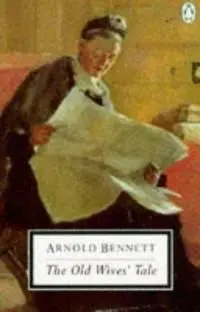
- Название:The Old Wives' Tale
- Автор:
- Издательство:Kessinger Publishing
- Жанр:
- Год:2005
- ISBN:9781417903672
- Рейтинг книги:5 / 5. Голосов: 1
-
Избранное:Добавить в избранное
- Отзывы:
-
Ваша оценка:
The Old Wives' Tale: краткое содержание, описание и аннотация
Предлагаем к чтению аннотацию, описание, краткое содержание или предисловие (зависит от того, что написал сам автор книги «The Old Wives' Tale»). Если вы не нашли необходимую информацию о книге — напишите в комментариях, мы постараемся отыскать её.
The Old Wives' Tale — читать онлайн бесплатно полную книгу (весь текст) целиком
Ниже представлен текст книги, разбитый по страницам. Система сохранения места последней прочитанной страницы, позволяет с удобством читать онлайн бесплатно книгу «The Old Wives' Tale», без необходимости каждый раз заново искать на чём Вы остановились. Поставьте закладку, и сможете в любой момент перейти на страницу, на которой закончили чтение.
Интервал:
Закладка:
Then there was Maggie Hollins. Constance could still vividly recall the self-consciousness with which she had one day received Maggie and the heir of the Hollinses; but it was a long time ago. After staggering half the town by the production of this infant (of which she nearly died) Maggie allowed the angels to waft it away to heaven, and everybody said that she ought to be very thankful--at her age. Old women dug up out of their minds forgotten histories of the eccentricities of the goddess Lucina. Mrs. Baines was most curiously interested; she talked freely to Constance, and Constance began to see what an incredible town Bursley had always been--and she never suspected it! Maggie was now mother of other children, and the draggled, lame mistress of a drunken home, and looked sixty. Despite her prophecy, her husband had conserved his 'habits.' The Poveys ate all the fish they could, and sometimes more than they enjoyed, because on his sober days Hollins invariably started his round at the shop, and Constance had to buy for Maggie's sake. The worst of the worthless husband was that he seldom failed to be cheery and polite. He never missed asking after the health of Mrs. Baines. And when Constance replied that her mother was 'pretty well considering,' but that she would not come over to Bursley again until the Axe railway was opened, as she could not stand the drive, he would shake his grey head and be sympathetically gloomy for an instant.
All these changes in six years! The almanacs were in the right of it.
But nothing had happened to her. Gradually she had obtained a sure ascendency over her mother, yet without seeking it, merely as the outcome of time's influences on her and on her mother respectively. Gradually she had gained skill and use in the management of her household and of her share of the shop, so that these machines ran smoothly and effectively and a sudden contretemps no longer frightened her. Gradually she had constructed a chart of Samuel's individuality, with the submerged rocks and perilous currents all carefully marked, so that she could now voyage unalarmed in those seas. But nothing happened. Unless their visits to Buxton could be called happenings! Decidedly the visit to Buxton was the one little hill that rose out of the level plain of the year. They had formed the annual habit of going to Buxton for ten days. They had a way of saying: "Yes, we always go to Buxton. We went there for our honeymoon, you know." They had become confirmed Buxtonites, with views concerning St. Anne's Terrace, the Broad Walk and Peel's Cavern. They could not dream of deserting their Buxton. It was the sole possible resort. Was it not the highest town in England? Well, then! They always stayed at the same lodgings, and grew to be special favourites of the landlady, who whispered of them to all her other guests as having come to her house for their honeymoon, and as never missing a year, and as being most respectable, superior people in quite a large way of business. Each year they walked out of Buxton station behind their luggage on a truck, full of joy and pride because they knew all the landmarks, and the lie of all the streets, and which were the best shops.
At the beginning, the notion of leaving the shop to hired custody had seemed almost fantastic, and the preparations for absence had been very complicated. Then it was that Miss Insull had detached herself from the other young lady assistants as a creature who could be absolutely trusted. Miss Insull was older than Constance; she had a bad complexion, and she was not clever, but she was one of your reliable ones. The six years had witnessed the slow, steady rise of Miss Insull. Her employers said 'Miss Insull' in a tone quite different from that in which they said 'Miss Hawkins,' or 'Miss Dadd.' 'Miss Insull' meant the end of a discussion. 'Better tell Miss Insull.' 'Miss Insull will see to that.' 'I shall ask Miss Insull.' Miss Insull slept in the house ten nights every year. Miss Insull had been called into consultation when it was decided to engage a fourth hand in the shape of an apprentice.
Trade had improved in the point of excellence. It was now admitted to be good--a rare honour for trade! The coal-mining boom was at its height, and colliers, in addition to getting drunk, were buying American organs and expensive bull-terriers. Often they would come to the shop to purchase cloth for coats for their dogs. And they would have good cloth. Mr. Povey did not like this. One day a butty chose for his dog the best cloth of Mr. Povey's shop-- at 12s. a yard. "Will ye make it up? I've gotten th' measurements," asked the collier. "No, I won't!" said Mr. Povey, hotly. "And what's more, I won't sell you the cloth either! Cloth at 12s. a yard on a dog's back indeed! I'll thank you to get out of my shop!" The incident became historic, in the Square. It finally established that Mr. Povey was a worthy son-in-law and a solid and successful man. It vindicated the old pre-eminence of "Baines's." Some surprise was expressed that Mr. Povey showed no desire nor tendency towards entering the public life of the town. But he never would, though a keen satirical critic of the Local Board in private. And at the chapel he remained a simple private worshipper, refusing stewardships and trusteeships.
III
Was Constance happy? Of course there was always something on her mind, something that had to be dealt with, either in the shop or in the house, something to employ all the skill and experience which she had acquired. Her life had much in it of laborious tedium--tedium never-ending and monotonous. And both she and Samuel worked consistently hard, rising early, 'pushing forward,' as the phrase ran, and going to bed early from sheer fatigue; week after week and month after month as season changed imperceptibly into season. In June and July it would happen to them occasionally to retire before the last silver of dusk was out of the sky. They would lie in bed and talk placidly of their daily affairs. There would be a noise in the street below. "Vaults closing!" Samuel would say, and yawn. "Yes, it's quite late," Constance would say. And the Swiss clock would rapidly strike eleven on its coil of resonant wire. And then, just before she went to sleep, Constance might reflect upon her destiny, as even the busiest and smoothest women do, and she would decide that it was kind. Her mother's gradual decline and lonely life at Axe saddened her. The cards which came now and then at extremely long intervals from Sophia had been the cause of more sorrow than joy. The naive ecstasies of her girlhood had long since departed--the price paid for experience and self-possession and a true vision of things. The vast inherent melancholy of the universe did not exempt her. But as she went to sleep she would be conscious of a vague contentment. The basis of this contentment was the fact that she and Samuel comprehended and esteemed each other, and made allowances for each other. Their characters had been tested and had stood the test. Affection, love, was not to them a salient phenomenon in their relations. Habit had inevitably dulled its glitter. It was like a flavouring, scarce remarked; but had it been absent, how they would have turned from that dish!
Samuel never, or hardly ever, set himself to meditate upon the problem whether or not life had come up to his expectations. But he had, at times, strange sensations which he did not analyze, and which approached nearer to ecstasy than any feeling of Constance's. Thus, when he was in one of his dark furies, molten within and black without, the sudden thought of his wife's unalterable benignant calm, which nothing could overthrow, might strike him into a wondering cold. For him she was astoundingly feminine. She would put flowers on the mantelpiece, and then, hours afterwards, in the middle of a meal, ask him unexpectedly what he thought of her 'garden;' and he gradually divined that a perfunctory reply left her unsatisfied; she wanted a genuine opinion; a genuine opinion mattered to her. Fancy calling flowers on a mantelpiece a 'garden'! How charming, how childlike! Then she had a way, on Sunday mornings, when she descended to the parlour all ready for chapel, of shutting the door at the foot of the stairs with a little bang, shaking herself, and turning round swiftly as if for his inspection, as if saying: "Well, what about this? Will this do?" A phenomenon always associated in his mind with the smell of kid gloves! Invariably she asked him about the colours and cut of her dresses. Would he prefer this, or that? He could not take such questions seriously until one day he happened to hint, merely hint, that he was not a thorough-going admirer of a certain new dress--it was her first new dress after the definite abandonment of crinolines. She never wore it again. He thought she was not serious at first, and remonstrated against a joke being carried too far. She said: "It's not a bit of use you talking, I shan't wear it again." And then he so far appreciated her seriousness as to refrain, by discretion, from any comment. The incident affected him for days. It flattered him; it thrilled him; but it baffled him. Strange that a woman subject to such caprices should be so sagacious, capable, and utterly reliable as Constance was! For the practical and commonsense side of her eternally compelled his admiration. The very first example of it--her insistence that the simultaneous absence of both of them from the shop for half an hour or an hour twice a day would not mean the immediate downfall of the business--had remained in his mind ever since. Had she not been obstinate--in her benevolent way--against the old superstition which he had acquired from his employers, they might have been eating separately to that day. Then her handling of her mother during the months of the siege of Paris, when Mrs. Baines was convinced that her sinful daughter was in hourly danger of death, had been extraordinarily fine, he considered. And the sequel, a card for Constance's birthday, had completely justified her attitude.
Читать дальшеИнтервал:
Закладка:
Похожие книги на «The Old Wives' Tale»
Представляем Вашему вниманию похожие книги на «The Old Wives' Tale» списком для выбора. Мы отобрали схожую по названию и смыслу литературу в надежде предоставить читателям больше вариантов отыскать новые, интересные, ещё непрочитанные произведения.










Обсуждение, отзывы о книге «The Old Wives' Tale» и просто собственные мнения читателей. Оставьте ваши комментарии, напишите, что Вы думаете о произведении, его смысле или главных героях. Укажите что конкретно понравилось, а что нет, и почему Вы так считаете.