Arnold Bennett - The Old Wives' Tale
Здесь есть возможность читать онлайн «Arnold Bennett - The Old Wives' Tale» весь текст электронной книги совершенно бесплатно (целиком полную версию без сокращений). В некоторых случаях можно слушать аудио, скачать через торрент в формате fb2 и присутствует краткое содержание. Год выпуска: 2005, ISBN: 2005, Издательство: Kessinger Publishing, Жанр: Классическая проза, на английском языке. Описание произведения, (предисловие) а так же отзывы посетителей доступны на портале библиотеки ЛибКат.
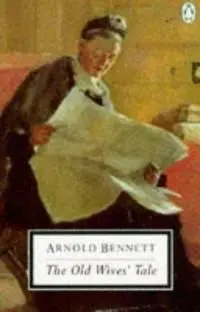
- Название:The Old Wives' Tale
- Автор:
- Издательство:Kessinger Publishing
- Жанр:
- Год:2005
- ISBN:9781417903672
- Рейтинг книги:5 / 5. Голосов: 1
-
Избранное:Добавить в избранное
- Отзывы:
-
Ваша оценка:
The Old Wives' Tale: краткое содержание, описание и аннотация
Предлагаем к чтению аннотацию, описание, краткое содержание или предисловие (зависит от того, что написал сам автор книги «The Old Wives' Tale»). Если вы не нашли необходимую информацию о книге — напишите в комментариях, мы постараемся отыскать её.
The Old Wives' Tale — читать онлайн бесплатно полную книгу (весь текст) целиком
Ниже представлен текст книги, разбитый по страницам. Система сохранения места последней прочитанной страницы, позволяет с удобством читать онлайн бесплатно книгу «The Old Wives' Tale», без необходимости каждый раз заново искать на чём Вы остановились. Поставьте закладку, и сможете в любой момент перейти на страницу, на которой закончили чтение.
Интервал:
Закладка:
Constance rang the bell for Maggie to clear the table; and as she did so she had the illusion that she was not really a married woman and a house-mistress, but only a kind of counterfeit. She did most fervently hope that all would go right in the house--at any rate until she had grown more accustomed to her situation.
The hope was to be disappointed. Maggie's rather silly, obsequious smile concealed but for a moment the ineffable tragedy that had lain in wait for unarmed Constance.
"If you please, Mrs. Povey," said Maggie, as she crushed cups together on the tin tray with her great, red hands, which always looked like something out of a butcher's shop; then a pause, "Will you please accept of this?"
Now, before the wedding Maggie had already, with tears of affection, given Constance a pair of blue glass vases (in order to purchase which she had been obliged to ask for special permission to go out), and Constance wondered what was coming now from Maggie's pocket. A small piece of folded paper came from Maggie's pocket. Constance accepted of it, and read: "I begs to give one month's notice to leave. Signed Maggie. June 10, 1867."
"Maggie!" exclaimed the old Constance, terrified by this incredible occurrence, ere the married woman could strangle her.
"I never give notice before, Mrs. Povey," said Maggie, "so I don't know as I know how it ought for be done--not rightly. But I hope as you'll accept of it, Mrs. Povey."
"Oh! of course," said Mrs. Povey, primly, just as if Maggie was not the central supporting pillar of the house, just as if Maggie had not assisted at her birth, just as if the end of the world had not abruptly been announced, just as if St. Luke's Square were not inconceivable without Maggie. "But why--"
"Well, Mrs. Povey, I've been a-thinking it over in my kitchen, and I said to myself: 'If there's going to be one change there'd better be two,' I says. Not but what I wouldn't work my fingers to the bone for ye, Miss Constance."
Here Maggie began to cry into the tray.
Constance looked at her. Despite the special muslin of that day she had traces of the slatternliness of which Mrs. Baines had never been able to cure her. She was over forty, big, gawky. She had no figure, no charms of any kind. She was what was left of a woman after twenty-two years in the cave of a philanthropic family. And in her cave she had actually been thinking things over! Constance detected for the first time, beneath the dehumanized drudge, the stirrings of a separate and perhaps capricious individuality. Maggie's engagements had never been real to her employers. Within the house she had never been, in practice, anything but 'Maggie'--an organism. And now she was permitting herself ideas about changes!
"You'll soon be suited with another, Mrs. Povey," said Maggie. "There's many a--many a--" She burst into sobs.
"But if you really want to leave, what are you crying for, Maggie?" asked Mrs. Povey, at her wisest. "Have you told mother?"
"No, miss," Maggie whimpered, absently wiping her wrinkled cheeks with ineffectual muslin. "I couldn't seem to fancy telling your mother. And as you're the mistress now, I thought as I'd save it for you when you come home. I hope you'll excuse me, Mrs. Povey."
"Of course I'm very sorry. You've been a very good servant. And in these days--"
The child had acquired this turn of speech from her mother. It did not appear to occur to either of them that they were living in the sixties.
"Thank ye, miss."
"And what are you thinking of doing, Maggie? You know you won't get many places like this."
"To tell ye the truth, Mrs. Povey, I'm going to get married mysen."
"Indeed!" murmured Constance, with the perfunctoriness of habit in replying to these tidings.
"Oh! but I am, mum," Maggie insisted. "It's all settled. Mr. Hollins, mum."
"Not Hollins, the fish-hawker!"
"Yes, mum. I seem to fancy him. You don't remember as him and me was engaged in '48. He was my first, like. I broke it off because he was in that Chartist lot, and I knew as Mr. Baines would never stand that. Now he's asked me again. He's been a widower this long time."
"I'm sure I hope you'll be happy, Maggie. But what about his habits?"
"He won't have no habits with me, Mrs. Povey."
A woman was definitely emerging from the drudge.
When Maggie, having entirely ceased sobbing, had put the folded cloth in the table-drawer and departed with the tray, her mistress became frankly the girl again. No primness about her as she stood alone there in the parlour; no pretence that Maggie's notice to leave was an everyday document, to be casually glanced at--as one glances at an unpaid bill! She would be compelled to find a new servant, making solemn inquiries into character, and to train the new servant, and to talk to her from heights from which she had never addressed Maggie. At that moment she had an illusion that there were no other available, suitable servants in the whole world. And the arranged marriage? She felt that this time--the thirteenth or fourteenth time--the engagement was serious and would only end at the altar. The vision of Maggie and Hollins at the altar shocked her. Marriage was a series of phenomena, and a general state, very holy and wonderful--too sacred, somehow, for such creatures as Maggie and Hollins. Her vague, instinctive revolt against such a usage of matrimony centred round the idea of a strong, eternal smell of fish. However, the projected outrage on a hallowed institution troubled her much less than the imminent problem of domestic service.
She ran into the shop--or she would have run if she had not checked her girlishness betimes--and on her lips, ready to be whispered importantly into a husband's astounded ear, were the words, "Maggie has given notice! Yes! Truly!" But Samuel Povey was engaged. He was leaning over the counter and staring at an outspread paper upon which a certain Mr. Yardley was making strokes with a thick pencil. Mr. Yardley, who had a long red beard, painted houses and rooms. She knew him only by sight. In her mind she always associated him with the sign over his premises in Trafalgar Road, "Yardley Bros., Authorised plumbers. Painters. Decorators. Paper-hangers. Facia writers." For years, in childhood, she had passed that sign without knowing what sort of things 'Bros,' and 'Facia' were, and what was the mysterious similarity between a plumber and a version of the Bible. She could not interrupt her husband, he was wholly absorbed; nor could she stay in the shop (which appeared just a little smaller than usual), for that would have meant an unsuccessful endeavour to front the young lady-assistants as though nothing in particular had happened to her. So she went sedately up the showroom stairs and thus to the bedroom floors of the house--her house! Mrs. Povey's house! She even climbed to Constance's old bedroom; her mother had stripped the bed--that was all, except a slight diminution of this room, corresponding to that of the shop! Then to the drawing-room. In the recess outside the drawing-room door the black box of silver plate still lay. She had expected her mother to take it; but no! Assuredly her mother was one to do things handsomely--when she did them. In the drawing-room, not a tassel of an antimacassar touched! Yes, the fire-screen, the luscious bunch of roses on an expanse of mustard, which Constance had worked for her mother years ago, was gone! That her mother should have clung to just that one souvenir, out of all the heavy opulence of the drawing-room, touched Constance intimately. She perceived that if she could not talk to her husband she must write to her mother. And she sat down at the oval table and wrote, "Darling mother, I am sure you will be very surprised to hear. ... She means it. ... I think she is making a serious mistake. Ought I to put an advertisement in the Signal, or will it do if. ... Please write by return. We are back and have enjoyed ourselves very much. Sam says he enjoys getting up late. ..." And so on to the last inch of the fourth scolloped page.
Читать дальшеИнтервал:
Закладка:
Похожие книги на «The Old Wives' Tale»
Представляем Вашему вниманию похожие книги на «The Old Wives' Tale» списком для выбора. Мы отобрали схожую по названию и смыслу литературу в надежде предоставить читателям больше вариантов отыскать новые, интересные, ещё непрочитанные произведения.







Обсуждение, отзывы о книге «The Old Wives' Tale» и просто собственные мнения читателей. Оставьте ваши комментарии, напишите, что Вы думаете о произведении, его смысле или главных героях. Укажите что конкретно понравилось, а что нет, и почему Вы так считаете.