Arnold Bennett - The Old Wives' Tale
Здесь есть возможность читать онлайн «Arnold Bennett - The Old Wives' Tale» весь текст электронной книги совершенно бесплатно (целиком полную версию без сокращений). В некоторых случаях можно слушать аудио, скачать через торрент в формате fb2 и присутствует краткое содержание. Год выпуска: 2005, ISBN: 2005, Издательство: Kessinger Publishing, Жанр: Классическая проза, на английском языке. Описание произведения, (предисловие) а так же отзывы посетителей доступны на портале библиотеки ЛибКат.
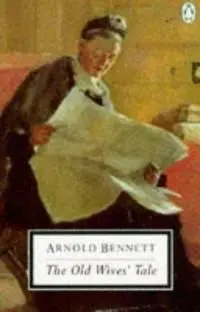
- Название:The Old Wives' Tale
- Автор:
- Издательство:Kessinger Publishing
- Жанр:
- Год:2005
- ISBN:9781417903672
- Рейтинг книги:5 / 5. Голосов: 1
-
Избранное:Добавить в избранное
- Отзывы:
-
Ваша оценка:
The Old Wives' Tale: краткое содержание, описание и аннотация
Предлагаем к чтению аннотацию, описание, краткое содержание или предисловие (зависит от того, что написал сам автор книги «The Old Wives' Tale»). Если вы не нашли необходимую информацию о книге — напишите в комментариях, мы постараемся отыскать её.
The Old Wives' Tale — читать онлайн бесплатно полную книгу (весь текст) целиком
Ниже представлен текст книги, разбитый по страницам. Система сохранения места последней прочитанной страницы, позволяет с удобством читать онлайн бесплатно книгу «The Old Wives' Tale», без необходимости каждый раз заново искать на чём Вы остановились. Поставьте закладку, и сможете в любой момент перейти на страницу, на которой закончили чтение.
Интервал:
Закладка:
"I suppose you weren't surprised by my letter?" said Mrs. Baines.
"I was and I wasn't," answered Miss Chetwynd, in her professional manner and not her manner of a prospective sister-in-law. "Of course I am naturally sorry to lose two such good pupils, but we can't keep our pupils for ever." She smiled; she was not without fortitude--it is easier to lose pupils than to replace them. "Still"--a pause--"what you say of Sophia is perfectly true, perfectly. She is quite as advanced as Constance. Still"--another pause and a more rapid enunciation--"Sophia is by no means an ordinary girl."
"I hope she hasn't been a very great trouble to you?"
"Oh NO!" exclaimed Miss Chetwynd. "Sophia and I have got on very well together. I have always tried to appeal to her reason. I have never FORCED her ... Now, with some girls ... In some ways I look on Sophia as the most remarkable girl--not pupil--but the most remarkable--what shall I say?--individuality, that I have ever met with." And her demeanour added, "And, mind you, this is something --from me!"
"Indeed!" said Mrs. Baines. She told herself, "I am not your common foolish parent. I see my children impartially. I am incapable of being flattered concerning them."
Nevertheless she was flattered, and the thought shaped itself that really Sophia was no ordinary girl.
"I suppose she has talked to you about becoming a teacher?" asked Miss Chetwynd, taking a morsel of the unparalleled jam.
She held the spoon with her thumb and three fingers. Her fourth finger, in matters of honest labour, would never associate with the other three; delicately curved, it always drew proudly away from them.
"Has she mentioned that to you?" Mrs. Baines demanded, startled.
"Oh yes!" said Miss Chetwynd. "Several times. Sophia is a very secretive girl, very--but I think I may say I have always had her confidence. There have been times when Sophia and I have been very near each other. Elizabeth was much struck with her. Indeed, I may tell you that in one of her last letters to me she spoke of Sophia and said she had mentioned her to Mr. Jones, and Mr. Jones remembered her quite well."
Impossible for even a wise, uncommon parent not to be affected by such an announcement!
"I dare say your sister will give up her school now," observed Mrs. Baines, to divert attention from her self-consciousness.
"Oh NO!" And this time Mrs. Baines had genuinely shocked Miss Chetwynd. "Nothing would induce Elizabeth to give up the cause of education. Archibald takes the keenest interest in the school. Oh no! Not for worlds!"
"THEN YOU THINK SOPHIA WOULD MAKE A GOOD TEACHER?" asked Mrs. Baines with apparent inconsequence, and with a smile. But the words marked an epoch in her mind. All was over.
"I think she is very much set on it and--"
"That wouldn't affect her father--or me," said Mrs. Baines quickly.
"Certainly not! I merely say that she is very much set on it. Yes, she would, at any rate, make a teacher far superior to the average." ("That girl has got the better of her mother without me!" she reflected.) "Ah! Here is dear Constance!"
Constance, tempted beyond her strength by the sounds of the visit and the colloquy, had slipped into the room.
"I've left both doors open, mother," she excused herself for quitting her father, and kissed Miss Chetwynd.
She blushed, but she blushed happily, and really made a most creditable debut as a young lady. Her mother rewarded her by taking her into the conversation. And history was soon made.
So Sophia was apprenticed to Miss Aline Chetwynd. Mrs. Baines bore herself greatly. It was Miss Chetwynd who had urged, and her respect for Miss Chetwynd ... Also somehow the Reverend Archibald Jones came into the cause.
Of course the idea of Sophia ever going to London was ridiculous, ridiculous! (Mrs. Baines secretly feared that the ridiculous might happen; but, with the Reverend Archibald Jones on the spot, the worst could be faced.) Sophia must understand that even the apprenticeship in Bursley was merely a trial. They would see how things went on. She had to thank Miss Chetwynd.
"I made Miss Chetwynd come and talk to mother," said Sophia magnificently one night to simple Constance, as if to imply, 'Your Miss Chetwynd is my washpot.'
To Constance, Sophia's mere enterprise was just as staggering as her success. Fancy her deliberately going out that Saturday morning, after her mother's definite decision, to enlist Miss Chetwynd in her aid!
There is no need to insist on the tragic grandeur of Mrs. Baines's renunciation--a renunciation which implied her acceptance of a change in the balance of power in her realm. Part of its tragedy was that none, not even Constance, could divine the intensity of Mrs. Baines's suffering. She had no confidant; she was incapable of showing a wound. But when she lay awake at night by the organism which had once been her husband, she dwelt long and deeply on the martyrdom of her life. What had she done to deserve it? Always had she conscientiously endeavoured to be kind, just, patient. And she knew herself to be sagacious and prudent. In the frightful and unguessed trials of her existence as a wife, surely she might have been granted consolations as a mother! Yet no; it had not been! And she felt all the bitterness of age against youth--youth egotistic, harsh, cruel, uncompromising; youth that is so crude, so ignorant of life, so slow to understand! She had Constance. Yes, but it would be twenty years before Constance could appreciate the sacrifice of judgment and of pride which her mother had made, in a sudden decision, during that rambling, starched, simpering interview with Miss Aline Chetwynd. Probably Constance thought that she had yielded to Sophia's passionate temper! Impossible to explain to Constance that she had yielded to nothing but a perception of Sophia's complete inability to hear reason and wisdom. Ah! Sometimes as she lay in the dark, she would, in fancy, snatch her heart from her bosom and fling it down before Sophia, bleeding, and cry: "See what I carry about with me, on your account!" Then she would take it back and hide it again, and sweeten her bitterness with wise admonitions to herself.
All this because Sophia, aware that if she stayed in the house she would be compelled to help in the shop, chose an honourable activity which freed her from the danger. Heart, how absurd of you to bleed!
CHAPTER IV
ELEPHANT
I
"Sophia, will you come and see the elephant? Do come!" Constance entered the drawing-room with this request on her eager lips.
"No," said Sophia, with a touch of condescension. "I'm far too busy for elephants."
Only two years had passed; but both girls were grown up now; long sleeves, long skirts, hair that had settled down in life; and a demeanour immensely serious, as though existence were terrific in its responsibilities; yet sometimes childhood surprisingly broke through the crust of gravity, as now in Constance, aroused by such things as elephants, and proclaimed with vivacious gestures that it was not dead after all. The sisters were sharply differentiated. Constance wore the black alpaca apron and the scissors at the end of a long black elastic, which indicated her vocation in the shop. She was proving a considerable success in the millinery department. She had learnt how to talk to people, and was, in her modest way, very self-possessed. She was getting a little stouter. Everybody liked her. Sophia had developed into the student. Time had accentuated her reserve. Her sole friend was Miss Chetwynd, with whom she was, having regard to the disparity of their ages, very intimate. At home she spoke little. She lacked amiability; as her mother said, she was 'touchy.' She required diplomacy from others, but did not render it again. Her attitude, indeed, was one of half-hidden disdain, now gentle, now coldly bitter. She would not wear an apron, in an age when aprons were almost essential to decency. No! She would not wear an apron, and there was an end of it. She was not so tidy as Constance, and if Constance's hands had taken on the coarse texture which comes from commerce with needles, pins, artificial flowers, and stuffs, Sophia's fine hands were seldom innocent of ink. But Sophia was splendidly beautiful. And even her mother and Constance had an instinctive idea that that face was, at any rate, a partial excuse for her asperity.
Читать дальшеИнтервал:
Закладка:
Похожие книги на «The Old Wives' Tale»
Представляем Вашему вниманию похожие книги на «The Old Wives' Tale» списком для выбора. Мы отобрали схожую по названию и смыслу литературу в надежде предоставить читателям больше вариантов отыскать новые, интересные, ещё непрочитанные произведения.




Обсуждение, отзывы о книге «The Old Wives' Tale» и просто собственные мнения читателей. Оставьте ваши комментарии, напишите, что Вы думаете о произведении, его смысле или главных героях. Укажите что конкретно понравилось, а что нет, и почему Вы так считаете.