Джозеф Киплинг - Indian Tales
Здесь есть возможность читать онлайн «Джозеф Киплинг - Indian Tales» весь текст электронной книги совершенно бесплатно (целиком полную версию без сокращений). В некоторых случаях можно слушать аудио, скачать через торрент в формате fb2 и присутствует краткое содержание. Год выпуска: 2014, Издательство: epubBooks Classics, Жанр: Классическая проза, на английском языке. Описание произведения, (предисловие) а так же отзывы посетителей доступны на портале библиотеки ЛибКат.
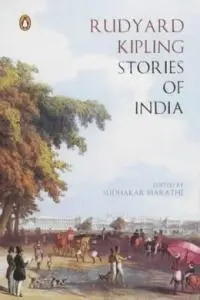
- Название:Indian Tales
- Автор:
- Издательство:epubBooks Classics
- Жанр:
- Год:2014
- ISBN:нет данных
- Рейтинг книги:5 / 5. Голосов: 1
-
Избранное:Добавить в избранное
- Отзывы:
-
Ваша оценка:
Indian Tales: краткое содержание, описание и аннотация
Предлагаем к чтению аннотацию, описание, краткое содержание или предисловие (зависит от того, что написал сам автор книги «Indian Tales»). Если вы не нашли необходимую информацию о книге — напишите в комментариях, мы постараемся отыскать её.
Indian Tales — читать онлайн бесплатно полную книгу (весь текст) целиком
Ниже представлен текст книги, разбитый по страницам. Система сохранения места последней прочитанной страницы, позволяет с удобством читать онлайн бесплатно книгу «Indian Tales», без необходимости каждый раз заново искать на чём Вы остановились. Поставьте закладку, и сможете в любой момент перейти на страницу, на которой закончили чтение.
Интервал:
Закладка:
But Dana Da was dying of whiskey and opium in the Englishman's godown, and had small heart for honors.
"They have been put to shame," said he. "Never was such a Sending. It has killed me."
"Nonsense," said the Englishman, "you are going to die, Dana Da, and that sort of stuff must be left behind. I'll admit that you have made some queer things come about. Tell me honestly, now, how was it done?"
"Give me ten more rupees," said Dana Da, faintly, "and if I die before I spend them, bury them with me." The silver was counted out while Dana Da was fighting with Death. His hand closed upon the money and he smiled a grim smile.
"Bend low," he whispered. The Englishman bent.
" Bunnia —Mission—school—expelled— box–wallah (peddler)—Ceylon pearl–merchant—all mine English education—out–casted, and made up name Dana Da—England with American thought–reading man and—and—you gave me ten rupees several times—I gave the Sahib's bearer two–eight a month for cats—little, little cats. I wrote, and he put them about—very clever man. Very few kittens now in the bazar . Ask Lone Sahib's sweeper's wife."
So saying, Dana Da gasped and passed away into a land where, if all be true, there are no materializations and the making of new creeds is discouraged.
But consider the gorgeous simplicity of it all!
On the City Wall
Then she let them down by a cord through the window; for her house was upon the town–wall, and she dwelt upon the wall.— Joshua ii. 15.
Lalun is a member of the most ancient profession in the world. Lilith was her very–great–grandmamma, and that was before the days of Eve as every one knows. In the West, people say rude things about Lalun's profession, and write lectures about it, and distribute the lectures to young persons in order that Morality may be preserved. In the East where the profession is hereditary, descending from mother to daughter, nobody writes lectures or takes any notice; and that is a distinct proof of the inability of the East to manage its own affairs.
Lalun's real husband, for even ladies of Lalun's profession in the East must have husbands, was a big jujube–tree. Her Mamma, who had married a fig–tree, spent ten thousand rupees on Lalun's wedding, which was blessed by forty–seven clergymen of Mamma's church, and distributed five thousand rupees in charity to the poor. And that was the custom of the land. The advantages of having a jujube–tree for a husband are obvious. You cannot hurt his feelings, and he looks imposing.
Lalun's husband stood on the plain outside the City walls, and Lalun's house was upon the east wall facing the river. If you fell from the broad window–seat you dropped thirty feet sheer into the City Ditch. But if you stayed where you should and looked forth, you saw all the cattle of the City being driven down to water, the students of the Government College playing cricket, the high grass and trees that fringed the river–bank, the great sand bars that ribbed the river, the red tombs of dead Emperors beyond the river, and very far away through the blue heat–haze, a glint of the snows of the Himalayas.
Wali Dad used to lie in the window–seat for hours at a time watching this view. He was a young Muhammadan who was suffering acutely from education of the English variety and knew it. His father had sent him to a Mission–school to get wisdom, and Wali Dad had absorbed more than ever his father or the Missionaries intended he should. When his father died, Wali Dad was independent and spent two years experimenting with the creeds of the Earth and reading books that are of no use to anybody.
After he had made an unsuccessful attempt to enter the Roman Catholic Church and the Presbyterian fold at the same time (the Missionaries found him out and called him names, but they did not understand his trouble), he discovered Lalun on the City wall and became the most constant of her few admirers. He possessed a head that English artists at home would rave over and paint amid impossible surroundings—a face that female novelists would use with delight through nine hundred pages. In reality he was only a clean–bred young Muhammadan, with penciled eyebrows, small–cut nostrils, little feet and hands, and a very tired look in his eyes. By virtue of his twenty–two years he had grown a neat black beard which he stroked with pride and kept delicately scented. His life seemed to be divided between borrowing books from me and making love to Lalun in the window–seat. He composed songs about her, and some of the songs are sung to this day in the City from the Street of the Mutton–Butchers to the Copper–Smiths' ward.
One song, the prettiest of all, says that the beauty of Lalun was so great that it troubled the hearts of the British Government and caused them to lose their peace of mind. That is the way the song is sung in the streets; but, if you examine it carefully and know the key to the explanation, you will find that there are three puns in it—on "beauty," "heart," and "peace of mind,"—so that it runs: "By the subtlety of Lalun the administration of the Government was troubled and it lost such and such a man." When Wali Dad sings that song his eyes glow like hot coals, and Lalun leans back among the cushions and throws bunches of jasmine–buds at Wali Dad.
But first it is necessary to explain something about the Supreme Government which is above all and below all and behind all. Gentlemen come from England, spend a few weeks in India, walk round this great Sphinx of the Plains, and write books upon its ways and its works, denouncing or praising it as their own ignorance prompts. Consequently all the world knows how the Supreme Government conducts itself, But no one, not even the Supreme Government, knows everything about the administration of the Empire. Year by year England sends out fresh drafts for the first fighting–line, which is officially called the Indian Civil Service. These die, or kill themselves by overwork, or are worried to death or broken in health and hope in order that the land may be protected from death and sickness, famine and war, and may eventually become capable of standing alone. It will never stand alone, but the idea is a pretty one, and men are willing to die for it, and yearly the work of pushing and coaxing and scolding and petting the country into good living goes forward. If an advance be made all credit is given to the native, while the Englishmen stand back and wipe their foreheads. If a failure occurs the Englishmen step forward and take the blame. Overmuch tenderness of this kind has bred a strong belief among many natives that the native is capable of administering the country, and many devout Englishmen believe this also, because the theory is stated in beautiful English with all the latest political color.
There be other men who, though uneducated, see visions and dream dreams, and they, too, hope to administer the country in their own way—that is to say, with a garnish of Red Sauce. Such men must exist among two hundred million people, and, if they are not attended to, may cause trouble and even break the great idol called Pax Britannic , which, as the newspapers say, lives between Peshawur and Cape Comorin. Were the Day of Doom to dawn to–morrow, you would find the Supreme Government "taking measures to allay popular excitement" and putting guards upon the graveyards that the Dead might troop forth orderly. The youngest Civilian would arrest Gabriel on his own responsibility if the Archangel could not produce a Deputy Commissioner's permission to "make music or other noises" as the license says.
Whence it is easy to see that mere men of the flesh who would create a tumult must fare badly at the hands of the Supreme Government. And they do. There is no outward sign of excitement; there is no confusion; there is no knowledge. When due and sufficient reasons have been given, weighed and approved, the machinery moves forward, and the dreamer of dreams and the seer of visions is gone from his friends and following. He enjoys the hospitality of Government; there is no restriction upon his movements within certain limits; but he must not confer any more with his brother dreamers. Once in every six months the Supreme Government assures itself that he is well and takes formal acknowledgment of his existence. No one protests against his detention, because the few people who know about it are in deadly fear of seeming to know him; and never a single newspaper "takes up his case" or organizes demonstrations on his behalf, because the newspapers of India have got behind that lying proverb which says the Pen is mightier than the Sword, and can walk delicately.
Читать дальшеИнтервал:
Закладка:
Похожие книги на «Indian Tales»
Представляем Вашему вниманию похожие книги на «Indian Tales» списком для выбора. Мы отобрали схожую по названию и смыслу литературу в надежде предоставить читателям больше вариантов отыскать новые, интересные, ещё непрочитанные произведения.







Обсуждение, отзывы о книге «Indian Tales» и просто собственные мнения читателей. Оставьте ваши комментарии, напишите, что Вы думаете о произведении, его смысле или главных героях. Укажите что конкретно понравилось, а что нет, и почему Вы так считаете.