Margaret Mitchell - Gone with the Wind
Здесь есть возможность читать онлайн «Margaret Mitchell - Gone with the Wind» весь текст электронной книги совершенно бесплатно (целиком полную версию без сокращений). В некоторых случаях можно слушать аудио, скачать через торрент в формате fb2 и присутствует краткое содержание. Жанр: Классическая проза, на английском языке. Описание произведения, (предисловие) а так же отзывы посетителей доступны на портале библиотеки ЛибКат.
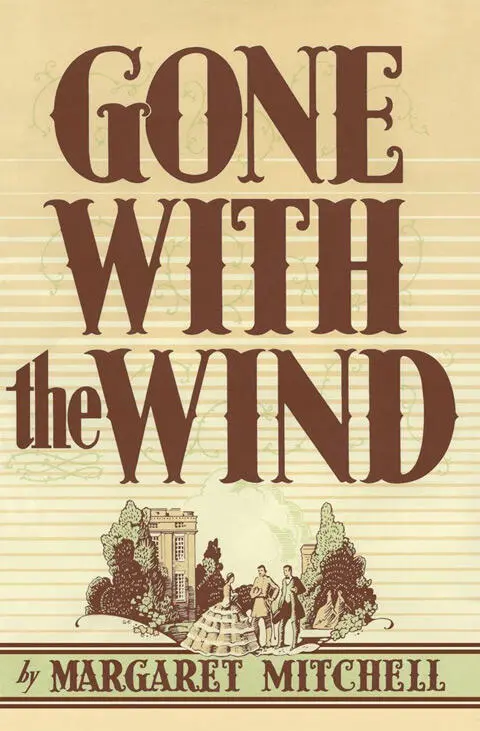
- Название:Gone with the Wind
- Автор:
- Жанр:
- Год:неизвестен
- ISBN:нет данных
- Рейтинг книги:4.17 / 5. Голосов: 6
-
Избранное:Добавить в избранное
- Отзывы:
-
Ваша оценка:
Gone with the Wind: краткое содержание, описание и аннотация
Предлагаем к чтению аннотацию, описание, краткое содержание или предисловие (зависит от того, что написал сам автор книги «Gone with the Wind»). Если вы не нашли необходимую информацию о книге — напишите в комментариях, мы постараемся отыскать её.
Gone with the Wind — читать онлайн бесплатно полную книгу (весь текст) целиком
Ниже представлен текст книги, разбитый по страницам. Система сохранения места последней прочитанной страницы, позволяет с удобством читать онлайн бесплатно книгу «Gone with the Wind», без необходимости каждый раз заново искать на чём Вы остановились. Поставьте закладку, и сможете в любой момент перейти на страницу, на которой закончили чтение.
Интервал:
Закладка:
“Did she really call her a peahen?” said Scarlett pleasedly and laughed.
“Oh, don’t laugh. It isn’t funny. It seems that Miss—this woman, wanted to do something for the hospital—can you imagine it? She offered to nurse every morning and, of course, Mrs. Elsing must have nearly died at the idea and ordered her out of the hospital. And then she said, ‘I want to do something, too. Ain’t I a Confedrut, good as you?’ And, Scarlett, I was right touched at her wanting to help. You know, she can’t be all bad if she wants to help the Cause. Do you think I’m bad to feel that way?”
“For Heaven’s sake, Melly, who cares if you’re bad? What else did she say?”
“She said she’d been watching the ladies go by to the hospital and thought I had—a—a kind face and so she stopped me. She had some money and she wanted me to take it and use it for the hospital and not tell a soul where it came from. She said Mrs. Elsing wouldn’t let it be used if she knew what kind of money it was. What kind of money! That’s when I thought I’d swoon! And I was so upset and anxious to get away, I just said: ‘Oh, yes, indeed, how sweet of you’ or something idiotic, and she smiled and said: ‘That’s right Christian of you’ and shoved this dirty handkerchief into my hand. Ugh, can you smell the perfume?”
Melanie held out a man’s handkerchief, soiled and highly perfumed, in which some coins were knotted.
“She was saying thank you and something about bringing me some money every week and just then Uncle Peter drove up and saw me!” Melly collapsed into tears and laid her head on the pillow. “And when he saw who was with me, he—Scarlett, he hollered at me! Nobody has ever hollered at me before in my whole life. And he said, ‘You git in dis hyah cah’ige dis minute!’ Of course, I did, and all the way home he blessed me out and wouldn’t let me explain and said he was going to tell Aunt Pitty. Scarlett, do go down and beg him not to tell her. Perhaps he will listen to you. It will kill Auntie if she knows I ever even looked that woman in the face. Will you?”
“Yes, I will. But let’s see how much money is in here. It feels heavy.”
She untied the knot and a handful of gold coins rolled out on the bed.
“Scarlett, there’s fifty dollars here! And in gold!” cried Melanie, awed, as she counted the bright pieces. “Tell me, do you think it’s all right to use this kind—well, money made—er—this way for the boys? Don’t you think that maybe God will understand that she wanted to help and won’t care if it is tainted? When I think of how many things the hospital needs—”
But Scarlett was not listening. She was looking at the dirty handkerchief, and humiliation and fury were filling her. There was a monogram in the corner in which were the initials “R. K. B.” In her top drawer was a handkerchief just like this, one that Rhett Butler had lent her only yesterday to wrap about the stems of wild flowers they had picked. She had planned to return it to him when he came to supper tonight.
So Rhett consorted with that vile Watling creature and gave her money. That was where the contribution to the hospital came from. Blockade gold. And to think that Rhett would have the gall to look a decent woman in the face after being with that creature! And to think that she could have believed he was in love with her! This proved he couldn’t be.
Bad women and all they involved were mysterious and revolting matters to her. She knew that men patronized these women for purposes which no lady should mention—or, if she did mention them, in whispers and by indirection and euphemism. She had always thought that only common vulgar men visited such women. Before this moment, it had never occurred to her that nice men—that is, men she met at nice homes and with whom she danced—could possibly do such things. It opened up an entirely new field of thought and one that was horrifying. Perhaps all men did this! It was bad enough that they forced their wives to go through such indecent performances but to actually seek out low women and pay them for such accommodation! Oh, men were so vile, and Rhett Butler was the worst of them all!
She would take this handkerchief and fling it in his face and show him the door and never, never speak to him again. But no, of course she couldn’t do that. She could never, never let him know she even realized that bad women existed, much less that he visited them. A lady could never do that.
“Oh,” she thought in fury. “If I just wasn’t a lady, what wouldn’t I tell that varmint!”
And, crumbling the handkerchief in her hand, she went down the stairs to the kitchen in search of Uncle Peter. As she passed the stove, she shoved the handkerchief into the flames and with impotent anger watched it burn.
Chapter XIV
Hope was rolling high in every Southern heart as the summer of 1863 came in. Despite privation and hardships, despite food speculators and kindred scourges, despite death and sickness and suffering which had now left their mark on nearly every family, the South was again saying “One more victory and the war is over,” saying it with even more happy assurance than in the summer before. The Yankees were proving a hard nut to crack but they were cracking at last.
Christmas of 1862 had been a happy one for Atlanta, for the whole South. The Confederacy had scored a smashing victory, at Fredericksburg and the Yankee dead and wounded were counted in the thousands. There was universal rejoicing in that holiday season, rejoicing and thankfulness that the tide was turning. The army in butternut were now seasoned fighters, their generals had proven their mettle, and everyone knew that when the campaign reopened in the spring, the Yankees would be crushed for good and all.
Spring came and the fighting recommenced. May came and the Confederacy won another great victory at Chancellorsville. The South roared with elation.
Closer at home, a Union cavalry dash into Georgia had been turned into a Confederate triumph. Folks were still laughing and slapping each other on the back and saying: “Yes, sir! When old Nathan Bedford Forrest gets after them, they better git!” Late in April, Colonel Streight and eighteen hundred Yankee cavalry had made a surprise raid into Georgia, aiming at Rome, only a little more than sixty miles north of Atlanta. They had ambitious plans to cut the vitally important railroad between Atlanta and Tennessee and then swing southward into Atlanta to destroy the factories and the war supplies concentrated there in that key city of the Confederacy.
It was a bold stroke and it would have cost the South dearly, except for Forrest. With only one-third as many men—but what men and what riders!—he had started after them, engaged them before they even reached Rome, harassed them day and night and finally captured the entire force!
The news reached Atlanta almost simultaneously with the news of the victory at Chancellorsville, and the town fairly rocked with exultation and with laughter. Chancellorsville might be a more important victory but the capture of Streight’s raiders made the Yankees positively ridiculous.
“No, sir, they’d better not fool with old Forrest,” Atlanta said gleefully as the story was told over and over.
The tide of the Confederacy’s fortune was running strong and full now, sweeping the people jubilantly along on its flood. True, the Yankees under Grant had been besieging Vicksburg since the middle of May. True, the South had suffered a sickening loss when Stonewall Jackson had been fatally wounded at Chancellorsville. True, Georgia had lost one of her bravest and most brilliant sons when General T. R. R. Cobb had been killed at Fredericksburg. But the Yankees just couldn’t stand any more defeats like Fredericksburg and Chancellorsville. They’d have to give in, and then this cruel war would be over.
Читать дальшеИнтервал:
Закладка:
Похожие книги на «Gone with the Wind»
Представляем Вашему вниманию похожие книги на «Gone with the Wind» списком для выбора. Мы отобрали схожую по названию и смыслу литературу в надежде предоставить читателям больше вариантов отыскать новые, интересные, ещё непрочитанные произведения.








Обсуждение, отзывы о книге «Gone with the Wind» и просто собственные мнения читателей. Оставьте ваши комментарии, напишите, что Вы думаете о произведении, его смысле или главных героях. Укажите что конкретно понравилось, а что нет, и почему Вы так считаете.