Margaret Mitchell - Gone with the Wind
Здесь есть возможность читать онлайн «Margaret Mitchell - Gone with the Wind» весь текст электронной книги совершенно бесплатно (целиком полную версию без сокращений). В некоторых случаях можно слушать аудио, скачать через торрент в формате fb2 и присутствует краткое содержание. Жанр: Классическая проза, на английском языке. Описание произведения, (предисловие) а так же отзывы посетителей доступны на портале библиотеки ЛибКат.
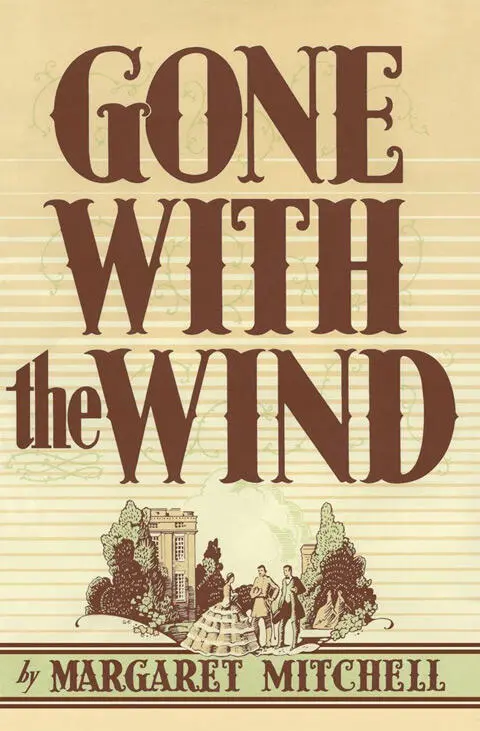
- Название:Gone with the Wind
- Автор:
- Жанр:
- Год:неизвестен
- ISBN:нет данных
- Рейтинг книги:4.17 / 5. Голосов: 6
-
Избранное:Добавить в избранное
- Отзывы:
-
Ваша оценка:
Gone with the Wind: краткое содержание, описание и аннотация
Предлагаем к чтению аннотацию, описание, краткое содержание или предисловие (зависит от того, что написал сам автор книги «Gone with the Wind»). Если вы не нашли необходимую информацию о книге — напишите в комментариях, мы постараемся отыскать её.
Gone with the Wind — читать онлайн бесплатно полную книгу (весь текст) целиком
Ниже представлен текст книги, разбитый по страницам. Система сохранения места последней прочитанной страницы, позволяет с удобством читать онлайн бесплатно книгу «Gone with the Wind», без необходимости каждый раз заново искать на чём Вы остановились. Поставьте закладку, и сможете в любой момент перейти на страницу, на которой закончили чтение.
Интервал:
Закладка:
But he made no move to kiss her. She gave him a sidelong glance from under her lashes and murmured encouragingly.
“So you always get paid, do you? And what do you expect to get from me?”
“That remains to be seen.”
“Well, if you think I’ll marry you to pay for the bonnet, I won’t,” she said daringly and gave her head a saucy flirt that set the plume to bobbing.
His white teeth gleamed under his little mustache.
“Madam, you flatter yourself, I do not want to marry you or anyone else. I am not a marrying man.”
“Indeed!” she cried, taken aback and now determined that he should take some liberty. “I don’t even intend to kiss you, either.”
“Then why is your mouth all pursed up in that ridiculous way?”
“Oh!” she cried as she caught a glimpse of herself and saw that her red lips were indeed in the proper pose for a kiss. “Oh!” she cried again, losing her temper and stamping her foot. “You are the horridest man I have ever seen and I don’t care if I never lay eyes on you again!”
“If you really felt that way, you’d stamp on the bonnet. My, what a passion you are in and it’s quite becoming, as you probably know. Come, Scarlett, stamp on the bonnet to show me what you think of me and my presents.”
“Don’t you dare touch this bonnet,” she said, clutching it by the bow and retreating. He came after her, laughing softly and took her hands in his.
“Oh, Scarlett, you are so young you wring my heart,” he said. “And I shall kiss you, as you seem to expect it,” and leaning down carelessly, his mustache just grazed her cheek. “Now, do you feel that you must slap me to preserve the proprieties?”
Her lips mutinous, she looked up into his eyes and saw so much amusement in their dark depths that she burst into laughter. What a tease he was and how exasperating! If he didn’t want to marry her and didn’t even want to kiss her, what did he want? If he wasn’t in love with her, why did he call so often and bring her presents?
“That’s better,” he said. “Scarlett, I’m a bad influence on you and if you have any sense you will send me packing—if you can. I’m very hard to get rid of. But I’m bad for you.”
“Are you?”
“Can’t you see it? Ever since I met you at the bazaar, your career has been most shocking and I’m to blame for most of it. Who encouraged you to dance? Who forced you to admit that you thought our glorious Cause was neither glorious nor sacred? Who goaded you into admitting that you thought men were fools to die for high-sounding principles? Who has aided you in giving the old ladies plenty to gossip about? Who is getting you out of mourning several years too soon? And who, to end all this, has lured you into accepting a gift which no lady can accept and still remain a lady?”
“You flatter yourself, Captain Butler. I haven’t done anything so scandalous and I’d have done everything you mentioned without your aid anyway.”
“I doubt that,” he said and his face went suddenly quiet and somber. “You’d still be the broken-hearted widow of Charles Hamilton and famed for your good deeds among the wounded. Eventually, however—”
But she was not listening, for she was regarding herself pleasedly in the mirror again, thinking she would wear the bonnet to the hospital this very afternoon and take flowers to the convalescent officers.
That there was truth in his last words did not occur to her. She did not see that Rhett had pried open the prison of her widowhood and set her free to queen it over unmarried girls when her days as a belle should have been long past. Nor did she see that under his influence she had come a long way from Ellen’s teachings. The change had been so gradual, the flouting of one small convention seeming to have no connection with the flouting of another, and none of them any connection with Rhett. She did not realize that, with his encouragement, she had disregarded many of the sternest injunctions of her mother concerning the proprieties, forgotten the difficult lessons in being a lady.
She only saw that the bonnet was the most becoming one she ever had, that it had not cost her a penny and that Rhett must be in love with her, whether he admitted it or not. And she certainly intended to find a way to make him admit it.
The next day, Scarlett was standing in front of the mirror with a comb in her hand and her mouth full of hairpins, attempting a new coiffure which Maybelle, fresh from a visit to her husband in Richmond, had said was the rage at the Capital. It was called “Cats, Rats and Mice” and presented many difficulties. The hair was parted in the middle and arranged in three rolls of graduating size on each side of the head, the largest, nearest the part, being the “cat.” The “cat” and the “rat” were easy to fix but the “mice” kept slipping out of her hairpins in an exasperating manner. However, she was determined to accomplish it, for Rhett was coming to supper and he always noticed and commented upon any innovation of dress or hair.
As she struggled with her bushy, obstinate locks, perspiration beading her forehead, she heard light running feet in the downstairs hall and knew that Melanie was home from the hospital. As she heard her fly up the stairs, two at a time, she paused, hairpin in mid-air, realizing that something must be wrong, for Melanie always moved as decorously as a dowager. She went to the door and threw it open, and Melanie ran in, her face flushed and frightened, looking like a guilty child.
There were tears on her cheeks, her bonnet was hanging on her neck by the ribbons and her hoops swaying violently. She was clutching something in her hand, and the reek of heavy cheap perfume came into the room with her.
“Oh, Scarlett!” she cried, shutting the door and sinking on the bed. “Is Auntie home yet? She isn’t? Oh, thank the Lord! Scarlett, I’m so mortified I could die! I nearly swooned and, Scarlett, Uncle Peter is threatening to tell Aunt Pitty!”
“Tell what?”
“That I was talking to that—to Miss—Mrs.—” Melanie fanned her hot face with her handkerchief. “That woman with red hair, named Belle Watling!”
“Why, Melly!” cried Scarlett, so shocked she could only stare.
Belle Watling was the red-haired woman she had seen on the street the first day she came to Atlanta and by now, she was easily the most notorious woman in town. Many prostitutes had flocked into Atlanta, following the soldiers, but Belle stood out above the rest, due to her flaming hair and the gaudy, overly fashionable dresses she wore. She was seldom seen on Peachtree Street or in any nice neighborhood, but when she did appear respectable women made haste to cross the street to remove themselves from her vicinity. And Melanie had been talking with her. No wonder Uncle Peter was outraged.
“I shall die if Aunt Pitty finds out! You know she’ll cry and tell everybody in town and I’ll be disgraced,” sobbed Melanie. “And it wasn’t my fault. I—I couldn’t run away from her. It would have been so rude. Scarlett, I—I felt sorry for her. Do you think I’m bad for feeling that way?”
But Scarlett was not concerned with the ethics of the matter. Like most innocent and well-bred young women, she had a devouring curiosity about prostitutes.
“What did she want? What does she talk like?”
“Oh, she used awful grammar but I could see she was trying so hard to be elegant, poor thing. I came out of the hospital and Uncle Peter and the carriage weren’t waiting, so I thought I’d walk home. And when I went by the Emersons’ yard, there she was hiding behind the hedge! Oh, thank Heaven, the Emersons are in Macon! And she said, ‘Please, Mrs. Wilkes, do speak a minute with me.’ I don’t know how she knew my name. I knew I ought to run as hard as I could but—well, Scarlett, she looked so sad and—well, sort of pleading. And she had on a black dress and black bonnet and no paint and really looked decent but for that red hair. And before I could answer she said. ‘I know I shouldn’t speak to you but I tried to talk to that old peahen, Mrs. Elsing, and she ran me away from the hospital.”
Читать дальшеИнтервал:
Закладка:
Похожие книги на «Gone with the Wind»
Представляем Вашему вниманию похожие книги на «Gone with the Wind» списком для выбора. Мы отобрали схожую по названию и смыслу литературу в надежде предоставить читателям больше вариантов отыскать новые, интересные, ещё непрочитанные произведения.








Обсуждение, отзывы о книге «Gone with the Wind» и просто собственные мнения читателей. Оставьте ваши комментарии, напишите, что Вы думаете о произведении, его смысле или главных героях. Укажите что конкретно понравилось, а что нет, и почему Вы так считаете.