Margaret Mitchell - Gone with the Wind
Здесь есть возможность читать онлайн «Margaret Mitchell - Gone with the Wind» весь текст электронной книги совершенно бесплатно (целиком полную версию без сокращений). В некоторых случаях можно слушать аудио, скачать через торрент в формате fb2 и присутствует краткое содержание. Жанр: Классическая проза, на английском языке. Описание произведения, (предисловие) а так же отзывы посетителей доступны на портале библиотеки ЛибКат.
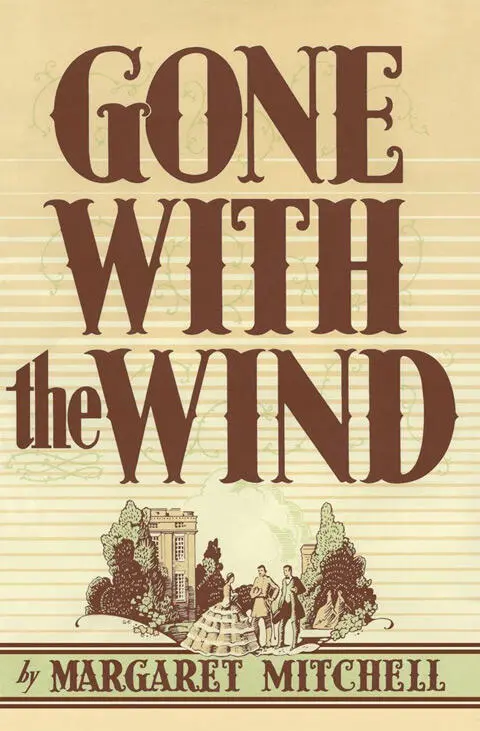
- Название:Gone with the Wind
- Автор:
- Жанр:
- Год:неизвестен
- ISBN:нет данных
- Рейтинг книги:4.17 / 5. Голосов: 6
-
Избранное:Добавить в избранное
- Отзывы:
-
Ваша оценка:
Gone with the Wind: краткое содержание, описание и аннотация
Предлагаем к чтению аннотацию, описание, краткое содержание или предисловие (зависит от того, что написал сам автор книги «Gone with the Wind»). Если вы не нашли необходимую информацию о книге — напишите в комментариях, мы постараемся отыскать её.
Gone with the Wind — читать онлайн бесплатно полную книгу (весь текст) целиком
Ниже представлен текст книги, разбитый по страницам. Система сохранения места последней прочитанной страницы, позволяет с удобством читать онлайн бесплатно книгу «Gone with the Wind», без необходимости каждый раз заново искать на чём Вы остановились. Поставьте закладку, и сможете в любой момент перейти на страницу, на которой закончили чтение.
Интервал:
Закладка:
Whenever he came to town, there was a feminine fluttering. Not only did the romantic aura of the dashing blockader hang about him but there was also the titillating element of the wicked and the forbidden. He had such a bad reputation! And every time the matrons of Atlanta gathered together to gossip, his reputation grew worse, which only made him all the more glamorous to the young girls. As most of them were quite innocent, they had heard little more than that he was “quite loose with women”—and exactly how a man went about the business of being “loose” they did not know. They also heard whispers that no girl was safe with him. With such a reputation, it was strange that he had never so much as kissed the hand of an unmarried girl since he first appeared in Atlanta. But that only served to make him more mysterious and more exciting.
Outside of the army heroes, he was the most talked-about man in Atlanta. Everyone knew in detail how he had been expelled from West Point for drunkenness and “something about women.” That terrific scandal concerning the Charleston girl he had compromised and the brother he had killed was public property. Correspondence with Charleston friends elicited the further information that his father, a charming old gentleman with an iron will and a ramrod for a backbone, had cast him out without a penny when he was twenty and even stricken his name from the family Bible. After that he had wandered to California in the gold rush of 1849 and thence to South America and Cuba, and the reports of his activities in these parts were none too savory. Scrapes about women, several shootings, gun running to the revolutionists in Central America and, worst of all, professional gambling were included in his career, as Atlanta heard it.
There was hardly a family in Georgia who could not own to their sorrow at least one male member or relative who gambled, losing money, houses, land and slaves. But that was different. A man could gamble himself to poverty and still be a gentleman, but a professional gambler could never be anything but an outcast.
Had it not been for the upset conditions due to the war and his own services to the Confederate government, Rhett Butler would never have been received in Atlanta. But now, even the most strait laced felt that patriotism called upon them to be more broad minded. The more sentimental were inclined to view that the black sheep of the Butler family had repented of his evil ways and was making an attempt to atone for his sins. So the ladies felt in duty bound to stretch a point, especially in the case of so intrepid a blockader. Everyone knew now that the fate of the Confederacy rested as much upon the skill of the blockade boats in eluding the Yankee fleet as it did upon the soldiers at the front.
Rumor had it that Captain Butler was one of the best pilots in the South and that he was reckless and utterly without nerves. Reared in Charleston, he knew every inlet, creek, shoal and rock of the Carolina coast near that port, and he was equally at home in the waters around Wilmington. He had never lost a boat or even been forced to dump a cargo. At the onset of the war, he had emerged from obscurity with enough money to buy a small swift boat and now, when blockaded goods realized two thousand per cent on each cargo, he owned four boats. He had good pilots and paid them well, and they slid out of Charleston and Wilmington on dark nights, bearing cotton for Nassau, England and Canada. The cotton mills of England were standing idle and the workers were starving, and any blockader who could outwit the Yankee fleet could command his own price in Liverpool. Rhett’s boats were singularly lucky both in taking out cotton for the Confederacy and bringing in the war materials for which the South was desperate. Yes, the ladies felt they could forgive and forget a great many things for such a brave man.
He was a dashing figure and one that people turned to look at. He spent money freely, rode a wild black stallion, and wore clothes which were always the height of style and tailoring. The latter in itself was enough to attract attention to him, for the uniforms of the soldiers were dingy and worn now and the civilians, even when turned out in their best, showed skillful patching and darning. Scarlett thought she had never seen such elegant pants as he wore, fawn colored, shepherd’s plaid, and checked. As for his waistcoats, they were indescribably handsome, especially the white watered-silk one with tiny pink rosebuds embroidered on it. And he wore these garments with a still more elegant air as though unaware of their glory.
There were few ladies who could resist his charms when he chose to exert them, and finally even Mrs. Merriwether unbent and invited him to Sunday dinner.
Maybelle Merriwether was to marry her little Zouave when he got his next furlough, and she cried every time she thought of it, for she had set her heart on marrying in a white satin dress and there was no white satin in the Confederacy. Nor could she borrow a dress, for the satin wedding dresses of years past had all gone into the making of battle flags. Useless for the patriotic Mrs. Merriwether to upbraid her daughter and point out that homespun was the proper bridal attire for a Confederate bride. Maybelle wanted satin. She was willing, even proud to go without hairpins and buttons and nice shoes and candy and tea for the sake of the Cause, but she wanted a satin wedding dress.
Rhett, hearing of this from Melanie, brought in from England yards and yards of gleaming white satin and a lace veil and presented them to her as a wedding gift. He did it in such a way that it was unthinkable to even mention paying him for them, and Maybelle was so delighted she almost kissed him. Mrs. Merriwether knew that so expensive a gift—and a gift of clothing at that—was highly improper, but she could think of no way of refusing when Rhett told her in the most florid language that nothing was too good to deck the bride of one of our brave heroes. So Mrs. Merriwether invited him to dinner, feeling that this concession more than paid for the gift.
He not only brought Maybelle the satin but he was able to give excellent hints on the making of the wedding dress. Hoops in Paris were wider this season and skirts were shorter. They were no longer ruffled but were gathered up in scalloped festoons, showing braided petticoats beneath. He said, too, that he had seen no pantalets on the streets, so he imagined they were “out.” Afterwards, Mrs. Merriwether told Mrs. Elsing she feared that if she had given him any encouragement at all, he would have told her exactly what kind of drawers were being worn by Parisiennes.
Had he been less obviously masculine, his ability to recall details of dresses, bonnets and coiffures would have been put down as the rankest effeminacy. The ladies always felt a little odd when they besieged him with questions about styles, but they did it nevertheless. They were as isolated from the world of fashion as shipwrecked mariners, for few books of fashion came through the blockade. For all they knew the ladies of France might be shaving their heads and wearing coonskin caps, so Rhett’s memory for furbelows was an excellent substitute for Godey’s Lady’s Book. He could and did notice details so dear to feminine hearts, and after each trip abroad he could be found in the center of a group of ladies, telling that bonnets were smaller this year and perched higher, covering most of the top of the head, that plumes and not flowers were being used to trim them, that the Empress of France had abandoned the chignon for evening wear and had her hair piled almost on the top of her head, showing all of her ears, and that evening frocks were shockingly low again.
For some months, he was the most popular and romantic figure the town knew, despite his previous reputation, despite the faint rumors that he was engaged not only in blockading but in speculating on foodstuffs, too. People who did not like him said that after every trip he made to Atlanta, prices jumped five dollars. But even with this under-cover gossip seeping about, he could have retained his popularity had he considered it worth retaining. Instead, it seemed as though, after trying the company of the staid and patriotic citizens and winning their respect and grudging liking, something perverse in him made him go out of his way to affront them and show them that his conduct had been only a masquerade and one which no longer amused him.
Читать дальшеИнтервал:
Закладка:
Похожие книги на «Gone with the Wind»
Представляем Вашему вниманию похожие книги на «Gone with the Wind» списком для выбора. Мы отобрали схожую по названию и смыслу литературу в надежде предоставить читателям больше вариантов отыскать новые, интересные, ещё непрочитанные произведения.







Обсуждение, отзывы о книге «Gone with the Wind» и просто собственные мнения читателей. Оставьте ваши комментарии, напишите, что Вы думаете о произведении, его смысле или главных героях. Укажите что конкретно понравилось, а что нет, и почему Вы так считаете.