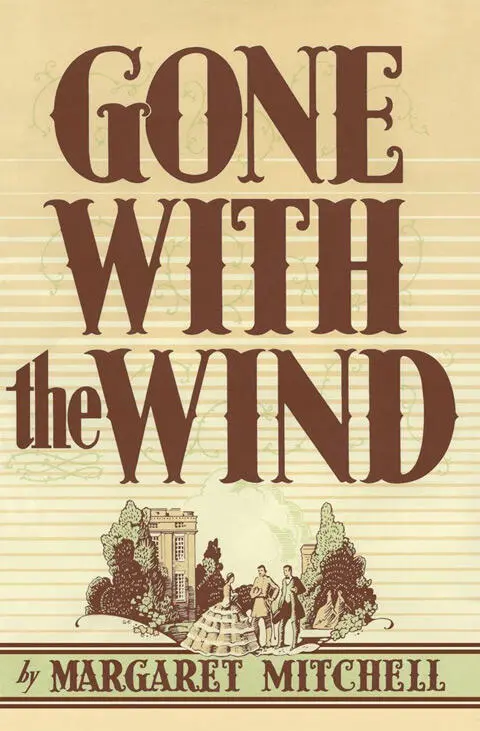
Margaret Mitchell - Gone with the Wind
Здесь есть возможность читать онлайн «Margaret Mitchell - Gone with the Wind» весь текст электронной книги совершенно бесплатно (целиком полную версию без сокращений). В некоторых случаях можно слушать аудио, скачать через торрент в формате fb2 и присутствует краткое содержание. Жанр: Классическая проза, на английском языке. Описание произведения, (предисловие) а так же отзывы посетителей доступны на портале библиотеки ЛибКат.
- Название:Gone with the Wind
- Автор:
- Жанр:
- Год:неизвестен
- ISBN:нет данных
- Рейтинг книги:4.17 / 5. Голосов: 6
-
Избранное:Добавить в избранное
- Отзывы:
-
Ваша оценка:
Gone with the Wind: краткое содержание, описание и аннотация
Предлагаем к чтению аннотацию, описание, краткое содержание или предисловие (зависит от того, что написал сам автор книги «Gone with the Wind»). Если вы не нашли необходимую информацию о книге — напишите в комментариях, мы постараемся отыскать её.
Gone with the Wind — читать онлайн бесплатно полную книгу (весь текст) целиком
Ниже представлен текст книги, разбитый по страницам. Система сохранения места последней прочитанной страницы, позволяет с удобством читать онлайн бесплатно книгу «Gone with the Wind», без необходимости каждый раз заново искать на чём Вы остановились. Поставьте закладку, и сможете в любой момент перейти на страницу, на которой закончили чтение.
Интервал:
Закладка:
“He writes such crazy letters,” Scarlett thought. “If ever any husband of mine wrote me such twaddle-twaddle, he’d certainly hear from me! Why, even Charlie wrote better letters than these.”
She flipped back the edges of the letters, looking at the dates, remembering their contents. In them there were no fine descriptive pages of bivouacs and charges such as Darcy Meade wrote his parents or poor Dallas McLure had written his old-maid sisters, Misses Faith and Hope. The Meades and McLures proudly read these letters all over the neighborhood, and Scarlett had frequently felt a secret shame that Melanie had no such letters from Ashley to read aloud at sewing circles.
It was as though when writing Melanie, Ashley tried to ignore the war altogether, and sought to draw about the two of them a magic circle of timelessness, shutting out everything that had happened since Fort Sumter was the news of the day. It was almost as if he were trying to believe there wasn’t any war. He wrote of books which he and Melanie had read and songs they had sung, of old friends they knew and places he had visited on his Grand Tour. Through the letters ran a wistful yearning to be back home at Twelve Oaks, and for pages he wrote of the hunting and the long rides through the still forest paths under frosty autumn stars, the barbecues, the fish fries, the quiet of moonlight nights and the serene charm of the old house.
She thought of his words in the letter she had just read: “Not this! Never this!” and they seemed to cry of a tormented soul facing something he could not face, yet must face. It puzzled her for, if he was not afraid of wounds and death, what was it he feared? Unanalytical, she struggled with the complex thought.
“The war disturbs him and he—he doesn’t like things that disturb him… Me, for instance… He loved me but he was afraid to marry me because—for fear I’d upset his way of thinking and living. No, it wasn’t exactly that he was afraid. Ashley isn’t a coward. He couldn’t be when he’s been mentioned in dispatches and when Colonel Sloan wrote that letter to Melly all about his gallant conduct in leading the charge. Once he’s made up his mind to do something, no one could be braver or more determined but—He lives inside his head instead of outside in the world and he hates to come out into the world and—Oh, I don’t know what it is! If I’d just understood this one thing about him years ago, I know he’d have married me.”
She stood for a moment holding the letters to her breast, thinking longingly of Ashley. Her emotions toward him had not changed since the day when she first fell in love with him. They were the same emotions that struck her speechless that day when she was fourteen years old and she had stood on the porch of Tara and seen Ashley ride up smiling, his hair shining silver in the morning sun. Her love was still a young girl’s adoration for a man she could not understand, a man who possessed all the qualities she did not own but which she admired. He was still a young girl’s dream of the Perfect Knight and her dream asked no more than acknowledgment of his love, went no further than hopes of a kiss.
After reading the letters, she felt certain he did love her, Scarlett, even though he had married Melanie, and that certainty was almost all that she desired. She was still that young and untouched. Had Charles with his fumbling awkwardness and his embarrassed intimacies tapped any of the deep vein of passionate feeling within her, her dreams of Ashley would not be ending with a kiss. But those few moonlight nights alone with Charles had not touched her emotions or ripened her to maturity. Charles had awakened no idea of what passion might be or tenderness or true intimacy of body or spirit.
All that passion meant to her was servitude to inexplicable male madness, unshared by females, a painful and embarrassing process that led inevitably to the still more painful process of childbirth. That marriage should be like this was no surprise to her. Ellen had hinted before the wedding that marriage was something women must bear with dignity and fortitude, and the whispered comments of other matrons since her widowhood had confirmed this. Scarlett was glad to be done with passion and marriage.
She was done with marriage but not with love, for her love for Ashley was something different, having nothing to do with passion or marriage, something sacred and breathtakingly beautiful, an emotion that grew stealthily through the long days of her enforced silence, feeding on oft-thumbed memories and hopes.
She sighed as she carefully tied the ribbon about the packet, wondering for the thousandth time just what it was in Ashley that eluded her understanding. She tried to think the matter to some satisfactory conclusion but, as always, the conclusion evaded her uncomplex mind. She put the letters back in the lap secretary and closed the lid. Then she frowned, for her mind went back to the last part of the letter she had just read, to his mention of Captain Butler. How strange that Ashley should be impressed by something that scamp had said a year ago. Undeniably Captain Butler was a scamp, for all that he danced divinely. No one but a scamp would say the things about the Confederacy that he had said at the bazaar.
She crossed the room to the mirror and patted her smooth hair approvingly. Her spirits rose, as always at the sight of her white skin and slanting green eyes, and she smiled to bring out her dimples. Then she dismissed Captain Butler from her mind as she happily viewed her reflection, remembering how Ashley had always liked her dimples. No pang of conscience at loving another woman’s husband or reading that woman’s mail disturbed her pleasure in her youth and charm and her renewed assurance of Ashley’s love.
She unlocked the door and went down the dim winding stair with a light heart. Halfway down she began singing “When This Cruel War Is Over.”
Chapter XII
The war went on, successfully for the most part, but people had stopped saying “One more victory and the war is over,” just as they had stopped saying the Yankees were cowards. It was obvious to all now that the Yankees were far from cowardly and that it would take more than one victory to conquer them. However, there were the Confederate victories in Tennessee scored by General Morgan and General Forrest and the triumph at the Second Battle of Bull Run hung up like visible Yankee scalps to gloat over. But there was a heavy price on these scalps. The hospitals and homes of Atlanta were overflowing with the sick and wounded, and more and more women were appearing in black. The monotonous rows of soldiers’ graves at Oakland Cemetery stretched longer every day.
Confederate money had dropped alarmingly and the price of food and clothing had risen accordingly. The commissary was laying such heavy levies on foodstuffs that the tables of Atlanta were beginning to suffer. White flour was scarce and so expensive that corn bread was universal instead of biscuits, rolls and waffles. The butcher shops carried almost no beef and very little mutton, and that mutton cost so much only the rich could afford it. However there was still plenty of hog meat, as well as chickens and vegetables.
The Yankee blockade about the Confederate ports had tightened, and luxuries such as tea, coffee, silks, whalebone stays, colognes, fashion magazines and books were scarce and dear. Even the cheapest cotton goods had skyrocketed in price and ladies were regretfully making their old dresses do another season. Looms that had gathered dust for years had been brought down from attics, and there were webs of homespun to be found in nearly every parlor. Everyone, soldiers, civilians, women, children and negroes, began to wear homespun. Gray, as the color of the Confederate uniform, practically disappeared and homespun of a butternut shade took its place.
Читать дальшеИнтервал:
Закладка:
Похожие книги на «Gone with the Wind»
Представляем Вашему вниманию похожие книги на «Gone with the Wind» списком для выбора. Мы отобрали схожую по названию и смыслу литературу в надежде предоставить читателям больше вариантов отыскать новые, интересные, ещё непрочитанные произведения.






Обсуждение, отзывы о книге «Gone with the Wind» и просто собственные мнения читателей. Оставьте ваши комментарии, напишите, что Вы думаете о произведении, его смысле или главных героях. Укажите что конкретно понравилось, а что нет, и почему Вы так считаете.