John Steinbeck - Sweet Thursday
Здесь есть возможность читать онлайн «John Steinbeck - Sweet Thursday» весь текст электронной книги совершенно бесплатно (целиком полную версию без сокращений). В некоторых случаях можно слушать аудио, скачать через торрент в формате fb2 и присутствует краткое содержание. Год выпуска: 2008, ISBN: 2008, Издательство: Penguin Classics, Жанр: Классическая проза, на английском языке. Описание произведения, (предисловие) а так же отзывы посетителей доступны на портале библиотеки ЛибКат.
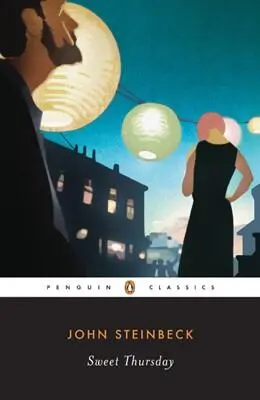
- Название:Sweet Thursday
- Автор:
- Издательство:Penguin Classics
- Жанр:
- Год:2008
- ISBN:1-4362-4126-X
- Рейтинг книги:5 / 5. Голосов: 1
-
Избранное:Добавить в избранное
- Отзывы:
-
Ваша оценка:
Sweet Thursday: краткое содержание, описание и аннотация
Предлагаем к чтению аннотацию, описание, краткое содержание или предисловие (зависит от того, что написал сам автор книги «Sweet Thursday»). Если вы не нашли необходимую информацию о книге — напишите в комментариях, мы постараемся отыскать её.
Cannery Row
Sweet Thursday — читать онлайн бесплатно полную книгу (весь текст) целиком
Ниже представлен текст книги, разбитый по страницам. Система сохранения места последней прочитанной страницы, позволяет с удобством читать онлайн бесплатно книгу «Sweet Thursday», без необходимости каждый раз заново искать на чём Вы остановились. Поставьте закладку, и сможете в любой момент перейти на страницу, на которой закончили чтение.
Интервал:
Закладка:
“What was you saying, Doc?” he asked quietly.
“Chong wanted you and the boys to have a home. He deeded it to you and put up the money for ten years’ taxes.”
“Well, whyn’t he tell us?”
“He was afraid if you knew you owned it you’d mortgage it or sell it and then you wouldn’t have a home.”
Mack was shaken. “Doc,” he said, “would you do me the favor? Don’t tell the boys.”
“Why, sure.”
“Shake on it?”
“Shake! Have a drink.”
Suddenly Mack laughed. “Doc,” he said, “I and the boys want to ask will you rent the joint to us?”
“Sure I will, Mack.”
“I hope they never find out. They’d skin me,” said Mack.
“Wouldn’t it be simpler if we just forgot the raffle?”
“No, sir!” said Mack. “Chong was right. I wouldn’t trust the boys not to sell her sometime when they need a buck. I wouldn’t trust myself.”
The visit of Old Jingleballicks had put Doc’s system to an outrageous test. Meals had been infrequent, sleep fitful, emotions on stilts, and the intake of alcohol enormous. The raffle had jarred him out of a pleasant swimming state into something resembling sobriety, but not very closely. A fog of unreality like a dream feeling was not in him but all around him. He went inside the Palace and saw the dwarfs and monsters and the preposterous Hazel all lighted by the flickering lanterns. None of it seemed the fabric of sweet reality. The music was deafening. Old Jay danced by, clutching a pale brunette to his stomach as though she were a pain—a disgusting sight, and as unreal as the rest.
Anyone untrained in tom-wallagers might well have been startled at this tom-wallager. Eddie waltzed to the rumba music, his arms embracing an invisible partner. Wide Ida lay on the floor wrestling with Whitey No. 2, at each try displaying acres of pink pan ties, while a wild conga line of dwarfs and animals milled about. Johnny Carriaga ran wild. Standing on a box, he fired at random but not at unsuspecting hearts. Mrs. Alfred Wong had a rubber-tipped arrow stuck between her shoulderblades. Then Johnny winged a lantern, and it crashed in flames and set fire to three dwarfs, so that they had to be put out with a punch bowl.
Mack and Doc were swept into the conga line. To Doc the room began to revolve slowly and then to rise and fall like the deck of a stately ship in a groundswell. The music roared and tinkled. Hazel beat out rhythm on the stove with his sword until Johnny, aiming carefully, got a bull’s-eye on Hazel. Hazel leaped in the air and came down on the oven door, scattering crushed ice all over the floor. One of the guests had got wedged in the grandfather clock. From the outside the Palace Flop house seemed to swell and subside like rising bread.
Doc cupped his hands close to Mack’s ear. “Where’s Fauna and the girls?” he shouted.
“Later,” Mack cried.
“What?”
“Coming later,” and he added, “Better get here pretty soon before the joint burns down.”
“What?”
“Skip it,” Mack shouted.
At this point Whitey No. 1 fought his way to Mack’s side and yelled, “Mack, they’re coming!”
Mack rushed to the Espaldas Mojadas and raised both hands at them. Johnny aimed his last arrow at the guitarón and took the fret out clean.
“Hold it!” Mack screamed.
The music stopped, and silence fell on the room. Then the unrealest part of all began to happen.
Very softly the sound of a sweet muted trumpet whispered, and the crazy thing was playing the “Wedding March” [108] “Wedding March”… Lohengrin: The Bridal Chorus from Richard Wagner’s romantic opera Lohengrin (1850). Traditionally played at weddings, it is commonly known as “Here Comes the Bride.”
from Lohengrin, and even as Doc listened the sly brass began playing with it, slid into minors, took a short rhythm ride, and moaned away at blues. The dancers were very still, almost stuffed. Doc found the source of the music—Cacahuete Rivas in the corner of the room, muting his trumpet with a damp sponge.
Then in this dream the paint-splashed curtain was pulled aside, and Fauna, the witch, came through the door, straddling a broom.
Doc thought, God! I’d hate to testify about this. I’d get the booby-hatch!
Fauna barked, “This here’s a very happy occasion.” She looked around. “Doc, come here.”
He moved vaguely toward her.
Four girls from the Bear Flag came through the door, dressed in blinding colors. They ranged themselves two on each side of the door, facing inward, holding their beribboned whisky bottles to make an arch.
Fauna dismounted from her broom and ripped off her black wrapper, displaying a sheath of silver lamé. In her hand miraculously appeared a silver wand tipped with a gold star. She struck a pose, riding on her toes as though prepared for flight. “I am your fairy godmother,” she shouted. “I bring you Snow White, the bride!”
Then Suzy appeared in the doorway, a transformed Suzy in a wedding gown. The silver crown was on her head, and from its points a veil was suspended. She looked lovely and young and excited. Her lips were parted.
Fauna yelled, “Doc, come get your girl!”
Doc shook his head to try to wake up. It was a dream, a craziness, the crown, the veil, the virginity. “What in hell is going on?”
It happens that two people standing apart can dip into each other’s thoughts. Suzy read his mind or his face. An embarrassed red crept up her neck and darkened her cheeks. She closed her eyes.
And Doc’s mind read her pain. His world spun like a top. He heard himself say, “Fairy Godmother, I accept—my—girl.”
Suzy opened her eyes and looked in Doc’s eyes. Then her jaw muscles tightened and her eyes grew fierce; her sweet mouth hardened to a line. She took off the crown and veil, looked at them a moment, and placed them gently on an apple box.
The crazy trumpet put a samba beat to the “Wedding March” and a guitar took up the throbbing.
“Listen, you mugs,” said Suzy over the music, “I could live with a stumblebum in a culvert and be a good wife. I could marry a yellow dog and be nice to him. But good Christ! Not Doc!” Suddenly she turned and darted out the door.
Fauna plunged after her. There was no chicken walk out the back way. Suzy slipped and rolled down the embankment and Fauna rolled after her. On the railroad track they gathered themselves together.
“You goddam grandstanding bitch!” said Fauna bitterly. “What do you mean—‘not Doc’?”
“I love him,” said Suzy.
29
Oh, Woe, Woe, Woe! [109] Oh, Woe, Woe, Woe!: From American Modernist expatriate poet Ezra Pound’s parodic “Song in the Manner of House man,” which appeared in his fifth collection, Canzoni (1911). The final stanza reads, “London is a woeful place, / Shropshire is much pleasanter. / Then let us smile a little space / Upon fond nature’s morbid grace. / Oh, Woe, woe, woe, etcetera… ”
One of the common reactions to shock is lethargy. If, after an automobile accident, one man is howling and writhing and another sits quietly staring into space, it is usually the quiet man who is badly hurt. A community can go into shock too. Cannery Row did. People drew into themselves, kept their doors closed, and didn’t visit. Everyone felt guilty, even those who had not planned the party. Merely to have seen it was enough.
Mack and the boys were doubled up with a sense of unhappy fate. It was their third try at doing something nice for Doc, and it was their third failure. They did not know where to turn to escape their own scorn.
Wide Ida became fiercely taciturn. Her customers drank in silence to escape the guilty rage they knew was just under her muscular surface.
Читать дальшеИнтервал:
Закладка:
Похожие книги на «Sweet Thursday»
Представляем Вашему вниманию похожие книги на «Sweet Thursday» списком для выбора. Мы отобрали схожую по названию и смыслу литературу в надежде предоставить читателям больше вариантов отыскать новые, интересные, ещё непрочитанные произведения.





Обсуждение, отзывы о книге «Sweet Thursday» и просто собственные мнения читателей. Оставьте ваши комментарии, напишите, что Вы думаете о произведении, его смысле или главных героях. Укажите что конкретно понравилось, а что нет, и почему Вы так считаете.