Jerome Jerome - Paul Kelver
Здесь есть возможность читать онлайн «Jerome Jerome - Paul Kelver» весь текст электронной книги совершенно бесплатно (целиком полную версию без сокращений). В некоторых случаях можно слушать аудио, скачать через торрент в формате fb2 и присутствует краткое содержание. Город: New York, Год выпуска: 1902, Издательство: Dodd, Mead & Company, Жанр: Классическая проза, на английском языке. Описание произведения, (предисловие) а так же отзывы посетителей доступны на портале библиотеки ЛибКат.
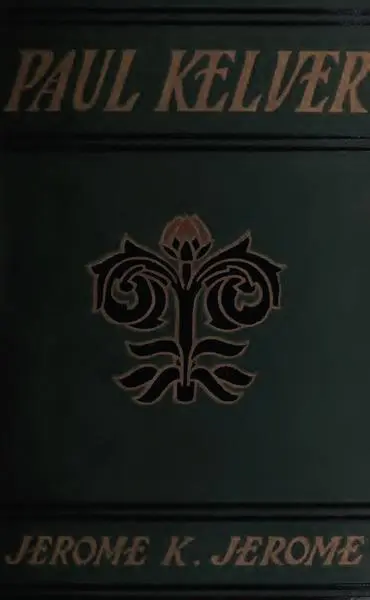
- Название:Paul Kelver
- Автор:
- Издательство:Dodd, Mead & Company
- Жанр:
- Год:1902
- Город:New York
- ISBN:нет данных
- Рейтинг книги:3 / 5. Голосов: 1
-
Избранное:Добавить в избранное
- Отзывы:
-
Ваша оценка:
Paul Kelver: краткое содержание, описание и аннотация
Предлагаем к чтению аннотацию, описание, краткое содержание или предисловие (зависит от того, что написал сам автор книги «Paul Kelver»). Если вы не нашли необходимую информацию о книге — напишите в комментариях, мы постараемся отыскать её.
Paul Kelver — читать онлайн бесплатно полную книгу (весь текст) целиком
Ниже представлен текст книги, разбитый по страницам. Система сохранения места последней прочитанной страницы, позволяет с удобством читать онлайн бесплатно книгу «Paul Kelver», без необходимости каждый раз заново искать на чём Вы остановились. Поставьте закладку, и сможете в любой момент перейти на страницу, на которой закончили чтение.
Интервал:
Закладка:
“You fire away, Shakespeare Redivivus,” he would reply. “Don't delay the tragedy. Why should London wait? I'll keep quiet.”
But his notion of keeping quiet was to retire into a corner and there amuse himself by enacting a tragedy of his own in a hoarse whisper, accompanied by appropriate gesture.
“Ah, ah!” I would hear him muttering to himself, “I 'ave killed 'er good old father; I 'ave falsely accused 'er young man of all the crimes that I 'ave myself committed; I 'ave robbed 'er of 'er ancestral estates. Yet she loves me not! It is streeange!” Then changing his bass to a shrill falsetto: “It is a cold and dismal night: the snow falls fast. I will leave me 'at and umbrella be'ind the door and go out for a walk with the chee-ild. Aha! who is this? 'E also 'as forgotten 'is umbrella. Ah, now I know 'im in the pitch dark by 'is cigarette! Villain, murderer, silly josser! it is you!” Then with lightning change of voice and gesture: “Mary, I love yer!” “Sir Jasper Murgatroyd, let me avail myself of this opportunity to tell you what I think of you—” “No, no; the 'ouses close in 'alf an hour; there is not tee-ime. Fly with me instead!” “Never! Un'and me!” “'Ear me! Ah, what 'ave I done? I 'ave slipped upon a piece of orange peel and broke me 'ead! If you will kindly ask them to turn off the snow and give me a little moonlight, I will confess all.”
Finding it (much to Jarman's surprise) impossible to renew the thread of my work, I would abandon my attempts at literature, and instead listen to his talk, which was always interesting. His conversation was, it is true, generally about himself, but it was none the less attractive on that account. His love affairs, which appeared to be numerous, formed his chief topic. There was no reserve about Jarman: his life contained no secret chambers. What he “told her straight,” what she “up and said to him” in reply was for all the world that cared to hear. So far his search after the ideal had met with but ill success.
“Girls,” he would say, “they're all alike, till you know 'em. So long as they're trying to palm themselves off on yer, they'll persuade you there isn't such another article in all the market. When they've got yer order—ah, then yer find out what they're really made of. And you take it from me, 'Omer Junior, most of 'em are put together cheap. Bah! it sickens me sometimes to read the way you paper-stainers talk about 'em-angels, goddesses, fairies! They've just been getting at yer. You're giving 'em just the price they're asking without examining the article. Girls ain't a special make, like what you seem to think 'em. We're all turned out of the same old slop shop.”
“Not that I say, mind yer,” he would continue, “that there are none of the right sort. They're to be 'ad—real good 'uns. All I say is, taking 'em at their own valuation ain't the way to do business with 'em.”
What he was on the look out for—to quote his own description—was a really first class article, not something from which the paint would come off almost before you got it home.
“They're to be found,” he would cheerfully affirm, “but you've got to look for 'em. They're not the sort that advertises.”
Behind Jarman in the second floor back resided one whom Jarman had nicknamed “The Lady 'Ortensia.” I believe before my arrival there had been love passages between the two; but neither of them, so I gathered, had upon closer inspection satisfied the other's standard. Their present attitude towards each other was that of insult thinly veiled under exaggerated politeness. Miss Rosina Sellars was, in her own language, a “lady assistant,” in common parlance, a barmaid at the Ludgate Hill Station refreshment room. She was a large, flabby young woman. With less powder, her complexion might by admirers have been termed creamy; as it was, it presented the appearance rather of underdone pastry. To be on all occasions “quite the lady” was her pride. There were those who held the angle of her dignity to be exaggerated. Jarman would beg her for her own sake to be more careful lest one day she should fall down backwards and hurt herself. On the other hand, her bearing was certainly calculated to check familiarity. Even stockbrokers' clerks—young men as a class with the bump of reverence but poorly developed—would in her presence falter and grow hesitating. She had cultivated the art of not noticing to something approaching perfection. She could draw the noisiest customer a glass of beer, which he had never ordered; exchange it for three of whiskey, which he had; take his money and return him his change without ever seeing him, hearing him, or knowing he was there. It shattered the self-assertion of the youngest of commercial travellers. Her tone and manner, outside rare moments of excitement, were suggestive of an offended but forgiving iceberg. Jarman invariably passed her with his coat collar turned up to his ears, and even thus protected might have been observed to shiver. Her stare, in conjunction with her “I beg your pardon!” was a moral douche that would have rendered apologetic and explanatory Don Juan himself.
To me she was always gracious, which by contrast to her general attitude towards my sex of studied disdain, I confess flattered me. She was good enough to observe to Mrs. Peedles, who repeated it to me, that I was the only gentleman in the house who knew how to behave himself.
The entire first floor was occupied by an Irishman and—they never minced the matter themselves, so hardly is there need for me to do so. She was a charming little dark-eyed woman, an ex-tight-rope dancer, and always greatly offended Mrs. Peedles by claiming Miss Lucretia Barry as a sister artiste.
“Of course I don't know how it may be now,” would reply Mrs. Peedles, with some slight asperity; “but in my time we ladies of the legitimate stage used to look down upon dancers and such sort. Of course, no offence to you, Mrs. O'Kelly.”
Neither of them was in the least offended.
“Sure, Mrs. Peedles, ye could never have looked down upon the Signora,” the O'Kelly would answer laughing. “Ye had to lie back and look up to her. Why, I've got the crick in me neck to this day!”
“Ah! my dear, and you don't know how nervous I was when glancing down I'd see his handsome face just underneath me, thinking that with one false step I might spoil it for ever,” would reply the Signora.
“Me darling! I'd have died happy, just smothered in loveliness!” would return the O'Kelly; and he and the Signora would rush into each other's arms, and the sound of their kisses would quite excite the little slavey sweeping down the stairs outside.
He was a barrister attached in theory to the Western Circuit; in practice, somewhat indifferent to it, much more attached to the lower strata of Bohemia and the Signora. At the present he was earning all sufficient for the simple needs of himself and the Signora as a teacher of music and singing. His method was simple and suited admirably the locality. Unless specially requested, he never troubled his pupils with such tiresome things as scales and exercises. His plan was to discover the song the young man fancied himself singing, the particular jingle the young lady yearned to knock out of the piano, and to teach it to them. Was it “Tom Bowling?” Well and good. Come on; follow your leader. The O'Kelly would sing the first line.
“Now then, try that. Don't be afraid. Just open yer mouth and gave it tongue. That's all right. Everything has a beginning. Sure, later on, we'll get the time and tune, maybe a little expression.”
Whether the system had any merit in it, I cannot answer. Certain it was that as often as not it achieved success. Gradually—say, by the end of twelve eighteen-penny lessons—out of storm and chaos “Tom Bowling” would emerge, recognisable for all men to hear. Had the pupil any voice to start with, the O'Kelly improved it; had he none, the O'Kelly would help him to disguise the fact.
Читать дальшеИнтервал:
Закладка:
Похожие книги на «Paul Kelver»
Представляем Вашему вниманию похожие книги на «Paul Kelver» списком для выбора. Мы отобрали схожую по названию и смыслу литературу в надежде предоставить читателям больше вариантов отыскать новые, интересные, ещё непрочитанные произведения.







Обсуждение, отзывы о книге «Paul Kelver» и просто собственные мнения читателей. Оставьте ваши комментарии, напишите, что Вы думаете о произведении, его смысле или главных героях. Укажите что конкретно понравилось, а что нет, и почему Вы так считаете.