Jerome Jerome - Paul Kelver
Здесь есть возможность читать онлайн «Jerome Jerome - Paul Kelver» весь текст электронной книги совершенно бесплатно (целиком полную версию без сокращений). В некоторых случаях можно слушать аудио, скачать через торрент в формате fb2 и присутствует краткое содержание. Город: New York, Год выпуска: 1902, Издательство: Dodd, Mead & Company, Жанр: Классическая проза, на английском языке. Описание произведения, (предисловие) а так же отзывы посетителей доступны на портале библиотеки ЛибКат.
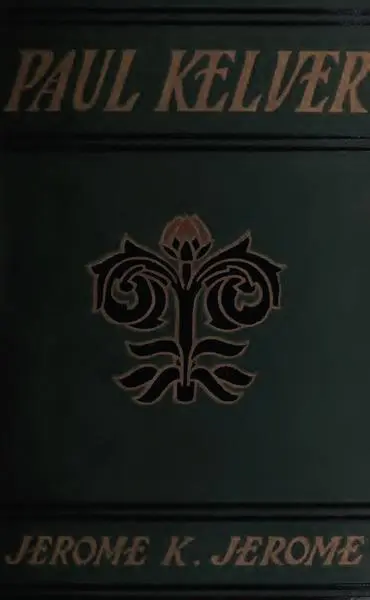
- Название:Paul Kelver
- Автор:
- Издательство:Dodd, Mead & Company
- Жанр:
- Год:1902
- Город:New York
- ISBN:нет данных
- Рейтинг книги:3 / 5. Голосов: 1
-
Избранное:Добавить в избранное
- Отзывы:
-
Ваша оценка:
Paul Kelver: краткое содержание, описание и аннотация
Предлагаем к чтению аннотацию, описание, краткое содержание или предисловие (зависит от того, что написал сам автор книги «Paul Kelver»). Если вы не нашли необходимую информацию о книге — напишите в комментариях, мы постараемся отыскать её.
Paul Kelver — читать онлайн бесплатно полную книгу (весь текст) целиком
Ниже представлен текст книги, разбитый по страницам. Система сохранения места последней прочитанной страницы, позволяет с удобством читать онлайн бесплатно книгу «Paul Kelver», без необходимости каждый раз заново искать на чём Вы остановились. Поставьте закладку, и сможете в любой момент перейти на страницу, на которой закончили чтение.
Интервал:
Закладка:
But no glib flow of figures fell from him. His eyebrows suddenly contracted, his body stiffened itself. Then for the next quarter of an hour nothing sounded in the quiet room but his turning of the creakling pages. Once or twice he glanced round swiftly over his shoulder, as though haunted by the idea of some one behind him; then back to the neat, closely written folios, his little eyes, now exhibiting a comical look of horror, starting out of his round red face. First slowly, then quickly with trembling hands he turned the pages, till the continual ratling of the leaves sounded like strange, mocking laughter through the silent, empty room; almost one could imagine it coming from some watching creature hidden in the shadows.
The end reached, he sat staring before him, his whole body quivering, great beads of sweat upon his shiny bald head.
“Am I mad?” was all he could find to say. “Kelver, am I mad?”
He handed me the book. It was a cynically truthful record of fraud, extending over thirty years. Every client, every friend, every relative that had fallen into his net he had robbed: the fortunate ones of a part, the majority of their all. Its very first entry debited him with the proceeds of his own partner's estate. Its last ran—“Re Kelver—various sales of stock.” To his credit were his payments year after year of imaginary interests on imaginary securities, the surplus accounted for with simple brevity: “Transferred to own account.” No record could have been more clear, more frank. Beneath each transaction was written its true history; the actual investments, sometimes necessary, carefully distinguished from the false. In neat red ink would occur here and there a note for his own guidance: “Eldest child comes of age August, '73. Be prepared for trustees desiring production.” Turning to “August, '73,” one found that genuine investment had been made, to be sold again a few months later on. From beginning to end not a single false step had he committed. Suspicious clients had been ear-marked: the trusting discriminated with gratitude, and milked again and again to meet emergency.
As a piece of organisation it was magnificent. No one but a financial genius could have picked a dozen steps through such a network of chicanery. For half a lifetime he had moved among it, dignified, respected and secure.
Whether even he could have maintained his position for another month was doubtful. Suicide, though hinted at, was proved to have been impossible. It seemed as though with his amazing audacity he had tricked even Death into becoming his accomplice.
“But it is impossible, Kelver!” cried Gadley, “this must be some dream. Stillwood, Waterhead and Royal! What is the meaning of it?”
He took the book into his hands again, then burst into tears. “You never knew him,” wailed the poor little man. “Stillwood, Waterhead and Royal! I came here as office boy fifty years ago. He was more like a friend to me than—” and again the sobs shook his little fat body.
I locked the books away and put him into his hat and coat. But I had much difficulty in getting him out of the office.
“I daren't, young 'un,” he cried, drawing back. “Fifty years I have walked out of this office, proud of it, proud of being connected with it. I daren't face the street!”
All the way home his only idea was: Could it not be hidden? Honest, kindly little man that he was, he seemed to have no thought for the unfortunate victims. The good name of his master, of his friend, gone! Stillwood, Waterhead and Royal, a by-word! To have avoided that I believe he would have been willing for yet another hundred clients to be ruined.
I saw him to his door, then turned homeward; and to my surprise in a dark by-street heard myself laughing heartily. I checked myself instantly, feeling ashamed of my callousness, of my seeming indifference to the trouble even of myself and my mother. Yet as there passed before me the remembrance of that imposing and expensive funeral with its mournful following of tearful faces; the hushed reading of the will with its accompaniment of rustling approval; the picture of the admirably sympathetic clergyman consoling with white hands Mrs. Stillwood, inclined to hysteria, but anxious concerning her two hundred pounds' worth of crape which by no possibility of means could now be paid for—recurred to me the obituary notice in “The Chelsea Weekly Chronicle”: the humour of the thing swept all else before it, and I laughed again—I could not help it—loud and long. It was my first introduction to the comedy of life, which is apt to be more brutal than the comedy of fiction.
But nearing home, the serious side of the matter forced itself uppermost. Fortunately, our supposed dividends had been paid to us by Mr. Stillwood only the month before. Could I keep the thing from troubling my mother's last days? It would be hard work. I should have to do it alone, for a perhaps foolish pride prevented my taking Hal into my confidence, even made his friendship a dread to me, lest he should come to learn and offer help. There is a higher generosity, it is said, that can receive with pleasure as well as bestow favour; but I have never felt it. Could I be sure of acting my part, of not betraying myself to her sharp eyes, of keeping newspapers and chance gossip away from her? Good shrewd Amy I cautioned, but I shrank from even speaking on the subject to Hal, and my fear was lest he should blunder into the subject, which for the usual nine days occupied much public attention. But fortunately he appeared not even to have heard of the scandal.
Possibly had the need lasted longer I might have failed, but as it was, a few weeks saw the end.
“Don't leave me to-day, Paul,” whispered my mother to me one morning. So I stayed, and in the evening my mother put her arms around my neck and I lay beside her, my head upon her breast, as I used to when a little boy. And when the morning came I was alone.
BOOK II.
Chapter I.
Describes the Desert Island to which Paul was Drifted.
“Room to let for a single gentleman.” Sometimes in an idle hour, impelled by foolishness, I will knock at the door. It is opened after a longer or shorter interval by the “slavey”—in the morning, slatternly, her arms concealed beneath her apron; in the afternoon, smart in dirty cap and apron. How well I know her! Unchanged, not grown an inch—her round bewildered eyes, her open mouth, her touzled hair, her scored red hands. With an effort I refrain from muttering: “So sorry, forgot my key,” from pushing past her and mounting two at a time the narrow stairs, carpeted to the first floor, but bare beyond. Instead, I say, “Oh, what rooms have you to let?” when, scuttling to the top of the kitchen stairs, she will call over the banisters: “A gentleman to see the rooms.” There comes up, panting, a harassed-looking, elderly female, but genteel in black. She crushes past the little “slavey,” and approaching, eyes me critically.
“I have a very nice room on the first floor,” she informs me, “and one behind on the third.”
I agree to see them, explaining that I am seeking them for a young friend of mine. We squeeze past the hat and umbrella stand: there is just room, but one must keep close to the wall. The first floor is rather an imposing apartment, with a marble-topped sideboard measuring quite three feet by two, the doors of which will remain closed if you introduce a wad of paper between them. A green table-cloth, matching the curtains, covers the loo-table. The lamp is perfectly safe so long as it stands in the exact centre of the table, but should not be shifted. A paper fire-stove ornament in some mysterious way bestows upon the room an air of chastity. Above the mantelpiece is a fly-blown mirror, between the once gilt frame and glass of which can be inserted invitation cards; indeed, one or two so remain, proving that the tenants even of “bed-sitting-rooms” are not excluded from social delights. The wall opposite is adorned by an oleograph of the kind Cheap Jacks sell by auction on Saturday nights in the Pimlico Road, and warrant as “hand-made.” Generally speaking, it is a Swiss landscape. There appears to be more “body” in a Swiss landscape than in scenes from less favoured localities. A dilapidated mill, a foaming torrent, a mountain, a maiden and a cow can at the least be relied upon. An easy chair (I disclaim all responsibility for the adjective), stuffed with many coils of steel wire, each possessing a “business end” in admirable working order, and covered with horsehair, highly glazed, awaits the uninitiated. There is one way of sitting upon it, and only one: by using the extreme edge, and planting your feet firmly on the floor. If you attempt to lean back in it you inevitably slide out of it. When so treated it seems to say to you: “Excuse me, you are very heavy, and you would really be much more comfortable upon the floor. Thank you so much.” The bed is behind the door, and the washstand behind the bed. If you sit facing the window you can forget the bed. On the other hand, if more than one friend come to call on you, you are glad of it. As a matter of fact, experienced visitors prefer it—make straight for it, refusing with firmness to exchange it for the easy chair.
Читать дальшеИнтервал:
Закладка:
Похожие книги на «Paul Kelver»
Представляем Вашему вниманию похожие книги на «Paul Kelver» списком для выбора. Мы отобрали схожую по названию и смыслу литературу в надежде предоставить читателям больше вариантов отыскать новые, интересные, ещё непрочитанные произведения.









Обсуждение, отзывы о книге «Paul Kelver» и просто собственные мнения читателей. Оставьте ваши комментарии, напишите, что Вы думаете о произведении, его смысле или главных героях. Укажите что конкретно понравилось, а что нет, и почему Вы так считаете.