Mark Twain - A Tramp Abroad
Здесь есть возможность читать онлайн «Mark Twain - A Tramp Abroad» весь текст электронной книги совершенно бесплатно (целиком полную версию без сокращений). В некоторых случаях можно слушать аудио, скачать через торрент в формате fb2 и присутствует краткое содержание. Жанр: Классическая проза, Юмористическая проза, на английском языке. Описание произведения, (предисловие) а так же отзывы посетителей доступны на портале библиотеки ЛибКат.
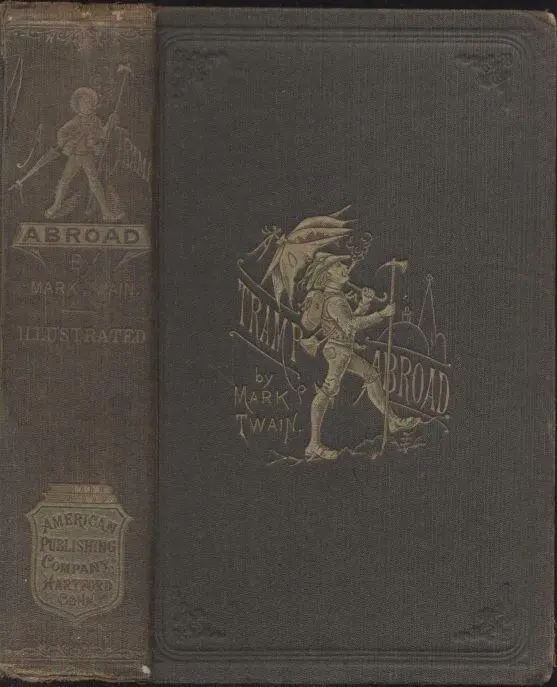
- Название:A Tramp Abroad
- Автор:
- Жанр:
- Год:неизвестен
- ISBN:нет данных
- Рейтинг книги:5 / 5. Голосов: 1
-
Избранное:Добавить в избранное
- Отзывы:
-
Ваша оценка:
A Tramp Abroad: краткое содержание, описание и аннотация
Предлагаем к чтению аннотацию, описание, краткое содержание или предисловие (зависит от того, что написал сам автор книги «A Tramp Abroad»). Если вы не нашли необходимую информацию о книге — напишите в комментариях, мы постараемся отыскать её.
A Tramp Abroad — читать онлайн бесплатно полную книгу (весь текст) целиком
Ниже представлен текст книги, разбитый по страницам. Система сохранения места последней прочитанной страницы, позволяет с удобством читать онлайн бесплатно книгу «A Tramp Abroad», без необходимости каждый раз заново искать на чём Вы остановились. Поставьте закладку, и сможете в любой момент перейти на страницу, на которой закончили чтение.
Интервал:
Закладка:
It appeared to me that the ice was getting pretty thin, here. I would have given something to know what the child's was. However, I had the good luck to think of a name that would fit either sex—so I brought it out:
"I named it Frances."
"From a relative, I suppose? But you named the one that died, too—one that I never saw. What did you call that one?"
I was out of neutral names, but as the child was dead and she had never seen it, I thought I might risk a name for it and trust to luck. Therefore I said:
"I called that one Thomas Henry."
She said, musingly:
"That is very singular ... very singular."
I sat still and let the cold sweat run down. I was in a good deal of trouble, but I believed I could worry through if she wouldn't ask me to name any more children. I wondered where the lightning was going to strike next. She was still ruminating over that last child's title, but presently she said:
"I have always been sorry you were away at the time—I would have had you name my child."
"YOUR child! Are you married?"
"I have been married thirteen years."
"Christened, you mean."
`"No, married. The youth by your side is my son."
"It seems incredible—even impossible. I do not mean any harm by it, but would you mind telling me if you are any over eighteen?—that is to say, will you tell me how old you are?"
"I was just nineteen the day of the storm we were talking about. That was my birthday."
That did not help matters, much, as I did not know the date of the storm. I tried to think of some non-committal thing to say, to keep up my end of the talk, and render my poverty in the matter of reminiscences as little noticeable as possible, but I seemed to be about out of non-committal things. I was about to say, "You haven't changed a bit since then"—but that was risky. I thought of saying, "You have improved ever so much since then"—but that wouldn't answer, of course. I was about to try a shy at the weather, for a saving change, when the girl slipped in ahead of me and said:
"How I have enjoyed this talk over those happy old times—haven't you?"
"I never have spent such a half-hour in all my life before!" said I, with emotion; and I could have added, with a near approach to truth, "and I would rather be scalped than spend another one like it." I was holily grateful to be through with the ordeal, and was about to make my good-bys and get out, when the girl said:
"But there is one thing that is ever so puzzling to me."
"Why, what is that?"
"That dead child's name. What did you say it was?"
Here was another balmy place to be in: I had forgotten the child's name; I hadn't imagined it would be needed again. However, I had to pretend to know, anyway, so I said:
"Joseph William."
The youth at my side corrected me, and said:
"No, Thomas Henry."
I thanked him—in words—and said, with trepidation:
"O yes—I was thinking of another child that I named—I have named a great many, and I get them confused—this one was named Henry Thompson—"
"Thomas Henry," calmly interposed the boy.
I thanked him again—strictly in words—and stammered out:
"Thomas Henry—yes, Thomas Henry was the poor child's name. I named him for Thomas—er—Thomas Carlyle, the great author, you know—and Henry—er—er—Henry the Eighth. The parents were very grateful to have a child named Thomas Henry."
"That makes it more singular than ever," murmured my beautiful friend.
"Does it? Why?"
"Because when the parents speak of that child now, they always call it Susan Amelia."
That spiked my gun. I could not say anything. I was entirely out of verbal obliquities; to go further would be to lie, and that I would not do; so I simply sat still and suffered—sat mutely and resignedly there, and sizzled—for I was being slowly fried to death in my own blushes. Presently the enemy laughed a happy laugh and said:
"I HAVE enjoyed this talk over old times, but you have not. I saw very soon that you were only pretending to know me, and so as I had wasted a compliment on you in the beginning, I made up my mind to punish you. And I have succeeded pretty well. I was glad to see that you knew George and Tom and Darley, for I had never heard of them before and therefore could not be sure that you had; and I was glad to learn the names of those imaginary children, too. One can get quite a fund of information out of you if one goes at it cleverly. Mary and the storm, and the sweeping away of the forward boats, were facts—all the rest was fiction. Mary was my sister; her full name was Mary ———. NOW do you remember me?"
"Yes," I said, "I do remember you now; and you are as hard-headed as you were thirteen years ago in that ship, else you wouldn't have punished me so. You haven't changed your nature nor your person, in any way at all; you look as young as you did then, you are just as beautiful as you were then, and you have transmitted a deal of your comeliness to this fine boy. There—if that speech moves you any, let's fly the flag of truce, with the understanding that I am conquered and confess it."
All of which was agreed to and accomplished, on the spot. When I went back to Harris, I said:
"Now you see what a person with talent and address can do."
"Excuse me, I see what a person of colossal ignorance and simplicity can do. The idea of your going and intruding on a party of strangers, that way, and talking for half an hour; why I never heard of a man in his right mind doing such a thing before. What did you say to them?"
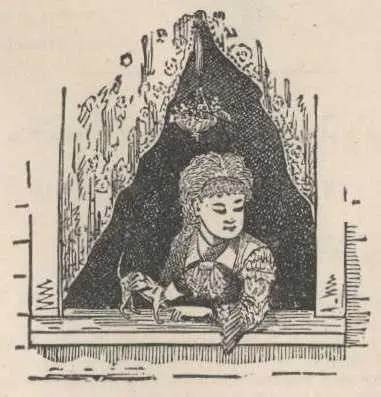
"I never said any harm. I merely asked the girl what her name was."
"I don't doubt it. Upon my word I don't. I think you were capable of it. It was stupid in me to let you go over there and make such an exhibition of yourself. But you know I couldn't really believe you would do such an inexcusable thing. What will those people think of us? But how did you say it?—I mean the manner of it. I hope you were not abrupt."
"No, I was careful about that. I said, 'My friend and I would like to know what your name is, if you don't mind.'"
"No, that was not abrupt. There is a polish about it that does you infinite credit. And I am glad you put me in; that was a delicate attention which I appreciate at its full value. What did she do?"
"She didn't do anything in particular. She told me her name."
"Simply told you her name. Do you mean to say she did not show any surprise?"
"Well, now I come to think, she did show something; maybe it was surprise; I hadn't thought of that—I took it for gratification."
"Oh, undoubtedly you were right; it must have been gratification; it could not be otherwise than gratifying to be assaulted by a stranger with such a question as that. Then what did you do?"
"I offered my hand and the party gave me a shake."
"I saw it! I did not believe my own eyes, at the time. Did the gentleman say anything about cutting your throat?"
"No, they all seemed glad to see me, as far as I could judge."
"And do you know, I believe they were. I think they said to themselves, 'Doubtless this curiosity has got away from his keeper—let us amuse ourselves with him.' There is no other way of accounting for their facile docility. You sat down. Did they ASK you to sit down?"
"No, they did not ask me, but I suppose they did not think of it."
"You have an unerring instinct. What else did you do? What did you talk about?"
"Well, I asked the girl how old she was."
"UNdoubtedly. Your delicacy is beyond praise. Go on, go on—don't mind my apparent misery—I always look so when I am steeped in a profound and reverent joy. Go on—she told you her age?"
Читать дальшеИнтервал:
Закладка:
Похожие книги на «A Tramp Abroad»
Представляем Вашему вниманию похожие книги на «A Tramp Abroad» списком для выбора. Мы отобрали схожую по названию и смыслу литературу в надежде предоставить читателям больше вариантов отыскать новые, интересные, ещё непрочитанные произведения.










Обсуждение, отзывы о книге «A Tramp Abroad» и просто собственные мнения читателей. Оставьте ваши комментарии, напишите, что Вы думаете о произведении, его смысле или главных героях. Укажите что конкретно понравилось, а что нет, и почему Вы так считаете.