Mark Twain - A Tramp Abroad
Здесь есть возможность читать онлайн «Mark Twain - A Tramp Abroad» весь текст электронной книги совершенно бесплатно (целиком полную версию без сокращений). В некоторых случаях можно слушать аудио, скачать через торрент в формате fb2 и присутствует краткое содержание. Жанр: Классическая проза, Юмористическая проза, на английском языке. Описание произведения, (предисловие) а так же отзывы посетителей доступны на портале библиотеки ЛибКат.
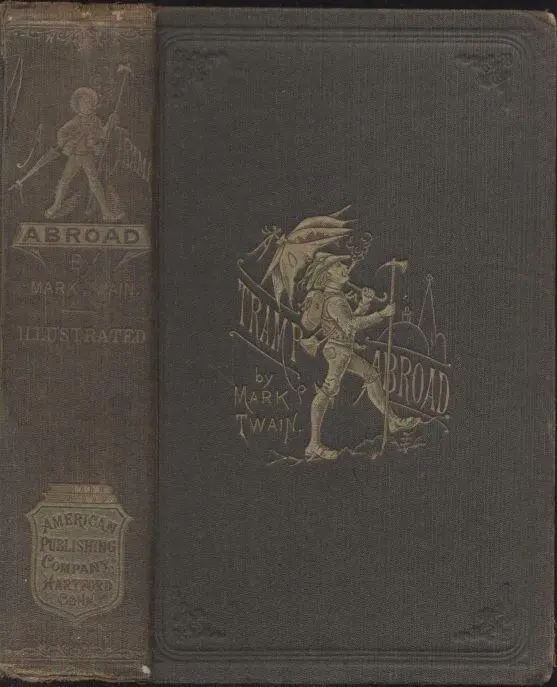
- Название:A Tramp Abroad
- Автор:
- Жанр:
- Год:неизвестен
- ISBN:нет данных
- Рейтинг книги:5 / 5. Голосов: 1
-
Избранное:Добавить в избранное
- Отзывы:
-
Ваша оценка:
A Tramp Abroad: краткое содержание, описание и аннотация
Предлагаем к чтению аннотацию, описание, краткое содержание или предисловие (зависит от того, что написал сам автор книги «A Tramp Abroad»). Если вы не нашли необходимую информацию о книге — напишите в комментариях, мы постараемся отыскать её.
A Tramp Abroad — читать онлайн бесплатно полную книгу (весь текст) целиком
Ниже представлен текст книги, разбитый по страницам. Система сохранения места последней прочитанной страницы, позволяет с удобством читать онлайн бесплатно книгу «A Tramp Abroad», без необходимости каждый раз заново искать на чём Вы остановились. Поставьте закладку, и сможете в любой момент перейти на страницу, на которой закончили чтение.
Интервал:
Закладка:
Thus my education proceeded easily and comfortably for me, but not for Harris. Three courses of a table d'hôte dinner were enough for me, but Harris preferred thirteen.
Even after I had acquired full confidence, and no longer needed the agent's help, I sometimes encountered difficulties. Once at Baden-Baden I nearly lost a train because I could not be sure that three young ladies opposite me at table were Germans, since I had not heard them speak; they might be American, they might be English, it was not safe to venture a bow; but just as I had got that far with my thought, one of them began a German remark, to my great relief and gratitude; and before she got out her third word, our bows had been delivered and graciously returned, and we were off.
There is a friendly something about the German character which is very winning. When Harris and I were making a pedestrian tour through the Black Forest, we stopped at a little country inn for dinner one day; two young ladies and a young gentleman entered and sat down opposite us. They were pedestrians, too. Our knapsacks were strapped upon our backs, but they had a sturdy youth along to carry theirs for them. All parties were hungry, so there was no talking. By and by the usual bows were exchanged, and we separated.
As we sat at a late breakfast in the hotel at Allerheiligen, next morning, these young people entered and took places near us without observing us; but presently they saw us and at once bowed and smiled; not ceremoniously, but with the gratified look of people who have found acquaintances where they were expecting strangers. Then they spoke of the weather and the roads. We also spoke of the weather and the roads. Next, they said they had had an enjoyable walk, notwithstanding the weather. We said that that had been our case, too. Then they said they had walked thirty English miles the day before, and asked how many we had walked. I could not lie, so I told Harris to do it. Harris told them we had made thirty English miles, too. That was true; we had "made" them, though we had had a little assistance here and there.
After breakfast they found us trying to blast some information out of the dumb hotel clerk about routes, and observing that we were not succeeding pretty well, they went and got their maps and things, and pointed out and explained our course so clearly that even a New York detective could have followed it. And when we started they spoke out a hearty good-by and wished us a pleasant journey. Perhaps they were more generous with us than they might have been with native wayfarers because we were a forlorn lot and in a strange land; I don't know; I only know it was lovely to be treated so.
Very well, I took an American young lady to one of the fine balls in Baden-Baden, one night, and at the entrance-door upstairs we were halted by an official—something about Miss Jones's dress was not according to rule; I don't remember what it was, now; something was wanting—her back hair, or a shawl, or a fan, or a shovel, or something. The official was ever so polite, and ever so sorry, but the rule was strict, and he could not let us in. It was very embarrassing, for many eyes were on us. But now a richly dressed girl stepped out of the ballroom, inquired into the trouble, and said she could fix it in a moment. She took Miss Jones to the robing-room, and soon brought her back in regulation trim, and then we entered the ballroom with this benefactress unchallenged.
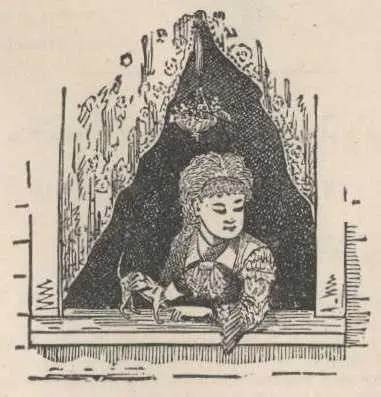
Being safe, now, I began to puzzle through my sincere but ungrammatical thanks, when there was a sudden mutual recognition —the benefactress and I had met at Allerheiligen. Two weeks had not altered her good face, and plainly her heart was in the right place yet, but there was such a difference between these clothes and the clothes I had seen her in before, when she was walking thirty miles a day in the Black Forest, that it was quite natural that I had failed to recognize her sooner. I had on MY other suit, too, but my German would betray me to a person who had heard it once, anyway. She brought her brother and sister, and they made our way smooth for that evening.
Well—months afterward, I was driving through the streets of Munich in a cab with a German lady, one day, when she said:
"There, that is Prince Ludwig and his wife, walking along there."
Everybody was bowing to them—cabmen, little children, and everybody else—and they were returning all the bows and overlooking nobody, when a young lady met them and made a deep courtesy.
"That is probably one of the ladies of the court," said my German friend.
I said:
"She is an honor to it, then. I know her. I don't know her name, but I know HER. I have known her at Allerheiligen and Baden-Baden. She ought to be an Empress, but she may be only a Duchess; it is the way things go in this way."
If one asks a German a civil question, he will be quite sure to get a civil answer. If you stop a German in the street and ask him to direct you to a certain place, he shows no sign of feeling offended. If the place be difficult to find, ten to one the man will drop his own matters and go with you and show you.
In London, too, many a time, strangers have walked several blocks with me to show me my way.
There is something very real about this sort of politeness. Quite often, in Germany, shopkeepers who could not furnish me the article I wanted have sent one of their employees with me to show me a place where it could be had.
CHAPTER XIX
The Deadly Jest of Dilsberg
Arrive at Neckarsteinach—Castle of Dilsberg—A Walled Town—On a Hill—Exclusiveness of the People—A Queer Old Place—An Ancient Well—An Outlet Proved—Legend of Dilsberg Castle—The Haunted Chamber—The Betrothed's request—The Knight's Slumbers and Awakening—Horror of the Lover—The Wicked Jest—The Lover a Maniac—Under the Linden—Turning Pilot—Accident to the Raft—Fearful Disaster
However, I wander from the raft. We made the port of Necharsteinach in good season, and went to the hotel and ordered a trout dinner, the same to be ready against our return from a two-hour pedestrian excursion to the village and castle of Dilsberg, a mile distant, on the other side of the river. I do not mean that we proposed to be two hours making two miles—no, we meant to employ most of the time in inspecting Dilsberg.
For Dilsberg is a quaint place. It is most quaintly and picturesquely situated, too. Imagine the beautiful river before you; then a few rods of brilliant green sward on its opposite shore; then a sudden hill—no preparatory gently rising slopes, but a sort of instantaneous hill—a hill two hundred and fifty or three hundred feet high, as round as a bowl, with the same taper upward that an inverted bowl has, and with about the same relation of height to diameter that distinguishes a bowl of good honest depth—a hill which is thickly clothed with green bushes—a comely, shapely hill, rising abruptly out of the dead level of the surrounding green plains, visible from a great distance down the bends of the river, and with just exactly room on the top of its head for its steepled and turreted and roof-clustered cap of architecture, which same is tightly jammed and compacted within the perfectly round hoop of the ancient village wall.
There is no house outside the wall on the whole hill, or any vestige of a former house; all the houses are inside the wall, but there isn't room for another one. It is really a finished town, and has been finished a very long time. There is no space between the wall and the first circle of buildings; no, the village wall is itself the rear wall of the first circle of buildings, and the roofs jut a little over the wall and thus furnish it with eaves. The general level of the massed roofs is gracefully broken and relieved by the dominating towers of the ruined castle and the tall spires of a couple of churches; so, from a distance Dilsberg has rather more the look of a king's crown than a cap. That lofty green eminence and its quaint coronet form quite a striking picture, you may be sure, in the flush of the evening sun.
Читать дальшеИнтервал:
Закладка:
Похожие книги на «A Tramp Abroad»
Представляем Вашему вниманию похожие книги на «A Tramp Abroad» списком для выбора. Мы отобрали схожую по названию и смыслу литературу в надежде предоставить читателям больше вариантов отыскать новые, интересные, ещё непрочитанные произведения.











Обсуждение, отзывы о книге «A Tramp Abroad» и просто собственные мнения читателей. Оставьте ваши комментарии, напишите, что Вы думаете о произведении, его смысле или главных героях. Укажите что конкретно понравилось, а что нет, и почему Вы так считаете.