Mark Twain - A Tramp Abroad
Здесь есть возможность читать онлайн «Mark Twain - A Tramp Abroad» весь текст электронной книги совершенно бесплатно (целиком полную версию без сокращений). В некоторых случаях можно слушать аудио, скачать через торрент в формате fb2 и присутствует краткое содержание. Жанр: Классическая проза, Юмористическая проза, на английском языке. Описание произведения, (предисловие) а так же отзывы посетителей доступны на портале библиотеки ЛибКат.
- Название:A Tramp Abroad
- Автор:
- Жанр:
- Год:неизвестен
- ISBN:нет данных
- Рейтинг книги:5 / 5. Голосов: 1
-
Избранное:Добавить в избранное
- Отзывы:
-
Ваша оценка:
A Tramp Abroad: краткое содержание, описание и аннотация
Предлагаем к чтению аннотацию, описание, краткое содержание или предисловие (зависит от того, что написал сам автор книги «A Tramp Abroad»). Если вы не нашли необходимую информацию о книге — напишите в комментариях, мы постараемся отыскать её.
A Tramp Abroad — читать онлайн бесплатно полную книгу (весь текст) целиком
Ниже представлен текст книги, разбитый по страницам. Система сохранения места последней прочитанной страницы, позволяет с удобством читать онлайн бесплатно книгу «A Tramp Abroad», без необходимости каждый раз заново искать на чём Вы остановились. Поставьте закладку, и сможете в любой момент перейти на страницу, на которой закончили чтение.
Интервал:
Закладка:
But Hirschhorn is best seen from a distance, down the river. Then the clustered brown towers perched on the green hilltop, and the old battlemented stone wall, stretching up and over the grassy ridge and disappearing in the leafy sea beyond, make a picture whose grace and beauty entirely satisfy the eye.
We descended from the church by steep stone stairways which curved this way and that down narrow alleys between the packed and dirty tenements of the village. It was a quarter well stocked with deformed, leering, unkempt and uncombed idiots, who held out hands or caps and begged piteously. The people of the quarter were not all idiots, of course, but all that begged seemed to be, and were said to be.
I was thinking of going by skiff to the next town, Necharsteinach; so I ran to the riverside in advance of the party and asked a man there if he had a boat to hire. I suppose I must have spoken High German—Court German—I intended it for that, anyway—so he did not understand me. I turned and twisted my question around and about, trying to strike that man's average, but failed. He could not make out what I wanted. Now Mr. X arrived, faced this same man, looked him in the eye, and emptied this sentence on him, in the most glib and confident way: "Can man boat get here?"
The mariner promptly understood and promptly answered. I can comprehend why he was able to understand that particular sentence, because by mere accident all the words in it except "get" have the same sound and the same meaning in German that they have in English; but how he managed to understand Mr. X's next remark puzzled me. I will insert it, presently. X turned away a moment, and I asked the mariner if he could not find a board, and so construct an additional seat. I spoke in the purest German, but I might as well have spoken in the purest Choctaw for all the good it did. The man tried his best to understand me; he tried, and kept on trying, harder and harder, until I saw it was really of no use, and said:
"There, don't strain yourself—it is of no consequence."
Then X turned to him and crisply said:
"MACHEN SIE a flat board."
I wish my epitaph may tell the truth about me if the man did not answer up at once, and say he would go and borrow a board as soon as he had lit the pipe which he was filling.
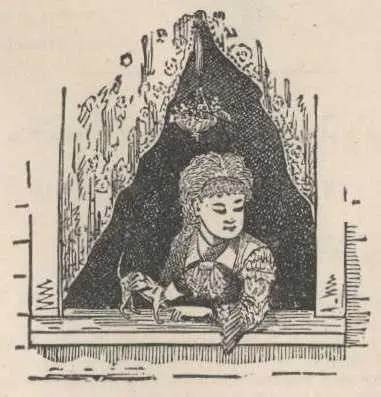
We changed our mind about taking a boat, so we did not have to go. I have given Mr. X's two remarks just as he made them. Four of the five words in the first one were English, and that they were also German was only accidental, not intentional; three out of the five words in the second remark were English, and English only, and the two German ones did not mean anything in particular, in such a connection.
X always spoke English to Germans, but his plan was to turn the sentence wrong end first and upside down, according to German construction, and sprinkle in a German word without any essential meaning to it, here and there, by way of flavor. Yet he always made himself understood. He could make those dialect-speaking raftsmen understand him, sometimes, when even young Z had failed with them; and young Z was a pretty good German scholar. For one thing, X always spoke with such confidence—perhaps that helped. And possibly the raftsmen's dialect was what is called PLATT-DEUTSCH, and so they found his English more familiar to their ears than another man's German. Quite indifferent students of German can read Fritz Reuter's charming platt-Deutch tales with some little facility because many of the words are English. I suppose this is the tongue which our Saxon ancestors carried to England with them. By and by I will inquire of some other philologist.
However, in the mean time it had transpired that the men employed to calk the raft had found that the leak was not a leak at all, but only a crack between the logs—a crack that belonged there, and was not dangerous, but had been magnified into a leak by the disordered imagination of the mate. Therefore we went aboard again with a good degree of confidence, and presently got to sea without accident. As we swam smoothly along between the enchanting shores, we fell to swapping notes about manners and customs in Germany and elsewhere.
As I write, now, many months later, I perceive that each of us, by observing and noting and inquiring, diligently and day by day, had managed to lay in a most varied and opulent stock of misinformation. But this is not surprising; it is very difficult to get accurate details in any country. For example, I had the idea once, in Heidelberg, to find out all about those five student-corps. I started with the White Cap corps. I began to inquire of this and that and the other citizen, and here is what I found out:
1. It is called the Prussian Corps, because none but Prussians are admitted to it.
2. It is called the Prussian Corps for no particular reason. It has simply pleased each corps to name itself after some German state.
3. It is not named the Prussian Corps at all, but only the White Cap Corps.
4. Any student can belong to it who is a German by birth.
5. Any student can belong to it who is European by birth.
6. Any European-born student can belong to it, except he be a Frenchman.
7. Any student can belong to it, no matter where he was born.
8. No student can belong to it who is not of noble blood.
9. No student can belong to it who cannot show three full generations of noble descent.
10. Nobility is not a necessary qualification.
11. No moneyless student can belong to it.
12. Money qualification is nonsense—such a thing has never been thought of.
I got some of this information from students themselves—students who did not belong to the corps.
I finally went to headquarters—to the White Caps—where I would have gone in the first place if I had been acquainted. But even at headquarters I found difficulties; I perceived that there were things about the White Cap Corps which one member knew and another one didn't. It was natural; for very few members of any organization know ALL that can be known about it. I doubt there is a man or a woman in Heidelberg who would not answer promptly and confidently three out of every five questions about the White Cap Corps which a stranger might ask; yet it is a very safe bet that two of the three answers would be incorrect every time.
There is one German custom which is universal—the bowing courteously to strangers when sitting down at table or rising up from it. This bow startles a stranger out of his self-possession, the first time it occurs, and he is likely to fall over a chair or something, in his embarrassment, but it pleases him, nevertheless. One soon learns to expect this bow and be on the lookout and ready to return it; but to learn to lead off and make the initial bow one's self is a difficult matter for a diffident man. One thinks, "If I rise to go, and tender my bow, and these ladies and gentlemen take it into their heads to ignore the custom of their nation, and not return it, how shall I feel, in case I survive to feel anything." Therefore he is afraid to venture. He sits out the dinner, and makes the strangers rise first and originate the bowing. A table d'hôte dinner is a tedious affair for a man who seldom touches anything after the three first courses; therefore I used to do some pretty dreary waiting because of my fears. It took me months to assure myself that those fears were groundless, but I did assure myself at last by experimenting diligently through my agent. I made Harris get up and bow and leave; invariably his bow was returned, then I got up and bowed myself and retired.
Интервал:
Закладка:
Похожие книги на «A Tramp Abroad»
Представляем Вашему вниманию похожие книги на «A Tramp Abroad» списком для выбора. Мы отобрали схожую по названию и смыслу литературу в надежде предоставить читателям больше вариантов отыскать новые, интересные, ещё непрочитанные произведения.











Обсуждение, отзывы о книге «A Tramp Abroad» и просто собственные мнения читателей. Оставьте ваши комментарии, напишите, что Вы думаете о произведении, его смысле или главных героях. Укажите что конкретно понравилось, а что нет, и почему Вы так считаете.