Robert Walser - The Tanners
Здесь есть возможность читать онлайн «Robert Walser - The Tanners» весь текст электронной книги совершенно бесплатно (целиком полную версию без сокращений). В некоторых случаях можно слушать аудио, скачать через торрент в формате fb2 и присутствует краткое содержание. Год выпуска: 2009, ISBN: 2009, Издательство: New Directions, Жанр: Классическая проза, на английском языке. Описание произведения, (предисловие) а так же отзывы посетителей доступны на портале библиотеки ЛибКат.
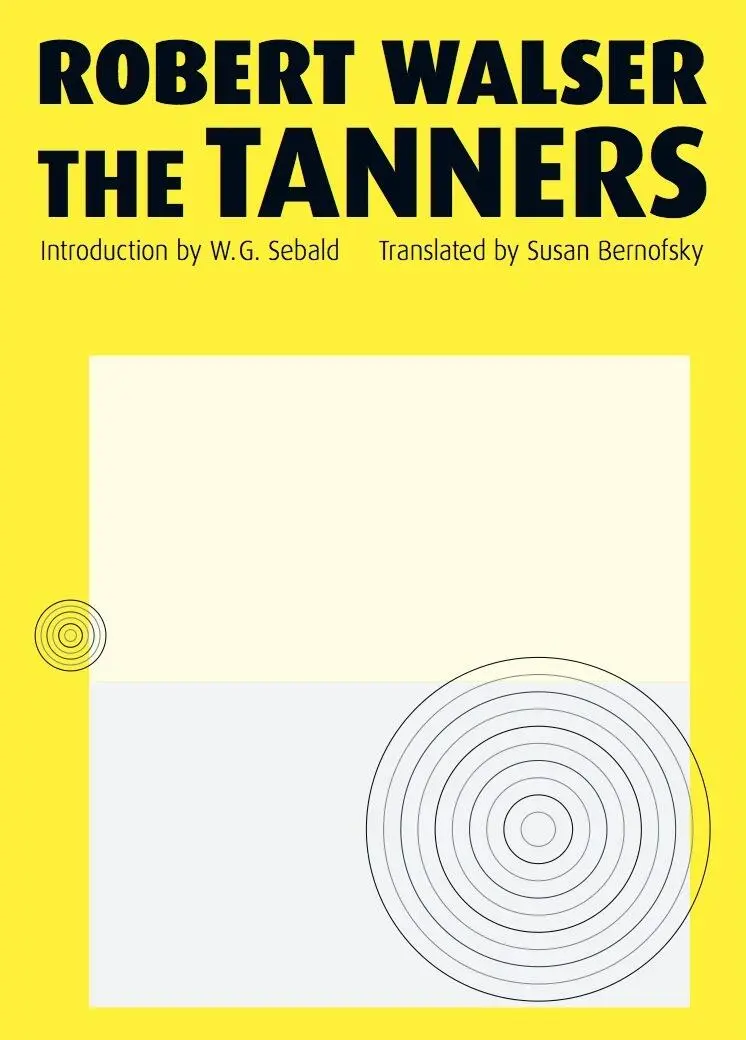
- Название:The Tanners
- Автор:
- Издательство:New Directions
- Жанр:
- Год:2009
- ISBN:978-0811215893
- Рейтинг книги:4 / 5. Голосов: 1
-
Избранное:Добавить в избранное
- Отзывы:
-
Ваша оценка:
The Tanners: краткое содержание, описание и аннотация
Предлагаем к чтению аннотацию, описание, краткое содержание или предисловие (зависит от того, что написал сам автор книги «The Tanners»). Если вы не нашли необходимую информацию о книге — напишите в комментариях, мы постараемся отыскать её.
remarked on the “Buster Keaton-like indomitably sad cheerfulness [that is] most hilariously disturbing.”
called him “the dreamy confectionary snowflake of German language fiction. He also might be the single most underrated writer of the 20th century….The gait of his language is quieter than a kitten’s.”
“A clairvoyant of the small” W. G. Sebald calls Robert Walser, one of his favorite writers in the world, in his acutely beautiful, personal, and long introduction, studded with his signature use of photographs.
The Tanners — читать онлайн бесплатно полную книгу (весь текст) целиком
Ниже представлен текст книги, разбитый по страницам. Система сохранения места последней прочитанной страницы, позволяет с удобством читать онлайн бесплатно книгу «The Tanners», без необходимости каждый раз заново искать на чём Вы остановились. Поставьте закладку, и сможете в любой момент перейти на страницу, на которой закончили чтение.
Интервал:
Закладка:
Kaspar had a low opinion of Sebastian; that’s why he was mocking him. He had no understanding whatever for tragic individuals, or rather, he understood them all too easily, all too well, and therefore had no respect for them. Moreover, he was in a diabolical mood this evening.
Hedwig leapt to defend the poor insulted fellow who was unable to stand up for himself: “How awful of you to speak in such a way, Kaspar,” she cried to her brother with an ardor that sprang from her eagerness to defend the lad, “and certainly not clever either. You enjoy hurting a person who should be spared and respected by all for the sake of his unhappiness. Mock all you like. I know you regret your words. If I didn’t know you so well, I’d have to consider you a ruffian, a tormenter. It’s so easy to torment an unfortunate, defenseless person, one might as well torture some poor animal. The defenseless all too easily fill the strong with a desire to inflict pain. If you can feel strong, be happy, and leave the weaker ones in peace. You show your strength in a bad light, misusing it to torment the weak. Why isn’t it enough for you to stand on a firm footing, do you have to place your foot upon the necks of others, the hesitant seekers, making them doubt themselves even more and sending them plummeting down, down into the waters of despair? Must self-confidence, courage, strength and determination always commit the sin of pitilessly, tactlessly riding roughshod over others, even though these others aren’t in their way at all, they’re just standing there covetously listening to the peals of fame, respect and success ringing out? Is it noble and good to insult a soul filled with longing? Poets are so easily hurt; oh, one should never hurt poets. By the way, I’m not even speaking about you now, my little Kaspar; for have you yourself amounted to much of anything in this world? You yourself perhaps still amount to nothing and have no cause to scoff at others who amount to nothing as well. When you wrestle with fate, let others do the same as best they can. Both of you are already wrestling, so why battle one another? How foolish, how unwise. Both of you will find pain enough in the perils and meanderings and promises and failures in your art; must you insist on causing one another even more pain? In all truth, I’d be a poet’s brother if I were a painter. And never be so swift to look in scorn upon someone who is failing or appears lethargic or inactive. How quickly his sunshine, his poems can arise from these long, dull dreams! And where does that leave the ones who were so hasty with their scorn? Sebastian is struggling honestly with life, that in itself should be a reason to respect and love him. How can one mock him for his soft heart? Shame on you, Kaspar, and may you never again give me cause — if you have even a trace of love for your sister — to get worked up like this over you. I’d rather not. I revere Sebastian because I know he has the courage to admit his many failings. As for the rest, it’s all just idle chatter — feel free to leave if you prefer not to walk with us. What a face you’re making, Kaspar! Just because a girl who enjoys the privilege of being your sister happens to give you a lecture, is this grounds for anger? No, don’t be angry. Please. And of course you’re allowed to make fun of poetry. Why ever not. I was taking things too seriously a moment ago. Forgive me.”
A delicate, shy but tender smile was playing in the dark about Sebastian’s lips. Hedwig devoted herself to flattering her brother until his mood improved. He then gave an imitation of her impassioned speech, causing all three of them to break out in resounding laughter. Sebastian in particular laughed himself silly. Gradually all had grown still and empty beneath the trees; people had returned to their homes, the lights were dreaming, but many lights had been extinguished as well, and the distance no longer glittered. There in rural parts, it seemed, lights were snuffed out earlier; the distant mountains now lay like dead black bodies, but still isolated human couples remained who weren’t making for home, but rather looked as if they meant to spend the entire night conversing wide-awake beneath the sky.
Simon and Klara were sitting, immersed in long hushed conversation, upon a bench. They had so many things to say to one another, they could have talked on and on forever without stopping. Klara would have gone on speaking about Kaspar, and Simon of the woman seated beside him. He had a strange, free, open way of speaking about people who were his immediate companions, who sat or stood beside him listening to what he said. This came about of its own accord, he always felt most strongly about whoever was occasioning his speech, and so he spoke of them and not of others who were absent. “Doesn’t it torment you,” she asked, “that we speak only of him?” “No,” Simon replied, “his love is my love. I always asked myself whether either of us would ever fall in love. I always saw this as a marvelous thing for which neither of us was good enough. I’ve read a great deal about lovers in books, I’ve always loved lovers. Even as a schoolboy I spent hours bent over books of this sort, trembling and shaking and fearing along with my lovers. It was almost always a proud woman and a man of an even more unbending nature, a laborer in a work shirt or a lowly soldier. The woman was always a fine lady. A common pair of lovers wouldn’t have piqued my interest in those days. All my senses grew up with these books, perishing again and again when I closed their covers. Then I stepped into life and forgot all these things. I became obsessed with questions of freedom, but I dreamt of experiencing love. What good would it do me to be angry that love has now arrived but not for me? How childish. I am almost even happy that this love desires not me but another, I would like to witness this first and only later experience it. But I shall never experience love. I think life has other plans for me, other intentions. It forces me to love everything it throws my way, every being. I am allowed to love you, too, Klara, if only in a different, perhaps a foolish way. Isn’t it silly that I know perfectly well that, if you should wish it, I could die for you, would willingly do so. May I not die for you? I’d find this so perfectly natural. I place no value on my life, I value only the lives of others, and nonetheless I love life, but I love it only because I hope it will give me the opportunity to throw it away in some respectable fashion. Isn’t it idiotic to speak in this way? Let me kiss your two hands so you’ll feel how I belong to you. Of course I am not yours and you will never demand anything at all of me, for what could it possibly occur to you to ask of me? But I love women of your sort, and it is agreeable to give gifts to a woman one loves, and so I am giving you myself, since I don’t know what would make a better present. Perhaps I can be useful to you, I can jump about for you with these legs of mine, I can hold my tongue when you want someone to keep silent for you, I can lie if you happen to find yourself in the position of requiring a shameless liar. There are quite noble instances of this sort. I can carry you in my arms, if you should happen to fall down, and I can lift you over puddles to keep your feet from getting dirty. Take a look at my arms. Don’t they look as though they were already lifting and carrying you? How you would smile if I were to carry you, and I would smile as well, for one smile, as long as it is not indelicate, always calls forth another. This gift that I am giving you is a portable, eternal one; for man, even the simplest of men, is eternal. I shall belong to you even when you have long since ceased to be anything at all, not even a grain of dust; because a gift always outlives its recipient so that it can mourn its lost owner. I was born to be a gift, I’ve always belonged to someone or other, and it’s always filled me with chagrin to spend a day wandering about without finding anyone to whom I could offer myself. Now I belong to you, though I know how little I mean to you. You have no choice but to not value me highly. It often happens that one scorns a gift. My soul, for example, is filled with scorn when I think of presents. I virtually abhor receiving gifts. This is why fate has willed me to be loved by no one; for fate is good and all-seeing. I would be unable to endure being loved, but I find the absence of love endurable. One mustn’t love a person who insists on loving, one would only be disturbing him in his devotions. I wouldn’t want you to love me. What’s more, the fact that you love another makes me so happy; for now, please understand me, you are clearing the way for me to love you. I adore faces that turn away from me, toward some other object. The soul, which is a painter, loves this sort of allure. A smile is so lovely when it crosses lips one surmises rather than sees. This is how you’ll please me — do you suppose there’s no need to? But no, now I remember: you don’t have to please me, you’ve no need to at all; for I am incapable of judging you, at most I might manage a plea; but I no longer know what I am saying.”
Читать дальшеИнтервал:
Закладка:
Похожие книги на «The Tanners»
Представляем Вашему вниманию похожие книги на «The Tanners» списком для выбора. Мы отобрали схожую по названию и смыслу литературу в надежде предоставить читателям больше вариантов отыскать новые, интересные, ещё непрочитанные произведения.





Обсуждение, отзывы о книге «The Tanners» и просто собственные мнения читателей. Оставьте ваши комментарии, напишите, что Вы думаете о произведении, его смысле или главных героях. Укажите что конкретно понравилось, а что нет, и почему Вы так считаете.