Antal Szerb - The Pendragon Legend
Здесь есть возможность читать онлайн «Antal Szerb - The Pendragon Legend» весь текст электронной книги совершенно бесплатно (целиком полную версию без сокращений). В некоторых случаях можно слушать аудио, скачать через торрент в формате fb2 и присутствует краткое содержание. Жанр: Классическая проза, на английском языке. Описание произведения, (предисловие) а так же отзывы посетителей доступны на портале библиотеки ЛибКат.
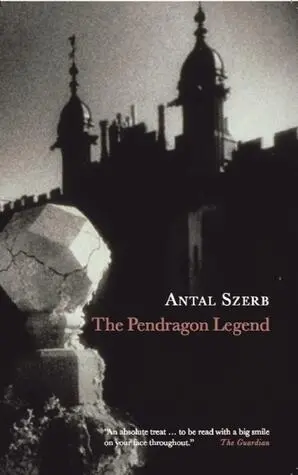
- Название:The Pendragon Legend
- Автор:
- Жанр:
- Год:неизвестен
- ISBN:нет данных
- Рейтинг книги:5 / 5. Голосов: 1
-
Избранное:Добавить в избранное
- Отзывы:
-
Ваша оценка:
The Pendragon Legend: краткое содержание, описание и аннотация
Предлагаем к чтению аннотацию, описание, краткое содержание или предисловие (зависит от того, что написал сам автор книги «The Pendragon Legend»). Если вы не нашли необходимую информацию о книге — напишите в комментариях, мы постараемся отыскать её.
The Pendragon Legend — читать онлайн бесплатно полную книгу (весь текст) целиком
Ниже представлен текст книги, разбитый по страницам. Система сохранения места последней прочитанной страницы, позволяет с удобством читать онлайн бесплатно книгу «The Pendragon Legend», без необходимости каждый раз заново искать на чём Вы остановились. Поставьте закладку, и сможете в любой момент перейти на страницу, на которой закончили чтение.
Интервал:
Закладка:
“Ah.”
“I was terribly afraid. But I couldn’t run away. Then the dog looked at me and asked, ‘What are you having for your tea?’ ‘Cauliflower,’ I said. ‘And coffee. Oh yes, and there was a little strawberry cake,’ I told him. I didn’t want to be less than truthful. ‘Young shoots must be eaten,’ he said. ‘They’re very nourishing. It’s what I’m having today.’ ‘And where are the young shoots?’ ‘In my head,’ said the dog. And there was something green sprouting from his head. This frightened me so much I woke up.”
“A very interesting and instructive tale,” said Osborne. “I particularly liked the bit about the strawberry cake: tell the truth and shame the Devil. It’s just that I don’t see where I, and Pendragon, come in.”
“You don’t understand? Truly? But it’s as clear as day. The dog — of course you know this, don’t pretend otherwise — was Cwn Annwn, the dog of Hell. The young shoot it wanted to eat was you, Osborne, the young shoot of the family. And the dog’s head, the head of Cwn Annwn, is Pen-Annwn. Pen is Welsh for head. Pen-Annwn is the true, the Welsh, name for Pendragon. Dreams always speak in Welsh.”
“I see.”
“Well then … dear Osborne … promise me, a poor old soul, that you will never go up to Pendragon.”
For a moment he hesitated. Then, to our great surprise, he gave his word. We took our leave of the vicar and his sister, and climbed back in the car. Osborne drove out of the village, towards Pendragon.
“So what now?” asked Maloney. “We’re not going up?”
“Of course we are. But I had to promise. I know the old girl. She’d die of worry. The poor old thing has been on the point of death these three years, anyway. She’s particularly fond of me. Besides … what a sensation if I really did die now up in Pendragon. The prophecy would be fulfilled. I’d become a legend, like my ancestors who lived in nobler times. I’d be like one of those Homeric heroes whose death is prefigured three cantos beforehand. Sensational.”
At the bend in the road he stopped the car and we debated whether to look for the secret entrance or go on up the usual way. In the end my view prevailed: given that people in those days built secret entrances precisely to be secret, we had little hope of finding it unless we stumbled on it by sheer chance. Much simpler to go up the proper way. And so we did.
The old abandoned track was the one formerly used by horsemen and was not excessively steep. The car was able to get almost to the top. Just below the ruins we were at last forced to get out and continue up a series of broken steps, overgrown with moss.
Of the old castle, only the walls remained. The roofs and upper storeys had been stripped away by the centuries. The ground had risen above the level of the stone floor and grass had covered it with a green carpet. The walls reared up crazily, like theatrical scenery, with the sky lowering down above our heads in place of the vanished ceilings.
We made our way through echoing squares that had once been halls. Only the window apertures had retained their original outline, defying the bombardment of the ages. Devoid of glass and sightless, they maintained their Gothic contours, in the form of that special English variation the ogee arch, which soars upwards, thinks again, and deviates into a horizontal ridge.
We finally reached the west wing, the best preserved section of the entire castle. Here even the roof remained. We traversed rooms that were more like rocky caves, stirring up the bats as we went, before arriving, to our surprise, in a little courtyard with the ancient tower rising up before us.
The tower was perfectly intact. From all sides, at irregular intervals, narrow windows gazed down without expression. The keep had probably once been a prison, as was the old practice, and interior lighting had never been regarded as a matter of importance. The sheer, almost unbroken expanse of its bleak walls exercised a forbidding power over the viewer.
We walked all round the circular structure, examining everything minutely, but could find no sign of human life. Nor indeed could we find an entrance.
“What’s this, then?” asked Maloney. “Did your ancestors fly in through the air?”
“On ceremonial occasions, naturally,” said Osborne, “but I believe there should be a pedestrian entrance for working days as well. I seem to remember having been shown it once.”
He led us back to the west wing where, after a brief search, we came across some stone steps, in almost pristine condition. We made our way down them and arrived at a corridor lit by holes cut in the roof.
“It runs under the courtyard,” said Osborne. “The entrance is at the far end.”
We followed it all the way, coming to a halt before a vast oak door reinforced by ancient iron bands that made me think of the Seven Seals.
“I don’t remember this door,” said Osborne. “Either it wasn’t here when I came, or it must have been open.”
As we feared, it was locked.
“Well, so far and no further,” he went on. “This is where the interesting stuff begins — right under our noses, and it’s locked away. The story of my life.”
“We should have a go — we might be able to get it open,” Maloney suggested. “I’ve managed quite a few in my time. We Connemarans know about these things. True, this one looks pretty serious. The mechanism looks like the inside of an old clock.”
“No, don’t bother,” said Osborne. “You probably wouldn’t succeed, and anyway it wouldn’t have been locked if we were meant to open it. Let’s do the decent thing.”
We made our way back, somewhat downcast.
“Let’s take a look at that room next to the stairs. We might find something interesting in there.”
The room was vaulted, dimly-lit, and empty. We were just about to leave when, having adjusted to the semi-darkness, my eye fell on something familiar hanging on the wall.
“Look, it’s the Rose Cross!”
A finely-carved stone cross, with stylised stone roses at its four points, stood out in relief against the wall.
Suddenly Maloney called out: “Don’t you see? — the stone around the cross, and the cross itself, aren’t the same stone as the walls.”
“Well, of course,” I replied. “It’s a relief; it was attached at later date.”
“Yes, but what if … what if …?” He said no more but went up to it, fiddled with it for a few moments, and behold, the cross moved. Very slowly, he rotated it.
At the same moment a section of the wall moved with it, drawing inwards like a door opening. The mouth of the secret entrance stood before us.
“Shall we go down?” we asked one another. In the pitch dark we could make out nothing of what lay beyond. Maloney produced a small torch.
“We absolutely must. Who knows, we might even find treasure. Come on, don’t worry about it. Trust my instincts as a rock climber.”
We made our way along a narrow, damp corridor to an antiquated spiral stairway. We began to descend, going round and round the stout stone column at its centre, for what seemed hours. Finally we reached the bottom.
We found ourselves in a vast, vaulted room, the far end of which could not be seen. From what we could make out by the light of the torch, it contained a row of elongated rectangular tables.
Approaching nearer we realised they were not tables. They were stone coffins, all bearing the Pendragon coat of arms. Rose crosses everywhere. We were in the crypt.
We did a tour around the walls. Oh, how vast that crypt was! Whoever constructed it could have had no doubt that his family would multiply down the centuries, and had provided amply for them when they returned to the womb of the castle.
“Is this crypt still used?” I asked Osborne.
Читать дальшеИнтервал:
Закладка:
Похожие книги на «The Pendragon Legend»
Представляем Вашему вниманию похожие книги на «The Pendragon Legend» списком для выбора. Мы отобрали схожую по названию и смыслу литературу в надежде предоставить читателям больше вариантов отыскать новые, интересные, ещё непрочитанные произведения.





Обсуждение, отзывы о книге «The Pendragon Legend» и просто собственные мнения читателей. Оставьте ваши комментарии, напишите, что Вы думаете о произведении, его смысле или главных героях. Укажите что конкретно понравилось, а что нет, и почему Вы так считаете.