Pitigrilli - Cocaine
Здесь есть возможность читать онлайн «Pitigrilli - Cocaine» весь текст электронной книги совершенно бесплатно (целиком полную версию без сокращений). В некоторых случаях можно слушать аудио, скачать через торрент в формате fb2 и присутствует краткое содержание. Год выпуска: 2013, Издательство: New Vessel Press, Жанр: Классическая проза, на английском языке. Описание произведения, (предисловие) а так же отзывы посетителей доступны на портале библиотеки ЛибКат.
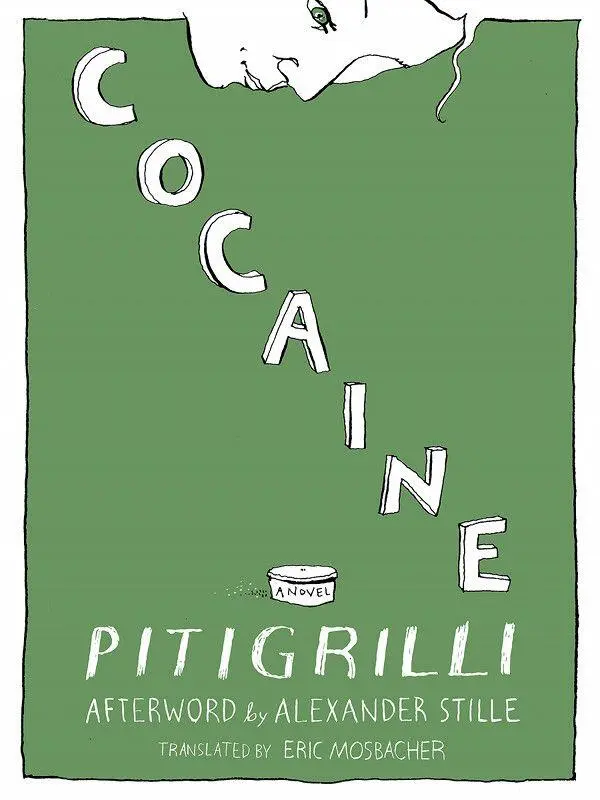
- Название:Cocaine
- Автор:
- Издательство:New Vessel Press
- Жанр:
- Год:2013
- ISBN:нет данных
- Рейтинг книги:3 / 5. Голосов: 1
-
Избранное:Добавить в избранное
- Отзывы:
-
Ваша оценка:
Cocaine: краткое содержание, описание и аннотация
Предлагаем к чтению аннотацию, описание, краткое содержание или предисловие (зависит от того, что написал сам автор книги «Cocaine»). Если вы не нашли необходимую информацию о книге — напишите в комментариях, мы постараемся отыскать её.
Cocaine — читать онлайн бесплатно полную книгу (весь текст) целиком
Ниже представлен текст книги, разбитый по страницам. Система сохранения места последней прочитанной страницы, позволяет с удобством читать онлайн бесплатно книгу «Cocaine», без необходимости каждый раз заново искать на чём Вы остановились. Поставьте закладку, и сможете в любой момент перейти на страницу, на которой закончили чтение.
Интервал:
Закладка:
“I fell in love with an ordinary little woman, whom I liked because of some of her shortcomings. But she had too many of them, and some of them I didn’t like. I tried to improve her with advice and tonic and corrective reading. But trying to improve a woman with words is like spreading sugar on chestnuts in the hope of producing marrons glacés.
“After that I fell in love on the rebound with a superior woman; she belonged to the old nobility, and she was also beautiful. But I’ve discovered that in every woman, whether superior or inferior, there are always four ingredients: nobility and commonness, the prostitute and the servant. The proportions vary, but the ingredients are always the same. In a superior woman you’ll find 93 per cent nobility, but the other seven per cent…
“The trouble is that they can’t hide that seven per cent. They talk grandly; all their ideas are grand and pure and lofty, like a rainbow. They turn up their noses at the minor miseries of life. When they are with a man cabs and hired cars are too vulgar for their fragile constitutions, but when they are alone they economically take the tram. If you take them out to tea, the tip you leave the waitress, even if it’s bigger than the bill, is always too little in their generous eyes. But if they are alone what they leave in the plate is less than you’d dare offer an organ grinder. If you lose your wallet, they laugh, and they’re rude if you look worried about it. But when they have to buy a pair of laces they haggle over twenty centesimi as if they were plenipotentiaries negotiating a new frontier.”
“I know,” Tito interrupted. “I could have told you all that. When you find such defects in superior women they’re pleasing, because they are the abysses that correspond to the dizzy heights. But please go on.”
“And so I left her in Paris and came back to Turin. I’m now an estate agent. Would you like to buy some land?”
“In the cemetery, perhaps. But not yet. Haven’t you got a woman here?”
“Yes, I have,” Nocera replied. “She’s an ordinary little woman, very plain from the outside, both in her ways and in her dress, but behind her modest ways she’s a treasure of sensitive simplicity, and under her quiet clothing she wears the most delicate underwear.”
Maud’s crêpe-de-Chine underwear adorned with fine organdy pleats flashed through Tito’s mind.
“She reminds me of a Muslim house,” Nocera went on. “From the outside it’s nothing but a square whitewashed block, but inside there are the most marvelous mosaics, gardens and fountains.”
“Won’t you be going back to Paris?”
“No, Tito, no more than you will. You, I, your waiter-monk friend, your Maud, your — what’s her name? — Calomelan…”
“Kalantan.”
“… are all governed by the same destiny. We’re like dying dogs that go and hide under beds or tables. We’re like stray cats that have run wild and go back home to die. We’re products of a disintegrating society. You, I, and your waiter friend for one reason or another leave Paris, the city of big streets and big appearances, because we are approaching the death of our desires. No longer wanting, no longer being curious, is equivalent to death. Your Armenian lady, if I rightly remember what you told me about her, rapidly completed the cycle of vices to take refuge in pure love, chaste delirium, as you put it. Your Maud scaled the heights of pure love in search of vice and, to obtain the maximum amorous yield that the organs can provide, killed those very organs herself. Our lives are a relentless pursuit of ideas; your waiter friend, who was an atheist, suddenly becomes a mystic.”
“Rubbish. He wears the clothes of a mystic, but laughs at them.”
“Better still. Because of his need to renounce something he takes orders without having faith, like someone who accepts a prison sentence he doesn’t deserve. Our life is a headlong succession of passions. For a long time you couldn’t make up your mind between two women, and because your feelings were so intense, you loved both at the same time. You tell me that Maud is getting old; she, too, of her own free will joined in the race to death.
“We are all killing ourselves in different ways, and we’re dying even though our heart goes on beating. Do you remember that excellent fellow, that so likeable chief sub-editor, that systematic, methodical drinker who drank out of conviction more than out of vice? You remember what he used to say? What? You don’t remember what he said in the Café Richelieu on the day we introduced you to the Armenian lady? He said: “To me women are roving uteri that men run after with words like glory and ideals on their lips. To avoid seeing that horror, I, a drinker out of conviction, drink. And I’m killing myself.” We’re all killing ourselves. We men of our time are all killing ourselves. And the spread of cocaine is symptomatic of the poisoning to which we are all succumbing. Cocaine is not hydrochloride of cocaine; it’s the sweet voluntary death that every one of us is calling for with different voices and with different words.
“This is where I live, on the second floor. Come and see me when you feel like it. Goodbye.”
Tito walked home alone. He found the shiny, spherical cinerary urns and the monstrance in his luggage. The urns were as spherical and shiny as soap bubbles, and inside the monstrance was the nude photograph of Maud.
He took it and put it in his pocket, so that he would always have it with him.
Then he went out again.
A few minutes or a few hours later he came back, his mind firmly and irrevocably made up. He would become a monk; he too would go to the monastery that accepted spiritual failures.
I shall devote myself to the study of butterflies and beetles, like that aged friar, he said to himself. An insect is more elegant than the most elegant gentleman. There’s more brilliance in a box of tiger beetles than in the windows of all the jewelers in Paris. I’ve seen clashing colors at embassy balls, but on insects’ wings, never. I shall work in the garden, watch the miracle of the seed germinating and emerging from the earth with its tender green smile. It’s as marvelous as the mystery of love, and there’s nothing mean or cowardly about it.
And I shall grow a great big beard (he went on), a long flowing beard that will be the headquarters of all my butterflies and all my beetles, and I shall never again take cocaine, even when I have a tooth out.
At this time tomorrow I’ll knock at the door. The day after that I shall have my sandals. I shan’t have everything at once, but I shall have some things; probably the girdle. The first thing they give soldiers is a spoon and a mess tin. And in a week’s time I shall feel I’ve been a monk all my life.
“Can I come in?”
It was the landlady with a radiogram.
TELEGRAPHING ON BOARD CARONIA ON WAY GENOA BUT STOPPING ONE WEEK DAKAR TO DANCE GOVERNMENT HOUSE PLEASE MEET ME DAKAR I LOVE YOU COCAINE.
Tito took a sheet of paper and wrote:
MAUD FABREGE DANCER STEAMSHIP CARONIA LINE BUENOS AIRES-GENOA TAKING FIRST SHIP DAKAR WANT YOU DESPERATELY TITO.
And he hurried to the telegraph office.
12
“You can still see Genoa,” his neighbor at table said, offering him his binoculars, which magnified twelve times. “In half an hour we’ll be on the high seas. Where are you going?”
“To Dakar.”
“And I’m going to Teresina.”
“Who’s she?”
“Teresina’s a town in Brazil. I’m a manufacturer of food essences of my own invention.”
“What are they for?”
“They’re a complete novelty that I’m going to launch all over the world in six months’ time. It’s an absolutely amazing thing. You know that essential oils of flowers — rose, verbena, carnation, for instance — are used for making toilet waters, and there are also extracts of fruit — raspberry, lemon, tangerine and so on — from which syrups are made. But I don’t use fruit or flowers for my invention; my essences are chemical products, extracts of tar. They can be added to bread or flour and give them the taste of various dishes. The illusion is complete. Thus there’ll be extracts of cutlets à la milanaise with potatoes, underdone roast beef with artichokes, and roast chicken with asparagus. You only need a few drops.”
Читать дальшеИнтервал:
Закладка:
Похожие книги на «Cocaine»
Представляем Вашему вниманию похожие книги на «Cocaine» списком для выбора. Мы отобрали схожую по названию и смыслу литературу в надежде предоставить читателям больше вариантов отыскать новые, интересные, ещё непрочитанные произведения.

Обсуждение, отзывы о книге «Cocaine» и просто собственные мнения читателей. Оставьте ваши комментарии, напишите, что Вы думаете о произведении, его смысле или главных героях. Укажите что конкретно понравилось, а что нет, и почему Вы так считаете.