Pitigrilli - Cocaine
Здесь есть возможность читать онлайн «Pitigrilli - Cocaine» весь текст электронной книги совершенно бесплатно (целиком полную версию без сокращений). В некоторых случаях можно слушать аудио, скачать через торрент в формате fb2 и присутствует краткое содержание. Год выпуска: 2013, Издательство: New Vessel Press, Жанр: Классическая проза, на английском языке. Описание произведения, (предисловие) а так же отзывы посетителей доступны на портале библиотеки ЛибКат.
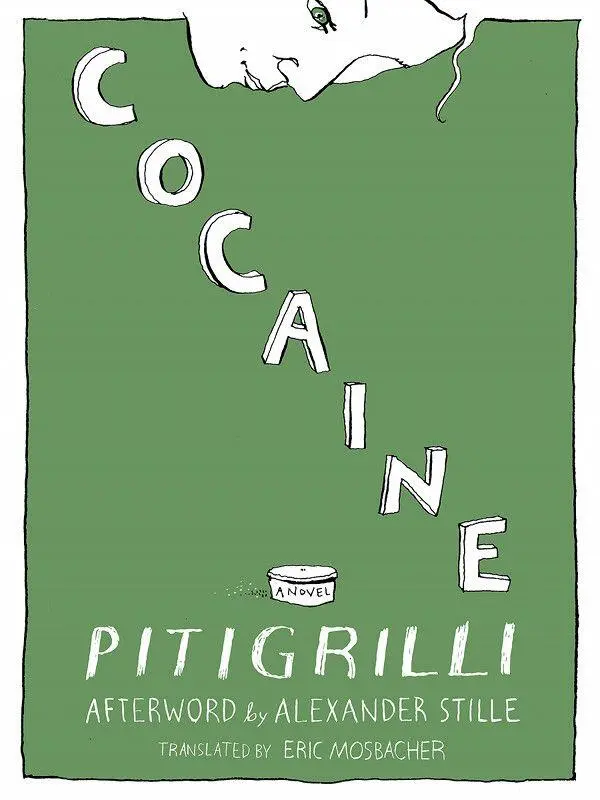
- Название:Cocaine
- Автор:
- Издательство:New Vessel Press
- Жанр:
- Год:2013
- ISBN:нет данных
- Рейтинг книги:3 / 5. Голосов: 1
-
Избранное:Добавить в избранное
- Отзывы:
-
Ваша оценка:
Cocaine: краткое содержание, описание и аннотация
Предлагаем к чтению аннотацию, описание, краткое содержание или предисловие (зависит от того, что написал сам автор книги «Cocaine»). Если вы не нашли необходимую информацию о книге — напишите в комментариях, мы постараемся отыскать её.
Cocaine — читать онлайн бесплатно полную книгу (весь текст) целиком
Ниже представлен текст книги, разбитый по страницам. Система сохранения места последней прочитанной страницы, позволяет с удобством читать онлайн бесплатно книгу «Cocaine», без необходимости каждый раз заново искать на чём Вы остановились. Поставьте закладку, и сможете в любой момент перейти на страницу, на которой закончили чтение.
Интервал:
Закладка:
Jealousy is a fever that arises from a stupid, baseless excitement in our unthinking brain.
Jealousy is a phenomenon of auto-suggestion.
The woman you love has gone to bed with X. You hate X, you hate her, and you have perpetually before your eyes the vision of your loved one and X embracing in an act that fills you with horror.
But you too in your time have deceived the woman you love and have done with Y what X did in bed with the woman you love.
Well, what remains in your skin, your mind of Mrs Y? Nothing whatever. No more than X left with your woman.
In other words, auto-suggestion. Do you want evidence of that? Well, then, if you don’t know the man, you imagine him to be hateful, offensive, repulsive, and you feel that if you met him you’d kill him.
But, if you happen to see his photograph, you begin to realize that it’s possible to look at him without horror; and, believe me, if you were actually introduced to him you’d approach him with a cordial smile on your lips, look him in the eye without trembling and, if you had reached my degree of perfection, you’d actually be capable of cheerfully patting him on the back and telling him he’s a good chap.
In a not too distant future, reason and education will have driven home the lesson of the futility of jealousy. The day will come when our beloved children (the cuckolds of the future) will be prepared to be cuckolded and will no longer suffer for it, because we shall have inoculated them with commonsense and given them anti-cuckoldry injections.
Now that he could not see the men concerned, Tito’s jealousy was greater than it had been three weeks earlier, when they were within his reach, catching the scent of the latest electric sparks invisibly given off by Maud’s body.
A street-walker offered herself to him for twenty lire.
“That’s not expensive, not even enough to cover the costs of production. Come along, then. But I’ll spray you all over with scent.”
The seller of sensations followed him to his room and allowed herself to be sprayed with Avatar, Maud’s perfume.
He tried a large number of these women. They were young, pretty and skillful, but they were not Cocaine. He poured her scent, the delicious Avatar, over them, but the result was not the same as that produced on Cocaine’s skin.
Every woman’s skin interprets scents in its own way, just as every musician interprets music in his own way.
He tried exhausting himself, exhausting his virility, going from one woman’s bed to another, but when his flesh seemed dead to any stimulus there was one thing that still excited him, the memory of Maud, desire for her. He had experienced this once before, in Paris, when, after the excesses of the insatiable Kalantan, he discovered new sources of pleasure in himself at the sight of Maud.
He went walking in the outlying districts of Turin, just as he had done in his days of misery in Paris. But now when he walked he started feeling the weight of his body. It was the first sign of age, the age when men start wearing dark brown suits.
One day he came across the knitted green tie with big blue diagonal stripes in a forgotten corner of a suitcase, and he wore it to go and see his monk friend who had sought refuge in the monastery that was a kind of Foreign Legion for the victims of emotional upsets. A ray of sunlight that fell on the tie revived a dead trace of Avatar scent. If you only knew how tears are perfumed when they run down a pretty woman’s face, and how ties are perfumed when a woman weeps on them.
In the monastery garden swifts were flying about at ground level and then zooming up as if to cleanse themselves in the sky.
A poor monk was throwing bits of bread to sparrows as poor as himself. Waves of silence met Tito in the porch.
His friend the monk came to meet him, holding out both sleeves, and greeted him as his brother in Christ. Then he said: “Yes, I’m happy.”
And he told him that he should enter the monastery too.
“But it’s not so easy…”
“On the contrary, it’s very easy indeed. Are you a Mason?”
“No.”
“Well, it’s just like entering a Masonic lodge.” He said that the Good Shepherd was happy to find a lost sheep.
“I know,” said Tito. “But if He doesn’t find it there’s one fewer to milk and clip.”
The monk showed Tito his cell, the library, and the workroom of an aged monk who lovingly studied beetles and butterflies. He also took him to the chapel.
“I’m sorry I can’t offer you a vermouth, as I did when I was a waiter in Paris,” he said. “But I can offer you a mass.”
“Very well,” said Tito, “I’ll settle for a mass.”
“Ordinary mass or sung mass?”
“Which is the quicker?”
“There’s no difference.”
“If you’ll sing…”
“Of course I will.”
“Then make it sung mass.”
He duly listened to it.
“Would you also like a benediction?”
“No, thanks. I’m all right as it is.”
They walked slowly along the cloister and looked at the refectory.
“What’s the food like?”
“It’s table d’hôte. Only the sick eat à la carte.”
The monk said that Christ should be loved because He had sacrificed himself for mankind, and Tito replied that the mice and rabbits that were killed in laboratories to test new medicines for the benefit of mankind were Jesus Christs too.
The monk was horrified, and begged him not to blaspheme; he said that mice saved nobody, while Jesus Christ had redeemed mankind.
“In that case a fireman who dies to save a single life is more admirable than Christ, because there’s more merit in sacrificing yourself to save a single life than in saving thousands of millions.”
The monk was not convinced, but he could find nothing better to suggest than that Tito should take minor orders, and he was so persuasive that when Tito said goodbye he did not dare call him a fool, but said: “I’ll consult my conscience.” In other words, he was just like women who, when they want to leave a shop without buying, say: “I’ll come back with my husband.”
He spent two or three evenings in a café in the Via Po, which he knew well from his student days. It was still frequented by the poet who wrote in dialect and drank coffee without sugar and the old painter who specialized in landscapes of Mars and the fantastic flowers of Saturn because he could not draw the flowers and countryside of our own world. Those people were artists. People are generous with labels. If someone manages to get a little bit of clay together and make a nose with it, he’s consecrated as an artist; if someone has four books and a microscope, he passes for a scientist. But fortunately reputations are demolished as easily as they are gained.
He was told that Pietro Nocera, who had been his colleague on the newspaper in Paris, was in Turin too. In fact a few days later he met him.
“Yes,” Nocera said, “I heard about that half million coup of yours. I wasn’t in the least surprised. It doesn’t surprise me when a man steals. What surprises me is when he doesn’t. Because there’s a latent, potential thief in everyone, and I make no distinction between those who have stolen and those who haven’t stolen yet.”
“It was the opportunity,” Tito said by way of excuse. “I’d always been honest before.”
“I know. My friend Marco Ramperti says that honesty is merely long-term cunning. But what are you doing now?”
“I’m living in a furnished room, and I still have a little money laid aside. When it has all gone I shall commit suicide or become a monk.”
“Are you becoming religious?”
“No. Religions remind me of the big companies that are promoted with government support to exploit mines that no one has ever seen. Other religions oppose them, but not too violently, to prevent anyone from finding out that they too are based on nonexistent mines. But, since the honorary chairman is the Almighty, everyone takes them seriously. Perhaps I too will one day take one of them seriously, particularly as I have nothing to lose if the speculation fails. And what did you do in Paris after I left? And why did you come back to Italy?”
Читать дальшеИнтервал:
Закладка:
Похожие книги на «Cocaine»
Представляем Вашему вниманию похожие книги на «Cocaine» списком для выбора. Мы отобрали схожую по названию и смыслу литературу в надежде предоставить читателям больше вариантов отыскать новые, интересные, ещё непрочитанные произведения.

Обсуждение, отзывы о книге «Cocaine» и просто собственные мнения читателей. Оставьте ваши комментарии, напишите, что Вы думаете о произведении, его смысле или главных героях. Укажите что конкретно понравилось, а что нет, и почему Вы так считаете.