André Gide - Autumn Leaves
Здесь есть возможность читать онлайн «André Gide - Autumn Leaves» весь текст электронной книги совершенно бесплатно (целиком полную версию без сокращений). В некоторых случаях можно слушать аудио, скачать через торрент в формате fb2 и присутствует краткое содержание. Год выпуска: 2012, Издательство: Philosophical Library/Open Road, Жанр: Классическая проза, Публицистика, Биографии и Мемуары, на английском языке. Описание произведения, (предисловие) а так же отзывы посетителей доступны на портале библиотеки ЛибКат.
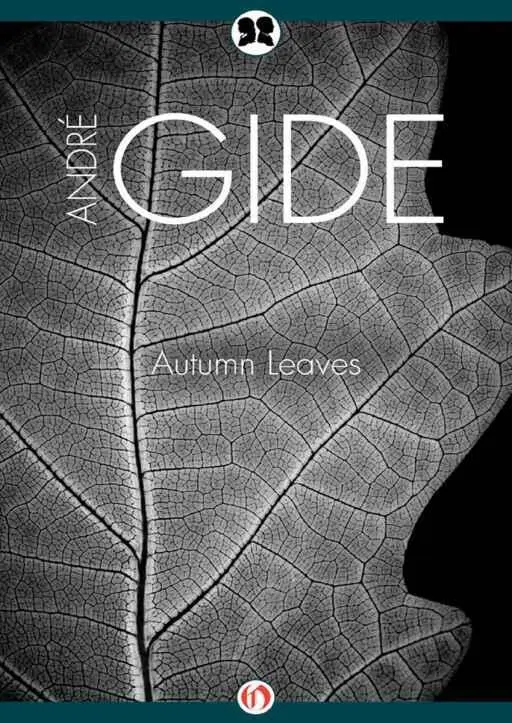
- Название:Autumn Leaves
- Автор:
- Издательство:Philosophical Library/Open Road
- Жанр:
- Год:2012
- ISBN:нет данных
- Рейтинг книги:4 / 5. Голосов: 1
-
Избранное:Добавить в избранное
- Отзывы:
-
Ваша оценка:
Autumn Leaves: краткое содержание, описание и аннотация
Предлагаем к чтению аннотацию, описание, краткое содержание или предисловие (зависит от того, что написал сам автор книги «Autumn Leaves»). Если вы не нашли необходимую информацию о книге — напишите в комментариях, мы постараемся отыскать её.
Autumn Leaves — читать онлайн бесплатно полную книгу (весь текст) целиком
Ниже представлен текст книги, разбитый по страницам. Система сохранения места последней прочитанной страницы, позволяет с удобством читать онлайн бесплатно книгу «Autumn Leaves», без необходимости каждый раз заново искать на чём Вы остановились. Поставьте закладку, и сможете в любой момент перейти на страницу, на которой закончили чтение.
Интервал:
Закладка:
I have let my thoughts run on; they have carried me very far from what I had intended to say at first; and which is simply this:
When I published my first book on the Soviet Union, I was perfectly conscious that I was going to stir up protestation and hatred around me. Perfectly conscious too when, recently, I did not think I should delete pages from my Journal that betrayed my first depression at the time of the invasion of France. I knew they would be used against me. It certainly required no courage to write them; it did, perhaps, to publish them at a time when they could do me the most harm. But a diary which permits of touching up and tries to color the past loses its interest, its reason for existence. Not what he would have liked to be, but what he really was, is important. 1Besides I had the right to hope that those pages would temper the fury of the accusations made against the Gionos, Jouhaudeaux, the Montherlants, against those who were deceived. That mistake of judgment was mine, too. I could be reproached as they were; I gave proof of it. If you condemn them, condemn me in the same way. But to my way of thinking, guilt begins only where the error is profitable. And that is why “capitalizable” opinions, as they say to-day, are questionable to me. That word is jargon, perhaps, but it is clear and says exactly what it means. Let us not cease to love the truth even when it is unfavorable to us.

1On reading Renan’s writings concerning the war of ’70, I find out he fell into the same errors, and in almost exactly the same way; with, perhaps, less excuse than I, for he was much younger and better informed than I could be. But I do not write this to excuse myself.
29 TRUTH
AT the word Truth alone, ideas spring up and crowd around, like the shades on the bank of the Cocytus, imploring Charon, who is helping them to cross the river, to receive them. Which should be taken first into that navicula of words which saves them from being forgotten for a time? They jostle each other so much that I give up all priority and take them out of order.
My friend Strohl observed that the recruitment of great naturalists and observers of the phenomenal world was made much more easily among Protestants than among Catholics. That has to be verified, but would scarcely surprise me; for I have already noted how often that sort of presbyopia brought about by fixed attention on distant clarities and the contemplation of the intangible renders the aspect of the real world indifferent or insensible. Those dazzled souls are at the same time unconcerned and incapable of observing. They live in a sort of mystical phantasmagoria.… It goes without saying there are exceptions, and I refuse to generalize excessively; but when I heard Bauman, in his Trois Villes Saintes, speak of the “hairy leaves” of the cabbage, I thought irresistibly that the Virgin would not have much trouble in appearing to him. I don’t think my quip attracted much notice; yet I consider it had a certain importance. Yes, I believe that it constitutes the point of departure between two kinds of truths, and that the minds most sensitive to one, to conventional truths, may very well be insensible to others, the verifiable truths. There are also truths of an historical nature. Furthermore belief, Faith, does not tempt one to research, even if it does not consider all research as challenging to authority and impious.
Reflecting well on the matter, nothing is more precarious, more fragile than this idea of the Truth that we too easily consider natural and, if I may say so, innate. Entire peoples, and not only primitive populations, have been able to get along very well (or very badly) without it. The same with children. They like to live in the imaginary and have no imperative concern with what is. To what degree this notion of the truth (which is by no means spontaneous) comes to be perverted in them by the pleasing tales of Santa Claus, guardian angels, the Holy Virgin, little Jesus, etc.… have parents no conception? and that the child, afterwards, on reaching maturity, may very well, when he takes it upon himself to cleanse his mind a bit, “throw out the child with the bath-water,” as the German proverb expresses it excellently.
Upon what then is that notion of the truth to be established?
I think a number of minds do not have it naturally, get along happily without it, and even can not understand that, in certain others, the love of truth, the need of truth, is an exigency that can take precedence over all considerations of prudence or advantageous opportunity. And I believe that Catholics, essentially and by their very formation, concerned above everything with a dogmatic and mytical truth, attach much less importance to the truths I spoke of: the verifiable ones, and I understand by that, those of the Natural Sciences and History. That could be verified at the time of the Dreyfus Affair, which cut France in half: the one for the revision of the case comprising an enormous majority of Protestants and Jews; the Catholics ranging themselves for the greater part on the side of the accepted thing and of the “let us not go back to it.”
The truth, in our day, finds few defenders. Falsehood triumphs everywhere. My first, my principal grievance against Barrès, is his having aided powerfully in balancing, in young minds, that swaying notion, enthroning in its place a convenient and yielding use of a relative truth, modifiable according to circumstances and places. There were, he taught, French truths, Lorrainese truths; the true one was the opportune one.
No need to glide along far to arrive at the “equivalent truths” that a young communist explained to me as being so convenient and even indispensable to use. It is a question of getting rid of an undesirable, but of getting rid of him according to Justice, that is to say in keeping the Law on one’s side. Now the crime committed is of an ideological nature so subtle that the people could not understand. For the use of the masses one can and must erect in place of the ideological subtility some great common crime susceptible of exciting indignation against that “enemy of the people,” so that the people remain convinced that it is their interests that are involved and that Justice defends.
Useless to insist, comrade; I have understood; you have the power: so you must be right..…
30 TWO IMAGINARY INTERVIEWS
I
THE Interviewer. — In its fight against Naturalism, or Realism, we recognize, dear Master, that art, that literature at least, at the time of your Nourritures terrestres, with its tendency toward the artificial, smelled terribly musty. But, without going back to it, let us pass on. I should like, I was telling you, to make one criticism of your introduction 1, which appears to me important. It seems, if I understand you (and I am thinking particularly of some sentences in your conclusion), it seems, I say, as though man were forced to choose between the Christian position and that taken by Goethe. As though there were not many ways to escape the hold of Christianity without joining Goethe!
I. — I do not say …
He. — And in the first place, when you speak of the “help of Grace,” I think you embody in those words all supernatural intervention, every appeal to any religion whatever. But, even then, man has many ways of exerting himself without going over to Goethe and the field remains clear …
I. — Nevertheless, the examples I quote, of Nietzsche, Leopoldi and Hoelderlin (and I could have quoted many others) should leave no doubt as to my idea. Goethe does not teach heroism, and we need heroes. Christianity can lead us into heroism, of which one of the finest forms is saintliness; but every hero is not necessarily a Christian.
Читать дальшеИнтервал:
Закладка:
Похожие книги на «Autumn Leaves»
Представляем Вашему вниманию похожие книги на «Autumn Leaves» списком для выбора. Мы отобрали схожую по названию и смыслу литературу в надежде предоставить читателям больше вариантов отыскать новые, интересные, ещё непрочитанные произведения.


Обсуждение, отзывы о книге «Autumn Leaves» и просто собственные мнения читателей. Оставьте ваши комментарии, напишите, что Вы думаете о произведении, его смысле или главных героях. Укажите что конкретно понравилось, а что нет, и почему Вы так считаете.