Raja Rao - Collected Stories
Здесь есть возможность читать онлайн «Raja Rao - Collected Stories» весь текст электронной книги совершенно бесплатно (целиком полную версию без сокращений). В некоторых случаях можно слушать аудио, скачать через торрент в формате fb2 и присутствует краткое содержание. Год выпуска: 2014, Издательство: Penguin, Жанр: Классическая проза, на английском языке. Описание произведения, (предисловие) а так же отзывы посетителей доступны на портале библиотеки ЛибКат.
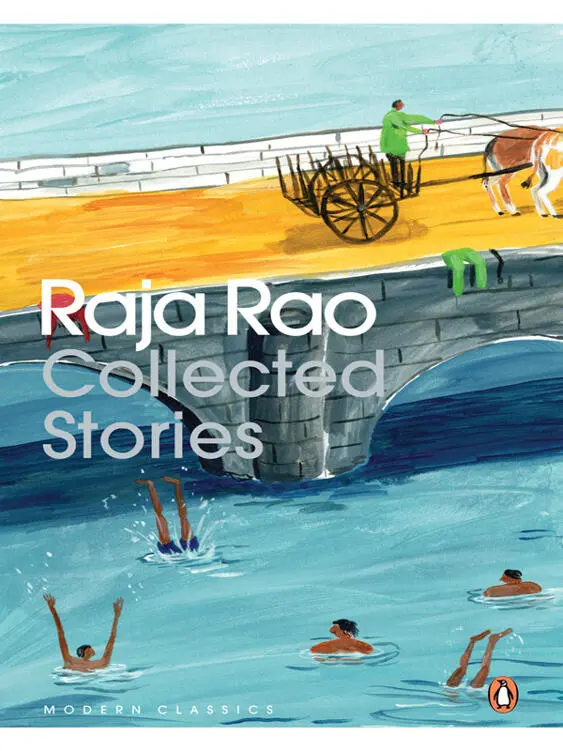
- Название:Collected Stories
- Автор:
- Издательство:Penguin
- Жанр:
- Год:2014
- ISBN:нет данных
- Рейтинг книги:5 / 5. Голосов: 1
-
Избранное:Добавить в избранное
- Отзывы:
-
Ваша оценка:
Collected Stories: краткое содержание, описание и аннотация
Предлагаем к чтению аннотацию, описание, краткое содержание или предисловие (зависит от того, что написал сам автор книги «Collected Stories»). Если вы не нашли необходимую информацию о книге — напишите в комментариях, мы постараемся отыскать её.
Collected Stories — читать онлайн бесплатно полную книгу (весь текст) целиком
Ниже представлен текст книги, разбитый по страницам. Система сохранения места последней прочитанной страницы, позволяет с удобством читать онлайн бесплатно книгу «Collected Stories», без необходимости каждый раз заново искать на чём Вы остановились. Поставьте закладку, и сможете в любой момент перейти на страницу, на которой закончили чтение.
Интервал:
Закладка:
The whole town rejoiced that Kashi-Vishweshwara and his Divine Companion had honoured their poor Subbehalli with their permanent presence. They gave dinners and organized processions, and renamed their village Kashipura. Vision Rangappa married the third daughter of Pandit Sivaramayya, and settled down in the village. And for fear the armies of the Red-man, which were battling then with the Sultan of Mysore, should rob them of the money-pot, he brought it home and, digging a hole beneath the family sanctum, put it there, and covered it over with mud and stone.
The next day, a huge three-striped cobra, with eyes like sapphire, and the jewel in the hood, lay curled upon the spot, for the cobra is the eternal guardian of sacred gold. And they called him Kanakapala — protector of gold.
Over a hundred years have now passed, and things have changed in Kashipura as all over the world. People have grown from boys to young men, from young men to men with children, and men to aged grandfathers, and some too have left for the woods to meditate, and others have died a common death, surrounded by wife and children, and children’s children. Others have become rich, after having begged in the streets; while some have become villains, though they were once the gentlest of the meek. And some — Shiva forgive them! — are lying eaten by disease though they were strong as bulls and pious as dedicated cows. Those who have become rich have children, those who have become wicked have children, and those who have become sick may have had children too, and after a hundred years, their children’s children are living to still see the Hemavathy hurl herself against the elephant-headed rock, and churning round the Harihara hills — just beneath the temple — leap forth into the breathful valleys, amidst gardens of mango and coconut, rice and sugarcane. Three times, they say, the Goddess Hemavathy has grown so furious with the sins of her children that she has risen in tempestuous rage, and swelling like a demon, swept away the trees, the crops, and the cattle — leaving behind sands where there was soil fine as powder of gold, and rock and stone where the mangoes stretched down as though to rest themselves on the soft green earth below. Coconut trees too were uprooted, and at least three houses were washed away, roofs and all. . but that was some fifteen years ago — the last flood. Since then nothing very important has happened in Kashipura, unless of course you count among big events the untimely death of the old Eight-Verandahed-House Ghowdayya, the third marriage of the old widower Cardamom-Field Venkatesha, the sale of Tippayya’s mango garden, the elopement of Sidda’s daughter, Kenchi, with the Revenue Inspector’s servant. But — and here, as Old Venkamma told me the story, she grew more and more animated — the biggest event without doubt is the one I am going to tell you about, of how the Vision-House brothers, Surappa, the eldest, and Ranganna, the third brother, pushed, as they say, though nobody knows the entire truth to this day— pushed their second brother Seetharamu into the river — you know why?. . to have gold. . to have the gold of Kanakapala. Nobody speaks loudly of it, but who does not know they have drowned him? You had only to see how of late Kanakapala, who even when you accidentally put your foot on him lay quiet as a lamb, now spreads his hood, as soon as he discovers you, and was even heard to pursue the carpenter Ranga to the door. After all, my son, if Kanakapala did not know of it, who else could have discovered it, tell me? Of course I do not know the story. But this is what they say. Now listen! ‘You know, in the Vision-House, since the good old father Ramakrishnayya died, they had been trying to murder one another. Oh! to have had a father with a heart pure as the morning lotus, so pious, so generous, and venerable as a saint, that such a father should have children like this! Shiva, Shiva, bestow unto us Thy light! Well, after all, my son, who can save us from our karma? It was perhaps his karma to see his children turn base as pariahs, and quarrel like street-dogs. Of course as long as he lived, they never fought openly. They beat each other in the garden, or when the father had gone to the temple; and when they saw Ramakrishnayya they suddenly changed into calves, so mild, so soft, and so deferent. Once he caught Surappa the elder, and Ranganna the third — the same who were to commit the horrid deed — he caught them pulling the branch of the champak tree, when Seetharamu had gone up to pluck flowers for the morning worship. ‘What are you up to?’ Ramakrishnayya cried. ‘Nothing! Nothing!’ they answered, and stood trembling before him. ‘We are just going to play Hopping-monkey.’ ‘Hoppingmonkey! Why not have four more children, you pariahs, before playing Hopping-monkey!’ For, you must remember, at that time Surappa was twenty-six, married and had already two children, and Ranganna had just come back after his nuptials. Seetharamu had lost his wife in that horrible malarial fever, and was just intending to marry again. That happened when our little Ramu was going through his initiation ceremony— that is, some four years to next Dassera. Since that day, the father is supposed to have taken great care of Seetharamu, for he loved him the most — learned and obedient and respectful as he was — and he often took him to the temple, lest the worst happen at home. Good Ranganayakamma, Ramakrishnayya’s sister, was pretty old, and had for long been blind, and nobody would listen to her now. Of course, there was Sata, the widowed daughter, who could easily have taken care of Seetharamu. But she herself, as every woman in this village knows, was greedy, malicious, and clever as a jackal. They even said she had poisoned her husband because he was too old for her, and take my word, she was malignant minx enough to do it. Anyway, since she came back home, she has been more with Surappa, and Ranganna, than with Seetharamu. I wonder if everybody believes in it. Never, however, speak of it to anyone, my child, will you? But everybody says, the very first day she came home, she discovered how things were going there, and tried to poison Seetharamu. She even did poison him, they say, for, if you remember, he fell seriously ill soon after her arrival, and vomited nothing but blood — red blood, black blood and violet blood; and it was during that same week too we saw Kanakapala furious for the first time, and lying near Seetharamu’s bed, to guard him from further harm. How he lay there, quiet and awake, eyes shining like jewels, and the old, old skin dandruff-covered and parched, shrivelled like the castoff skin of a plantain. Somehow Kanakapala had an especial love for Seetharamu. When he was born, they say Kanakapala had slowly slipped into the room, and stealing into the cradle, had spread his hood over the child, and disappeared with the swiftness of lightning. No wonder Seetharamu was such a godlike boy. He must have been one of the chosen ones. He was always so smiling, so serene, so full of respect and affection. Why, if I had a daughter to marry, I would have given her away to him! Anyway, he married a good girl, and it is unfortunate she died before bearing him a child. It is so unfortunate. .
‘However, to come back to the story. Surappa and Ranganna wanted somehow to kill Seetharamu, because they knew he would never think of digging out that gold their ancestors had offered to the gods. By the way, my son, do you know what they say about it? First, it was under the sanctum. Then it moved— under the earth, of course! — to the dining room, then later to the granary, and lastly it was under the lumber-room by the kitchen. Not that anyone knows about it, for sure. But wherever the serpent sleeps is the spot. If not, why should Kanakapala change places so often? And why does he not sleep always in the same place, once he has chosen his abode? Gold, you know, moves about from place to place lest the wicked find it. Only the holy ones can touch it. Seetharamu alone could go to the lumber-room, for Kanakapala knew the true from the false, as the rat knows the grain from the husk. Once, it was said, Surappa actually entered the lumber-room when Kanakapala was being fed with milk by Sata, and somehow — for the snakes have understanding where we human beings do not have — he knew of it, and spitting back the milk into the cup rushed to the spot, and having spread his hood hissed and bellowed and bit Surappa, without of course injecting any venom, for being of the temple it can never sting a Vision-House man. He yelled and ran into the kitchen. ‘What is it?’ cried Seetharamu, running to his brother’s rescue.
Читать дальшеИнтервал:
Закладка:
Похожие книги на «Collected Stories»
Представляем Вашему вниманию похожие книги на «Collected Stories» списком для выбора. Мы отобрали схожую по названию и смыслу литературу в надежде предоставить читателям больше вариантов отыскать новые, интересные, ещё непрочитанные произведения.










Обсуждение, отзывы о книге «Collected Stories» и просто собственные мнения читателей. Оставьте ваши комментарии, напишите, что Вы думаете о произведении, его смысле или главных героях. Укажите что конкретно понравилось, а что нет, и почему Вы так считаете.