Anna Kavan - Asylum Piece
Здесь есть возможность читать онлайн «Anna Kavan - Asylum Piece» весь текст электронной книги совершенно бесплатно (целиком полную версию без сокращений). В некоторых случаях можно слушать аудио, скачать через торрент в формате fb2 и присутствует краткое содержание. Год выпуска: 2001, Издательство: Peter Owen Publishers, Жанр: Классическая проза, на английском языке. Описание произведения, (предисловие) а так же отзывы посетителей доступны на портале библиотеки ЛибКат.
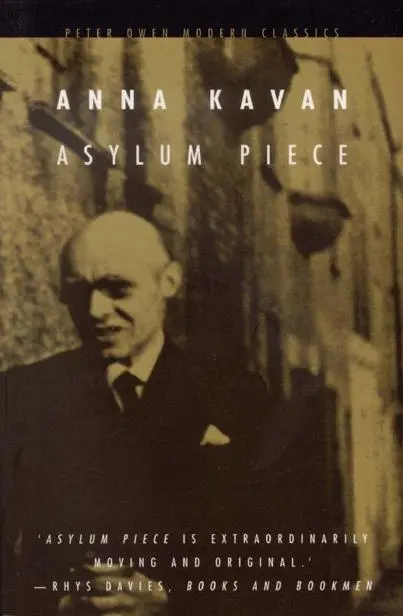
- Название:Asylum Piece
- Автор:
- Издательство:Peter Owen Publishers
- Жанр:
- Год:2001
- ISBN:нет данных
- Рейтинг книги:5 / 5. Голосов: 1
-
Избранное:Добавить в избранное
- Отзывы:
-
Ваша оценка:
Asylum Piece: краткое содержание, описание и аннотация
Предлагаем к чтению аннотацию, описание, краткое содержание или предисловие (зависит от того, что написал сам автор книги «Asylum Piece»). Если вы не нашли необходимую информацию о книге — напишите в комментариях, мы постараемся отыскать её.
by Kafka, a writer with whom Kavan is often compared, although her deeply personal, restrained, and almost foreign —accented style has no true model. The same characters who recur throughout — the protagonist's unhelpful "adviser," the friend and lover who abandons her at the clinic, and an assortment of deluded companions — are sketched without a trace of the rage, self-pity, or sentiment that have marked more recent accounts of mental instability.
Asylum Piece — читать онлайн бесплатно полную книгу (весь текст) целиком
Ниже представлен текст книги, разбитый по страницам. Система сохранения места последней прочитанной страницы, позволяет с удобством читать онлайн бесплатно книгу «Asylum Piece», без необходимости каждый раз заново искать на чём Вы остановились. Поставьте закладку, и сможете в любой момент перейти на страницу, на которой закончили чтение.
Интервал:
Закладка:
‘My dear madam, even though you don’t credit me with any understanding of my wife, you must at least allow the doctors’ opinion —’ he is beginning coldly, when two things occur simultaneously to rescue him from further embarrassment: a car sweeps round the bend of the private road and Freda rushes through the door of the clinic and comes running down the steps.
With only the briefest of salutes to his companion Rushwood goes across to the car where the girl is already sitting. Miss Swanson slowly waves her hand in response to Freda’s fluttering handkerchief. She watches the car out of sight and then walks in a dispirited way towards the workshop and the lampshade upon which she is stencilling a floral design. She knows that the day will pass drearily for her now.
For Freda, on the contrary, the hours fly like happy birds. Like a child just back from boarding-school for the holidays she wants to see everything, to do everything at once. The small lakeside town is a heaven to her; she darts in and out of shops, eating pastries and chocolates, buying absurd trifles, chattering all the while to her husband, whose attitude is more like that of a father, at the same time indulgent, distrait, and somewhat impatient. At lunch on the terrace of the hotel he can no longer restrain his impatience but sharply reproves the girl for her indecorous behaviour which, he fancies, is attracting the attention of the people around. Freda is cast-down and subdued for a few moments, but she soon forgets the rebuke and laughs and talks as irrepressibly as before.
The husband is rapidly coming to an end of his store of indulgence. The fact that the waiters obviously take Freda for his daughter and address her as ‘mademoiselle’ adds to his annoyance. He feels tired and worried, his leg is beginning to hurt him, he can no longer see anything but the faults in Freda’s conduct. Finally he suggests a trip on the lake. It seems to him that her childish irresponsibility and exuberance will be less noticeable on the steamer.
From the man’s point of view the afternoon is more satisfactory than the morning. To be sure, his wife is excited by the boat to begin with, she runs from one side to the other, leaning eagerly over the rail at the landing-stages to watch the people embark, and throwing bread to the gulls which mysteriously, so far from any sea, follow the steamer like white shadows. But towards the end of the trip she becomes quieter, sitting beside him on the wooden bench, her hand affectionately curled round his fingers. He spreads his coat over their knees so that no one shall see that she is holding his hand.
At dinner her febrile animation returns. The evening is chilly, instead of eating on the terrace they are now in the long dining-room. Her large, bright, prominent eyes dart mischievously from table to table, her indefatigable voice pours out its treble comments upon the diners. Once more Rushwood is forced to reprove her.
‘Really, Freda, you are acting like a bad-mannered schoolgirl. Can’t you realize that it’s not amusing but merely rude to make personal remarks?’
‘But they don’t understand what we’re saying —’
The note of almost unbearable irritation sounding through the deliberately calm tone in which he has just spoken penetrates her child’s heart like a cruel needle of ice. Her face falls grotesquely, her mouth trembles, tears — the sudden, despairing tears of a hurt child — fill her eyes to the brim.
‘All right, all right — there’s nothing to cry about,’ he says hastily, dreading a public scene.
Fortunately the waiter creates a diversion by bringing a dish of ice cream. Rushwood rests his chin on his hands and gazes across the small table at the girl who is now intent on the pink frozen substance upon her plate. Bitterness fills his being. Although his nature is cold and inflexible he is not a particularly unkind man, he wishes no ill to his wife; it is only that he can feel no sympathy, no toleration for her: his bitterness is directed against fate that has used him so evilly. He cannot understand why this disproportionate punishment should be inflicted upon him because he was once infatuated by a pretty face. ‘But who could have guessed it would turn out like this?’ he thinks wearily. He is glad that the meal is over, that the long, trying day has almost come to an end, that it is time to return his charge to the doctors’ care.
The car is waiting for them outside the hotel. He is profoundly relieved because Freda raises no objection to going back to the clinic. In his gratitude he feels more warmly towards her than he has done all day long: in the dusky seclusion of the car he touches her hand.
‘You never showed me your room in the hotel,’ she exclaims suddenly, as they start to climb the steep, curving road from the lake.
It has come now, the dangerous moment, the moment he dreads. But the lights of the clinic are in sight; he is saved.
‘I’m afraid I shan’t be staying,’ he says evenly. ‘I have to get back to the office. It’s not easy for me to get away even for a few days just now.’
There is dead silence inside the car. Even he, unimaginative and withdrawn as he is, feels the burden of silence. ‘Why doesn’t she say something?’ he wonders, peering at the averted whiteness that is her face. The car takes the final bend sharply and her body is thrown against his.
Suddenly she grasps his shoulders with both hands; he is surprised at the strength of her fingers, he feels her pointed fingers nipping into his flesh through the jacket and shirt.
‘You can’t leave me here… You must take me back with you!’ she cries shrilly, against his chest.
‘Now, Freda, do try and be reasonable. You know perfectly well that I can’t take you — that the doctors say you must stay here for the present.’
He tries to disengage her fingers; but he cannot capture her hands which, like desperate sparrows, are beating all about him, clawing at his sleeve, his lapels, his tie, even his face. He can do nothing except dumbly defend himself against those clawing, beating hands, his ears deafened and appalled by the broken treble that fills the interior of the closed car with ceaseless, inarticulate lamentation.
They have come now to the entrance of the clinic. The chauffeur opens the car door and looks inside, then quickly shuts the door again with a muttered, ‘One moment, monsieur’. He does not seem at all taken aback by what he sees in the car; probably he is quite used to such happenings. Almost at once he is back again with two nurses. ‘If you will get out here, monsieur — that will be best,’ he says to the confused husband, efficient and matter-of-fact.
The nurses prepare to restrain Freda in case she tries to prevent this move. But she, as if automatically giving up hope at the sight of authority, has already ceased all protest, all aggression, and is huddled unresistingly in the corner, limp as a doll, with tears running down her cheeks.
Mr. Rushwood steps out, with mechanical movements tidying his disordered attire. The car quickly drives on.
‘Silly little thing!’ one of the nurses says, quite kindly, to the sobbing girl. ‘This will mean ‘La Pinède’ for you.’
They reach the house in the pinewood and wait for the door to be opened. The women in white support Freda who is weeping and trembling so violently that she can scarcely stand. A light is switched on over the door revealing her face glistening all over with tears like the face of a person just emerging from water. The chauffeur watches with an impartial air as the three enter and the door is locked after them.
In the hall, which is dimly lit, someone moves out of the shadows and approaches the group. It is Miss Swanson who has waited a long time patiently for this moment. Dressed now in a blue knitted dress of exactly the same style as the mauve one which she wore earlier in the day, she comes up to the girl and, ignoring the nurses entirely, enfolds her in a compassionate and triumphant embrace.
Читать дальшеИнтервал:
Закладка:
Похожие книги на «Asylum Piece»
Представляем Вашему вниманию похожие книги на «Asylum Piece» списком для выбора. Мы отобрали схожую по названию и смыслу литературу в надежде предоставить читателям больше вариантов отыскать новые, интересные, ещё непрочитанные произведения.











Обсуждение, отзывы о книге «Asylum Piece» и просто собственные мнения читателей. Оставьте ваши комментарии, напишите, что Вы думаете о произведении, его смысле или главных героях. Укажите что конкретно понравилось, а что нет, и почему Вы так считаете.