Upton Sinclair - Dragons’s teeth
Здесь есть возможность читать онлайн «Upton Sinclair - Dragons’s teeth» весь текст электронной книги совершенно бесплатно (целиком полную версию без сокращений). В некоторых случаях можно слушать аудио, скачать через торрент в формате fb2 и присутствует краткое содержание. Жанр: Историческая проза, на английском языке. Описание произведения, (предисловие) а так же отзывы посетителей доступны на портале библиотеки ЛибКат.
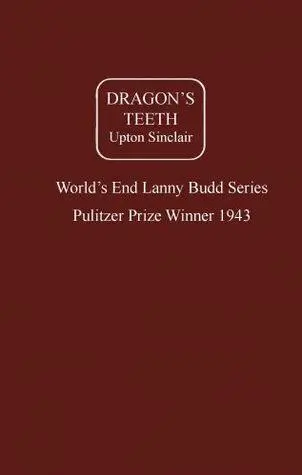
- Название:Dragons’s teeth
- Автор:
- Жанр:
- Год:неизвестен
- ISBN:нет данных
- Рейтинг книги:3 / 5. Голосов: 1
-
Избранное:Добавить в избранное
- Отзывы:
-
Ваша оценка:
Dragons’s teeth: краткое содержание, описание и аннотация
Предлагаем к чтению аннотацию, описание, краткое содержание или предисловие (зависит от того, что написал сам автор книги «Dragons’s teeth»). Если вы не нашли необходимую информацию о книге — напишите в комментариях, мы постараемся отыскать её.
Dragons’s teeth — читать онлайн бесплатно полную книгу (весь текст) целиком
Ниже представлен текст книги, разбитый по страницам. Система сохранения места последней прочитанной страницы, позволяет с удобством читать онлайн бесплатно книгу «Dragons’s teeth», без необходимости каждый раз заново искать на чём Вы остановились. Поставьте закладку, и сможете в любой момент перейти на страницу, на которой закончили чтение.
Интервал:
Закладка:
There was only one trouble on this cruise so far as concerned Lanny, and that was the game of bridge. Beauty and Irma had to play; not for money, but for points, for something to do. These ladies knew how to read, in the sense that they knew the meaning of the signs on paper, but neither knew how to lose herself in a book or apply herself to the mastering of its contents. They grew sleepy when they tried it; they wanted other people to tell them what was in books; and Irma at least had always been able to pay for the service. Now she had married a poor man, and understood it to mean that he was to keep her company. In the world of Irma Barnes the nursery rhyme had been turned about, and every Jill must have her Jack.
Lanny didn’t really mind playing bridge—only there were so many more interesting things to do. He wanted to continue child study with the two specimens he had on board. He wanted to read history about the places he visited, so that a town would be where a great mind had functioned or a martyr had died. But Beauty and Irma were willing to bid five no trumps while the yacht was pass~ ing the scene of the battle of Salamis. They would both think it inconsiderate of Lanny if he refused to make a fourth hand because he wanted to write up his notes of the last seance with Madame Zyszynski. Lanny thought it was important to keep proper records, and index them, so that the statements of Tecumseh on one occasion could be compared with those on another. He had the books of Osty and Geley, scientists who had patiently delved into these phenomena and tried to evolve theories to explain them. This seemed much more important than whether Culbertson was right in his rules about the total honor-trick-content requirement of hands.
Irma had persuaded Rahel to prepare herself for life in the beau monde, and Lanny had helped to teach her. Then he had given the same sort of help to Marceline, who was going to be thirteen in a short while, and already was the most perfect little society lady you could imagine. Even on board a yacht she spent much time in front of the mirror, studying her charms and keeping them at their apex; surely she ought to be preparing to defend herself against those harpies with signaling-systems who would soon be trying to deprive her of her pocket-money. After she had been taught, Lanny could plead that he wasn’t needed any more, and go back to the study of Liszt’s four-hand piano compositions with Bess: the Concerto Pathetique, a marvel of brilliant color, turning two pianos into an orchestra; the Don Juan Fantaisie, most delightful of showpieces— Hansi came in while they were playing it, and said they really ought to give it on a concert stage. A memorable moment for two humble amateurs.
XIII
The Bessie Budd came to rest in the harbor of Cannes, and the company returned to Bienvenu for a few days. Beauty wished to renew her wardrobe—one gets so tired of wearing the same things. Lanny wished to renew the stock of music-scores—one’s auditors get tired of hearing the same compositions. Also, there were stacks of magazines which had been coming in, and letters with news of one’s friends. Lanny opened one from his father, and exclaimed: "Robbie’s coming to Paris! He’s due there now!"
"Oh, dear!" said the wife. She knew what was coming next. "I really ought to see him, Irma. It’s been eight months." "It’s been exactly as long since I’ve seen my mother." "Surely if your mother were in Paris, I’d be offering to take you." "It’ll be so dreadfully lonesome on the yacht, Lanny!" "I’ll take a plane and join you at Lisbon in three or four days. You know Robbie’s been in a crisis and I ought to find out how he’s getting along."
Irma gave up, but not without inner revolt. She was going through such a trying ordeal, and people ought to do everything to make it easier for her. A violent change from being the glamour girl of Broadway, the observed of all observers, the darling of the columnists and target of the spotlights—and now to be in exile, almost in jail for all these months! Would anybody ever appreciate it? Would Baby appreciate it? Irma’s observation of children suggested that Baby probably would not.
She thought of taking a couple of cars and transporting her half of the lactation apparatus up to Paris. But no, it would upset all the arrangements of the admirable Miss Severne; Baby might pick up a germ in the streets of a crowded city; it was so much safer out at sea, where the air was loaded with a stuff called ozone. And there was Rahel, with whom Irma had agreed to stick it out; knowing it would be hard, she had wanted to tie herself down, and had made a bargain.
"Another thing," Lanny said; "Zoltan Kertezsi should be in Paris and might help me to sell a picture or two."
"Oh, dear!" exclaimed the wife. "Do you still want to fool with that business?"
"A little cash would come in handy to both Beauty and me."
"I don’t think it’s kind of you, Lanny. There’s no sense in your bothering to make money when I have it. If you have any time to sell, do please let me buy it!"
They had talked about this many times. Since Robbie couldn’t afford to send Beauty her thousand dollars a month, Irma insisted upon putting it up. She wanted the life of Bienvenu to go on exactly as before. The cost was nothing to her, and she liked the people around her to be happy. She would send money to Lanny’s account in Cannes, and then she didn’t want anybody to talk or think about the subject. That her husband might actually enjoy earning a few thousand dollars by selling Marcel’s paintings, or those of old masters, was something hard for her to make real to herself. It was harder still for Lanny to explain that he sometimes wanted to do other things than entertain an adored young wife!
4. I Can Call Spirits
I
FROMthe windows of the Hotel Crillon Lanny Budd had looked out upon quite a lot of history: the World War beginning, with soldiers bivouacked in the Place de la Concorde; the war in progress, with enemy planes overhead and anti-aircraft firing; after the armistice, with a great park of captured German cannon, and May Day mobs being sabered by cuirassiers. In the hotel had lived and worked a couple of hundred American peace-makers, all of them kind to a very young secretary-translator and willing to assist with his education. The only trouble was, they differed so greatly among themselves that Lanny’s mind had reached a state of confusion from which it had not yet recovered.
Now the hotel had been restored to the system of private enter prise in which Robbie Budd so ardently believed and which he was pleased to patronize regardless of cost. In view of his reduced circumstances, he might well have gone to a less expensive place, but that would have been to admit defeat and to declass himself. No, he was still European representative of Budd Gunmakers, still looking for big deals and certain that Europe was going to need American weapons before long. Keep your chin up, and make a joke out of the fact that you have lost five or six million dollars. Everybody knows that you had to be somebody to have that happen to you.
Here he was, comfortably ensconced in his suite, with a spare room for Lanny; his whisky and soda and ice early in the morning, his little portable typewriter and papers spread out on another table. He was in his middle fifties, but looked younger than he had in New York under the strain of the panic. He had got back his ruddy complexion and well-nourished appearance; a little bit portly, but still vigorous and ready to tackle the world. Already he was in the midst of affairs; there was a Rumanian purchasing commission in town, and a couple of Soviet agents—Robbie grinned as he said that he was becoming quite chummy with the "comrades"; he knew how to "talk their language," thanks to Lanny’s help. He meant, not that he could speak Russian, but that he could speak Red.
Читать дальшеИнтервал:
Закладка:
Похожие книги на «Dragons’s teeth»
Представляем Вашему вниманию похожие книги на «Dragons’s teeth» списком для выбора. Мы отобрали схожую по названию и смыслу литературу в надежде предоставить читателям больше вариантов отыскать новые, интересные, ещё непрочитанные произведения.











Обсуждение, отзывы о книге «Dragons’s teeth» и просто собственные мнения читателей. Оставьте ваши комментарии, напишите, что Вы думаете о произведении, его смысле или главных героях. Укажите что конкретно понравилось, а что нет, и почему Вы так считаете.