Upton Sinclair - Dragons’s teeth
Здесь есть возможность читать онлайн «Upton Sinclair - Dragons’s teeth» весь текст электронной книги совершенно бесплатно (целиком полную версию без сокращений). В некоторых случаях можно слушать аудио, скачать через торрент в формате fb2 и присутствует краткое содержание. Жанр: Историческая проза, на английском языке. Описание произведения, (предисловие) а так же отзывы посетителей доступны на портале библиотеки ЛибКат.
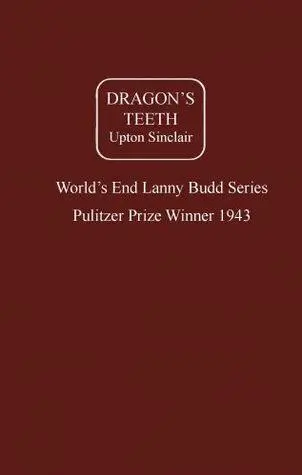
- Название:Dragons’s teeth
- Автор:
- Жанр:
- Год:неизвестен
- ISBN:нет данных
- Рейтинг книги:3 / 5. Голосов: 1
-
Избранное:Добавить в избранное
- Отзывы:
-
Ваша оценка:
Dragons’s teeth: краткое содержание, описание и аннотация
Предлагаем к чтению аннотацию, описание, краткое содержание или предисловие (зависит от того, что написал сам автор книги «Dragons’s teeth»). Если вы не нашли необходимую информацию о книге — напишите в комментариях, мы постараемся отыскать её.
Dragons’s teeth — читать онлайн бесплатно полную книгу (весь текст) целиком
Ниже представлен текст книги, разбитый по страницам. Система сохранения места последней прочитанной страницы, позволяет с удобством читать онлайн бесплатно книгу «Dragons’s teeth», без необходимости каждый раз заново искать на чём Вы остановились. Поставьте закладку, и сможете в любой момент перейти на страницу, на которой закончили чтение.
Интервал:
Закладка:
"Aren’t you going to tell me about it?" A mischievous request, and therefore the way to disguise it was with the most mischievous of smiles. On the same principle that you spoke the truth only when you didn’t wish to be believed.
Lanny, who had learned about intrigue when he was a tiny boy hearing his mother and father discussing the landing of a munitions contract—Lanny Budd, grandson of Budd Gunmakers, knew nothing better to do in a crisis than to be honest. "Liebe Frau Reichsminister," he said, "I beg you to be kind to a stranger in a strange land. I am in a painful position. I receive orders from those in authority, and I dare do nothing but obey."
"If I give you orders, will you obey, Herr Budd?" The wife of a Cabinet Minister apparently knew other ways to deal with one in a painful position. "What you call authority has a way of shifting suddenly in times like these. You had better give me an opportunity to advise you."
"Indeed, Frau Reichsminister, I will avail myself of your kindness." He had meant to say: "As soon as I am free to do so," but he decided to leave himself free to think it over.
Irma was being entertained by "Putzi" Hanfstaengl, wealthy art-publisher’s son who played clown to Hitler and staff; half American and a Harvard graduate, he was tall and big and waved his arms like a windmill; for a while he was solemn, and then suddenly he danced, capered, made jokes, and laughed at them so loudly that everybody else laughed at him. The younger men were curious about the famous heiress, and she enjoyed herself as she generally did in company. Elegant, uniformed men bowed attendance and flattered her, bringing food and over-strong drink—many of them had too much of it, but that was nothing new in smart society, and Irma knew how to deal with such men.
Driving home in the small hours of the morning she was a bit fuddled and sleepy. Next morning, or rather much later that same morning, they sat in bed sipping their coffee, and Irma said what she thought of the affair. She had met agreeable people and couldn’t believe they were as bad as they were painted. Lanny had to wait until they were in the car before getting in his side, which was: "I felt as if I were in a rendezvous of pirates."
Said Irma: "Listen, darling; did you ever meet a company of politicians in the United States?"
He had to admit that he lacked any basis of comparison, and his wife went on:
"They used to come to Father’s house quite often, and he used to talk about them. He said they were natural-born hijackers. He said that no one of them had ever produced anything—all they did was to take it away from business men. He said they wouldn’t stop till they got everything in their clutches."
"The prophecy has come true in Germany!" said Lanny.
20. Sufferance Is the Badge
I
A LONG letter from Robbie Budd, telling of the situation resulting from his father’s death. The old gentleman had held on to his power up to the last moment, but had failed to decide the question of who was to be his successor. Long ago he had tried to settle the quarrel between his oldest and his youngest sons; then he had given up, and left them to fight it out—and they were doing so. Each wanted to become head of Budd’s, and each was sure that the other was unfitted for the task. "I suppose," said Robbie, bitterly, "Father didn’t consider either of us fitted."
Anyhow, the question was going to be settled by the stockholders. It so happened that an election of directors was due, and for the next sixty days Robbie and Lawford would be lobbying, pulling wires, trying to corral votes. They had been doing this in underground ways for years, and now the fight was in the open. Meanwhile the first vice-president was in charge—"holding the sponge," as Robbie phrased it. He was Esther Budd’s brother, son of the president of the First National Bank of Newcastle. "The thing the old gentleman always dreaded," wrote Robbie; "the banks are taking us over!" Lanny knew this was said playfully, for Robbie and "Chassie" Remsen got along reasonably well, and the two couples played bridge one evening every week.
What really worried Robbie was the possibility of some Wall Street outfit "barging in." Budd’s had been forced to borrow from one of the big insurance companies; it was either that or the Reconstruction Finance Corporation, which meant putting yourself at the mercy of the politicians. Robbie was in a dither over what the new administration was doing; Roosevelt had had three months in which to show his hand, and apparently the only thing he knew was to borrow money and scatter it like a drunken sailor. Of course that was just putting off the trouble, throwing the country into debt which the future would have to pay; incidentally it meant teaching everybody to come to Washington—"like hogs to the trough," said the munitions salesman, who chose the most undignified metaphors whenever he referred to his country’s governmental affairs. Everything which gave power to the politicians meant debts, taxes, and troubles.
But Robbie didn’t go into that subject now; he had his own immediate problems. "If only I could raise the cash to buy some Budd stock that I know of, I could settle the matter of control. Tell our friend that I want to hear from him the moment he has time to spare. I can make him a proposition which he will find advantageous." This had been written before the receipt of an unsigned note in which Lanny conveyed the news that "our friend" was being separated from every dollar he owned in the world. Poor Johannes—and poor Robbie!
The ever-discreet father didn’t need any warning to be careful what he wrote about matters in Germany. His letter was a model of vagueness. He said: "There is a great deal of new business being done in Europe this year, and I ought to be there getting contracts. Once our problems at home are settled, I’ll get busy." Lanny knew what this meant—the rearmament of Germany was beginning, and what the Nazis couldn’t yet manufacture for themselves they would buy through intermediaries in Holland, Switzerland, Sweden. The factory chimneys of Newcastle would begin to smoke again—and it wouldn’t mean a thing to Robbie Budd that he was putting power into the hands of Hitler, Göring, and Goebbels. It was the salesman’s first axiom that all European nations were equally bad, and that whether the jaguar, the leopard, or the tiger came out on top was of no concern to anybody outside the jungle.
Lanny read this letter to his wife, who said: "Don’t you think it might be a good idea for me to help your father?"
"You know, dear," he answered, "I have never been willing to exploit my marriage."
"Yes, but be sensible. I own a lot of stocks and bonds, and why shouldn’t I exchange some of them for Budd’s?"
"Your father chose those investments very shrewdly, Irma. Some of them are still paying large dividends, and Budd’s isn’t paying any."
"Yes, but the prices seem to find their level, according to the earnings." Irma had been putting her mind on her financial affairs ever since she had got that terrific jolt in the panic. "If we could get Budd stock at its present price, wouldn’t it be safe to hold?"
"It wouldn’t worry you to be financing munitions?"
"Why should it? Somebody’s going to do it."
So there it was: everybody was "sensible" but Lanny. If the Nazis wanted automatics and machine guns, there were many makes on the market, and why shouldn’t Budd’s get the business as well as Vickers or Bofors or Skoda or Schneider-Creusot? Irma settled the matter. "When we get this business out of the way, we’ll run over to New York and get Robbie and Uncle Joseph together and see what can be worked out."
Lanny said: "It’s very kind of you." He knew it would have been unkind of him to say anything else.
Читать дальшеИнтервал:
Закладка:
Похожие книги на «Dragons’s teeth»
Представляем Вашему вниманию похожие книги на «Dragons’s teeth» списком для выбора. Мы отобрали схожую по названию и смыслу литературу в надежде предоставить читателям больше вариантов отыскать новые, интересные, ещё непрочитанные произведения.








Обсуждение, отзывы о книге «Dragons’s teeth» и просто собственные мнения читателей. Оставьте ваши комментарии, напишите, что Вы думаете о произведении, его смысле или главных героях. Укажите что конкретно понравилось, а что нет, и почему Вы так считаете.