Upton Sinclair - Dragons’s teeth
Здесь есть возможность читать онлайн «Upton Sinclair - Dragons’s teeth» весь текст электронной книги совершенно бесплатно (целиком полную версию без сокращений). В некоторых случаях можно слушать аудио, скачать через торрент в формате fb2 и присутствует краткое содержание. Жанр: Историческая проза, на английском языке. Описание произведения, (предисловие) а так же отзывы посетителей доступны на портале библиотеки ЛибКат.
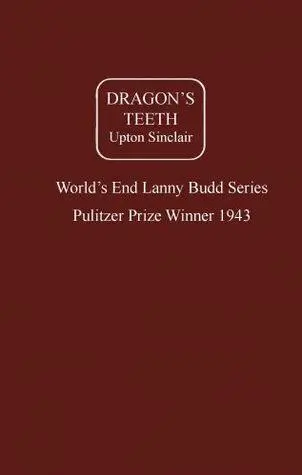
- Название:Dragons’s teeth
- Автор:
- Жанр:
- Год:неизвестен
- ISBN:нет данных
- Рейтинг книги:3 / 5. Голосов: 1
-
Избранное:Добавить в избранное
- Отзывы:
-
Ваша оценка:
Dragons’s teeth: краткое содержание, описание и аннотация
Предлагаем к чтению аннотацию, описание, краткое содержание или предисловие (зависит от того, что написал сам автор книги «Dragons’s teeth»). Если вы не нашли необходимую информацию о книге — напишите в комментариях, мы постараемся отыскать её.
Dragons’s teeth — читать онлайн бесплатно полную книгу (весь текст) целиком
Ниже представлен текст книги, разбитый по страницам. Система сохранения места последней прочитанной страницы, позволяет с удобством читать онлайн бесплатно книгу «Dragons’s teeth», без необходимости каждый раз заново искать на чём Вы остановились. Поставьте закладку, и сможете в любой момент перейти на страницу, на которой закончили чтение.
Интервал:
Закладка:
"Yes," said Hugo, "many of the leaders feel as I do, and some of them are Hitler’s oldest party comrades. It is no threat to his leadership, but a loyal effort to make him realize the danger and return to the true path." The young official offered to introduce Lanny to some of the men who were active in this movement; but the visitor explained the peculiar position he was in, with a Jewish relative in the toils of the law and the need of being discreet on his account.
That led to the subject of the Jews, and the apple-cheeked young Aryan proved that he was loyal to his creed by denouncing this evil people and the part they had played in corrupting German culture. But he added he did not approve the persecution of individual Jews who had broken no law, and he thought the recent one-day boycott had been silly. It represented an effort on the part of reactionary elements in the party to keep the people from remembering the radical promises which had been made to them. "It’s a lot cheaper and easier to beat up a few poor Jews than to oust some of the great Junker landlords."
Lanny found this conversation promising, and ventured tactfully to give his young friend some idea of the plight in which he found himself. His brother-in-law’s brother had been missing for more than a week, but he was afraid to initiate any inquiry for fear of arousing those elements about which Hugo had spoken, the fanatics who were eager to find some excuse for persecuting harmless, idealistic Jews. Lanny drew a picture of a shepherd boy out of ancient Judea, watching his flocks, playing his pipe, and dreaming of the Lord and His angels. Freddi Robin was a Socialist in the high sense of the word; desiring justice and kindness among men, and willing to set an example by living a selfless life here and now. He was a fine musician, a devoted husband and father, and his wife and mother were in an agony of dread about him.
"Ach, leider!" exclaimed the sports director, and added the formula which Lanny already knew by heart, that unfortunate incidents were bound to happen in the course of any great social overturn.
"For that reason," said Lanny, "each of us has to do what he can in the cases which come to his knowledge. What I need now is some person in the party whom I can trust, and who will do me the service to try to locate Freddi and tell me what he is accused of."
"That might not be easy," replied the other. "Such information isn’t given out freely—I mean, assuming that he’s in the hands of the authorities."
"I thought, that you, having so many contacts among the better elements of the party, might be able to make inquiries without attracting too much attention. If you would do me this favor, I would be most happy to pay you for your time—"
"Oh, I wouldn’t want any pay, Herr Budd!"
"You would certainly have to have it. The work may call for a lot of time, and there is no other way I can make it up to you. My wife is here, and neither of us can enjoy anything, because of worrying about this poor fellow. I assure you, she would consider a thousand marks a small price to pay for the mental peace she would get from even knowing that Freddi is still alive. If only I can find out where he is and what he’s accused of, I may be able to go to the proper authority and have the matter settled without any disagreeable scandal."
"If I could be sure that my name wouldn’t be brought into the matter—" began the young official, hesitatingly.
"On that I will give you my word of honor," said Lanny. "Nothing will induce either my wife or myself to speak your name. You don’t even have to give it when you call me on the phone; just tell me that you have, say, an Arnold Boecklin painting to show me, and tell me some place to meet you, and I’ll come. Be so good as to accept two hundred marks for a start—on the chance that you may have to pay out sums here and there."
XII
Minister-Prasident Hermann Wilhelm Goring flew to Rome unexpectedly. He had been there once before and hadn’t got along very well with his mentor, the Blessed Little Pouter Pigeon; they were quarreling bitterly over the question of which was to control Austria. But they patched it up somehow, and the newspapers of the world blazed forth a momentous event: the four great European nations had signed a peace pact, agreeing that for a period of ten years they would refrain from aggressive action against one another and would settle all problems by negotiation. Mussolini signed for Italy, Goring for Germany, and the British and French ambassadors to Vienna signed for their governments. Such a relief to the war-weary peoples of the Continent! Goring came home in triumph; and Irma said: "You see, things aren’t nearly as bad as you’ve been thinking."
The couple went to a reception at the home of the Frau Reichsminister Goebbels, where they met many of the Nazi great ones. Lanny, who had read history, remembered the Visigoths, who had conquered ancient Rome with astonishing ease, and wandered about the splendid city, dazed by the discovery of what they had at their disposal; he remembered Clive, who had been similarly stunned by the treasures of Bengal, and had said afterward that when he considered what his opportunities had been, he was astonished at his own moderation.
So it was now with the members of the N.S.D.A.P.; not the moderation, but the opportunities. Men who a few years ago had been without the price of a meal or a place to lay their heads had suddenly come into possession of all Germany. They wore the finest uniforms that Berlin’s tailors could design, and their women displayed their charms in the latest Paris models. Orders and medals, orchids and sparkling jewels—did they get all that out of party salaries, or the stipends of office in the Deutsches Reich or Preussischer Staat? Or had each one got busy on his own? They wouldn’t have to rob, or even to threaten; they would only have to keep their hands out and the possessors of wealth and privilege would come running to fill them.
Here were the friends and camp followers of Juppchen Goebbels, frustrated journalist from the Rheinland, now master of his country’s intellectual life. His word could make or break anyone in any profession; an invitation to his home was at once a command and the highest of opportunities. Men bowed and fawned, women smiled and flattered—and at the same time they watched warily, for it was a perilous world, in which your place was held only by sleepless vigilance. Jungle cats, all in one cage, circling one another warily, keeping a careful distance; the leopard and the jaguar would have tangled, had not both been afraid of the tiger.
But they were civilized cats, which had learned manners, and applied psychology, pretending to be gentle and harmless, even amiable. The deadliest killers wore the most cordial smiles; the most cunning were the most dignified, the most exalted. They had a great cause, an historic destiny, a patriotic duty, an inspired leader. They said: "We are building a new Germany," and at the same time they thought: "How can I cut out this fellow’s guts?" They said: "Good evening, Parteigenosse" and thought: "Schwarzer Lump, I know what lies you have been whispering!" They said: "Guten Abend, Herr Budd," and thought: "Who is this Emporkommling, and what is he doing here?" One would whisper: "The Chief thinks he can make use of him," and the other would be thinking: "The Chief must be plucking him good and plenty!"
XIII
"Seien Sie willkommen, Herr Budd" said the hostess, with the loveliest of her smiles. "You have been moving up in the world since we last met."
"Don’t say that, Frau Reichsminister!" pleaded Lanny. "I beg you to believe that what happened was totally unforeseen by me, and unsought." Would she believe it? Of course she wouldn’t— unless she happened to have inside information.
Читать дальшеИнтервал:
Закладка:
Похожие книги на «Dragons’s teeth»
Представляем Вашему вниманию похожие книги на «Dragons’s teeth» списком для выбора. Мы отобрали схожую по названию и смыслу литературу в надежде предоставить читателям больше вариантов отыскать новые, интересные, ещё непрочитанные произведения.











Обсуждение, отзывы о книге «Dragons’s teeth» и просто собственные мнения читателей. Оставьте ваши комментарии, напишите, что Вы думаете о произведении, его смысле или главных героях. Укажите что конкретно понравилось, а что нет, и почему Вы так считаете.