Саймон Моуэр - Prague Spring
Здесь есть возможность читать онлайн «Саймон Моуэр - Prague Spring» весь текст электронной книги совершенно бесплатно (целиком полную версию без сокращений). В некоторых случаях можно слушать аудио, скачать через торрент в формате fb2 и присутствует краткое содержание. Город: London, Год выпуска: 2018, ISBN: 2018, Издательство: Little, Brown Book Group, Жанр: Историческая проза, на английском языке. Описание произведения, (предисловие) а так же отзывы посетителей доступны на портале библиотеки ЛибКат.
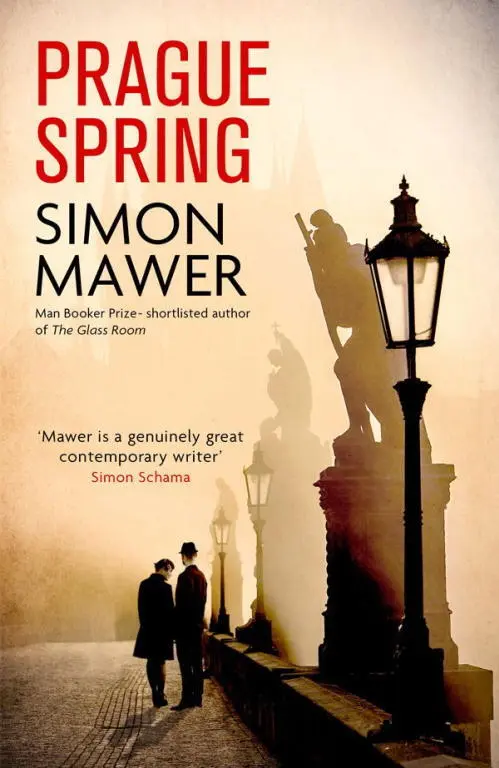
- Название:Prague Spring
- Автор:
- Издательство:Little, Brown Book Group
- Жанр:
- Год:2018
- Город:London
- ISBN:978-1-4087-1113-2
- Рейтинг книги:3 / 5. Голосов: 1
-
Избранное:Добавить в избранное
- Отзывы:
-
Ваша оценка:
Prague Spring: краткое содержание, описание и аннотация
Предлагаем к чтению аннотацию, описание, краткое содержание или предисловие (зависит от того, что написал сам автор книги «Prague Spring»). Если вы не нашли необходимую информацию о книге — напишите в комментариях, мы постараемся отыскать её.
In the summer of 1968, the year of Prague Spring with a Cold War winter, Oxford students James Borthwick and Eleanor Pike set out to hitchhike across Europe, complicating a budding friendship that could be something more. Having reached southern Germany, they decide on a whim to visit Czechoslovakia, where Alexander Dubček’s “socialism with a human face” is smiling on the world.
Meanwhile, Sam Wareham, First Secretary at the British embassy in Prague, observes developments in the country with a diplomat’s cynicism and a young man’s passion. In the company of Czech student Lenka Konečková, he finds a way into the world of Czechoslovak youth, with all its hopes and new ideas; now, nothing seems off-limits behind the Iron Curtain. But the great wheels of politics are grinding in the background; Soviet leader Leonid Brezhnev is making demands of Dubček, and the Red Army is massing on the borders.
This shrewd, engrossing, and sensual novel once again proves Simon Mawer is one of today’s most talented writers of historical spy fiction.
Prague Spring — читать онлайн бесплатно полную книгу (весь текст) целиком
Ниже представлен текст книги, разбитый по страницам. Система сохранения места последней прочитанной страницы, позволяет с удобством читать онлайн бесплатно книгу «Prague Spring», без необходимости каждый раз заново искать на чём Вы остановились. Поставьте закладку, и сможете в любой момент перейти на страницу, на которой закончили чтение.
Интервал:
Закладка:
Anger flared. Sam almost shouted, almost lost his temper. No one gives a fuck about you now! he almost yelled. Instead he said, ‘You’re right,’ and picked up the phone to dial Jitka’s number. The only lifeline he had. But the phone at the other end just rang and rang in an empty flat that he couldn’t picture.
46
They climb the stairs, out of the noise and confusion and fear of the streets. Somewhere above them a phone is ringing. Is it Jitka’s? But as they pass the floors it stops, and when they reach the flat it is a haven of peace and quiet with only the distant sound of a siren breaking the calm. They close the door behind them and turn the key. Through one of the dormer windows James can see smoke rising over the roofs. He and Ellie don’t discuss what to do. Somehow it has been decided by a kind of communication that operates beneath the level of conscious thought. She begins packing her things away, rolling up her sleeping bag, collecting her stuff from the bathroom, while he rings the embassy and asks to speak to Mr Wareham. In placid tones – the British in a crisis – an embassy voice asks if he is seeking consular advice, in which case he should phone the consulate on—
‘I don’t want the consulate. I want to speak directly to Mr Wareham. Samuel Wareham,’ he adds, suddenly remembering the posh guy’s first name. ‘My name’s James Borthwick. Tell him Lenka told me to contact him. It’s about her.’
There’s a moment’s hesitation. He can sense the operator wondering about the importance or otherwise of this unknown voice with its Northern accent. ‘Hold the line please.’ There’s a pause. Silence on the line, just the rush of static in the earphone. Then the sound of the operator again. ‘I’m afraid Mr Wareham is unavailable at the moment. May I take a message?’
47
At the entrance to the Charles Bridge there was a Russian checkpoint. Only the day before TV crews had been filming that British pop group, with everyone basking in the fiction that the country was in the process of joining Western pop culture; now half a dozen Russian soldiers were rifling people’s bags and searching them for offensive items. But the procedure was less to do with security, more plain highway robbery: they were taking cameras, pens, wristwatches, anything that might have pecuniary value. A young soldier – a mere boy – advanced on Sam as he moved to go through. Sam waved his diplomatic pass. ‘ Britanskoye posol’stvo ,’ he said. British embassy. The soldier hesitated. Standing downwind of him Sam caught the sour scent of stale sweat. There was a brief conversation between the soldier and his officer before Sam was waved through onto the bridge.
The bridge itself was already daubed with graffiti. Red stars and black swastikas in intimate conjunction, BREZHNEV = HITLER chalked on the parapet in case you’d missed the point. In one place a Cyrillic scrawl exhorted the Russians to ИДИТЕ ДОМОЙ! GO HOME! On either side of the bridge the embankments had become a tank park, Soviet armour lying like a great, articulated reptile alongside the water’s edge. Gunfire punctuated the morning, while from the crowded buildings of the Old Town came a noise like the roar of a football crowd. Sam went on, past the statue of the emperor Charles IV, hung now with a Czechoslovak flag, past the incurious gaze of soldiers, towards whatever was happening in the heart of the city. The streets, the squares were rancid with the smell of the occupiers – diesel fumes, hot metal, unwashed bodies. The act of walking, hurrying, almost running, distracted him from his feelings, which were visceral, a sensation of vomit, a feeling of fear lying just below the sternum and spreading up the spine to his brain.
Memories of that walk became confused in retrospect, so that he could no longer plot the exact route he took through the streets of the Old Town. There was the incongruity of tanks in narrow streets, of armoured vehicles confronting trams, of soldiers ringed by arguing men and women. Roads were blocked. Trams tipped over as barricades. A bus driven into a shop front. Smoke and dust eddying in the narrow spaces. Groups of youths waved banners while a motorbike drove past distributing copies of Rudé Právo . Bullets pockmarked buildings. Façades were smashed and broken stonework lay on the pavements. The National Museum at the head of Wenceslas Square, dark grey with urban soot, bore white spots where shells had hit. On Vinohradská there was a litter of overturned vehicles blocking access to the radio station. Tanks had ground their way through the debris, spewing clouds of exhaust fumes. Guns fired. Boys argued with tanks. Flags waved. Girls screamed.
At one street corner an argument was going on between a dozen youths and a young Russian officer. Their common language was an amalgam of Czech and Russian. ‘What are you doing here?’
‘We came to help.’
‘We don’t need your help. You can see that. So go back home.’
‘We were invited.’
‘By whom? Not by the people.’
‘By your leaders.’
‘Dubček didn’t invite you. Císař didn’t invite you. Svoboda didn’t invite you. So what are you doing here?’
‘We came to help.’
So it went on, a circular litany with no end in sight.
As he stood in the midst of this chaos, Sam’s fear gave way to a curious sense of detachment, as though the ferment all around were happening in some other, parallel world. These tanks, these soldiers, the blunt fact of their presence had all been inevitable. What had people expected? What had Lenka and her friends, with their fifteen minutes of freedom, imagined would happen? This was reality. The last eight months had been but a dream.
A group of protesters walked past chanting Dubček’s name. They parted and flowed round him like water round an obstacle, like the river that had flowed round Lenka as she stood there in the stream. A gunshot rang out. People flinched and scattered, but Sam had learned from his national service basic training that you never hear the report of the shot that hits you, so that particular bullet, echoing between the buildings, was safe for him at least. He had never felt so indifferent to risk.
He walked on. The steel rasp of tank tracks ground paving stones to dust. Sunlight through smoke. The smell of oil. A fire blazed beneath an armoured car while the crew tried to beat out the flames, just as people would try to beat out the flames of Jan Palach’s body in five months’ time in more or less the same place. A passing motorcyclist shouted, ‘Take these!’ and thrust a bundle of leaflets at him. He walked on, handing the leaflets out to anyone he passed, not really caring what the leaflet said – the simple act was enough. Was this what combat was like: fear transcended to become something close to euphoria? He came across a young man also distributing leaflets. There was an absurd hiatus during which they compared leaflets and found them to be different. ‘That’s good, then,’ the youth decided. He wore a black leather jacket and jeans. His hair was down to his collar. A badge of some kind. ‘You German?’ he asked.
‘English.’
‘You speak good Czech.’
A lorry roared past filled with kids yelling and waving the Czechoslovak flag, chanting Dubček, Dubček, Dubček! ‘Oh, one thing. You don’t know a girl called Konečková, do you? Lenka Konečková?’
A frown. ‘I’ve heard of her. A journalist?’
‘She writes a bit. And speaks on the radio sometimes. Have you seen her?’
The youth shook his head, indicating the chaos all around. ‘I wouldn’t know her by sight anyway.’
‘Blonde, tall.’
The youth laughed. ‘Aren’t they all?’
Sam walked on, handing people leaflets until his supply vanished. What else to do? On the embankment there were groups of people arguing with the tank crews. Slogans had been chalked on the steel hulls – swastikas, hangmen, the exhortation to ‘go home’ in Russian, in Czech, even, presumably with an eye on the news media, in English.
Читать дальшеИнтервал:
Закладка:
Похожие книги на «Prague Spring»
Представляем Вашему вниманию похожие книги на «Prague Spring» списком для выбора. Мы отобрали схожую по названию и смыслу литературу в надежде предоставить читателям больше вариантов отыскать новые, интересные, ещё непрочитанные произведения.



Обсуждение, отзывы о книге «Prague Spring» и просто собственные мнения читателей. Оставьте ваши комментарии, напишите, что Вы думаете о произведении, его смысле или главных героях. Укажите что конкретно понравилось, а что нет, и почему Вы так считаете.