Нора Икстена - Soviet Milk
Здесь есть возможность читать онлайн «Нора Икстена - Soviet Milk» весь текст электронной книги совершенно бесплатно (целиком полную версию без сокращений). В некоторых случаях можно слушать аудио, скачать через торрент в формате fb2 и присутствует краткое содержание. Город: London, Год выпуска: 2018, ISBN: 2018, Издательство: Peirene Press, Жанр: Историческая проза, на английском языке. Описание произведения, (предисловие) а так же отзывы посетителей доступны на портале библиотеки ЛибКат.
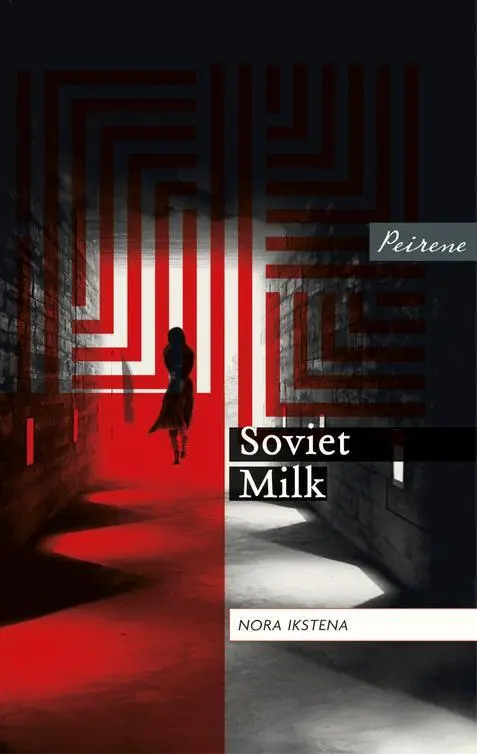
- Название:Soviet Milk
- Автор:
- Издательство:Peirene Press
- Жанр:
- Год:2018
- Город:London
- ISBN:978-1-908670-42-7
- Рейтинг книги:5 / 5. Голосов: 1
-
Избранное:Добавить в избранное
- Отзывы:
-
Ваша оценка:
Soviet Milk: краткое содержание, описание и аннотация
Предлагаем к чтению аннотацию, описание, краткое содержание или предисловие (зависит от того, что написал сам автор книги «Soviet Milk»). Если вы не нашли необходимую информацию о книге — напишите в комментариях, мы постараемся отыскать её.
This novel considers the effects of Soviet rule on a single individual. The central character in the story tries to follow her calling as a doctor. But then the state steps in. She is deprived first of her professional future, then of her identity and finally of her relationship with her daughter. Banished to a village in the Latvian countryside, her sense of isolation increases. Will she and her daughter be able to return to Riga when political change begins to stir?
Why Peirene chose to publish this book: cite
MEIKE ZIERVOGEL
EIRENE PRESS
Soviet Milk — читать онлайн бесплатно полную книгу (весь текст) целиком
Ниже представлен текст книги, разбитый по страницам. Система сохранения места последней прочитанной страницы, позволяет с удобством читать онлайн бесплатно книгу «Soviet Milk», без необходимости каждый раз заново искать на чём Вы остановились. Поставьте закладку, и сможете в любой момент перейти на страницу, на которой закончили чтение.
Интервал:
Закладка:
One night I saw that my mother was asleep with the light still burning in her room. I took out the coffee mugs, collected the apple cores and bread crusts. Apples and black rye bread were my mother’s favourite food. I turned out the light. The window was half-open. She kept it like that, to let some air into the smoke-filled room. Fresh, fragrant night air flowed in. Moonlight illuminated us.
My mother was sleeping on her left, her face turned to the window. She slept calmly. I sat across from her on a small stool. Her face was covered with freckles, like mine. In the winter they had faded somewhat, but were still visible. She had a high forehead on which tiny wrinkles were slowly forming. Once in a while she used to place her hand on my forehead and say, ‘Never look surprised; never frown.’ But she herself frowned often. Her nose was fine and narrow, with a small hump. Her eyebrows and lashes were dark brown, her ears small and close to her head, with small lobes. Now and then she opened her mouth and quietly snored for a while in her sleep. My mother’s face looked almost beautiful. Fear, so often another occupant of this room, had disappeared. There was just silence, the fresh night air and the moonlight. And my mother’s face.
I sat for a brief while, then left for my own bed. It was hard to fall asleep. I went straight into a dream. I was standing by my old wardrobe. The large oval mirror should have shown me full-length, but I could only see half of me. My hands were crossed over my chest. At first I seemed to see my grandmother. I had her face – her prominent cheekbones, humped nose, grey eyes and high forehead. Then the image in the mirror changed and I saw myself as my mother, her eyes closed, asleep. And then I saw myself with a lightly glowing skin as if taken from a greetings card, but nonetheless myself.
In the morning, as usual, I brought a big mug of coffee into my mother’s room. She had risen already, sat down before the broken mirror on her bedside table and was brushing her hair.
‘Give me the brush. I’ll help you,’ I said.
My mother often had tangled hair at the back, which she patted down and tied with an elastic band.
‘It has to be combed for once,’ I said, and began to untangle Mother’s hair.
She submitted, lit a cigarette and sipped her coffee.
‘I had a lovely dream. I saw myself in the mirror, first as your mother, then as you and then as me. Your eyes were closed and you were sleeping.’
My mother put her cigarette and coffee mug down on the bedside table. She clasped my hands and placed her face in them. Then she kissed them and quietly repeated, ‘Be vigilant. Keep your eyes open.’
I hadn’t seen them for several years. During the spring break my daughter asked if we could finally go to Riga together. Apparently my mother and stepfather thought I no longer wished to see them. They wanted to discuss my daughter’s move back to their flat. There were all sorts of reasons to go.
The morning we went to catch the train happened to be warm and sunny, although it was still March. We walked holding hands. As always, I felt as though my daughter was leading me. She was so happy, rushing along, almost dancing. Just as happily the March snow thawed into meltwater and flowed away. Even in shady spots the snowdrifts were shrinking. I felt as if I were setting out on a forgotten road after many years of winter.
In the small, neglected railway station a fire sputtered feebly in a wood stove. An exhausted night-owl was snoozing on a bench. My daughter knocked on the window of the cashier’s booth. The cashier slid open the heavy rag curtain and punched out two tickets for us.
‘Mamma, come,’ my daughter said. ‘You get the best feeling if you wait for the train at the end of the platform.’
Only a few passengers were waiting for the Riga train. We headed for the end of the platform. I joined in with my daughter’s ritual. Where the platform finished, the tracks disappeared in the distance between the fields on one side and the forest on the other. There in the springlike morning haze it had to appear: the train that, after all these years, would take me to the city from which I’d been banished. It would take me to my mother and stepfather, whom I had hurt so much.
In the distance the train roared. It was approaching to take us away from this Golgotha.
The journey was long. Lonely stations slid by the window, followed by the Rumbula Forest corridors, where Jews had been shot. I daydreamed back to a student party in one of the Rumbula’s community gardens. Having downed our strong, sour gut-rot, I was looking for somewhere to sit down. The allotment garden was surrounded by a temporary fence supported by posts. Small for its role, covered in moss, each post had a cross scored into it at the top. Cabbages, beetroot and potatoes to provide for our Soviet pigs would grow abundantly here, for bodies from military executions fertilized the soil.
The journey was slow. The train rolled into Šķirotava railway station, from where tens of thousands of Latvians were deported to Siberia. Nothing had changed since that day when my daughter and I had gone into our remote country exile. People were living in the same world, with identical sectional wall units, crockery sets and coffee tables, in identical flats, with identical doormats. They were irreproachable. For in Šķirotava – which means ‘place of separation’ in Latvian – no one was separated any longer. Husbands were not separated from wives, nor children separated from parents, nor grandparents from grandchildren. No longer separated to become slaves of the twentieth century, to fertilize the vast earth of the motherland.
I also thought about my father, from whom we had been separated right here.
The journey was long. I observed my daughter. Her happy girlish face, her chin pressed against the carriage window.
We got out at Riga station.
‘Let’s walk, Mamma. Let’s not take the tram,’ my daughter suggested. ‘The weather is so nice and you haven’t been here for years. Riga is lovely.’
Yes, the March sun was making it lovely, even though the streets were wet, full of mud and slush.
We decided to sit on a bench in Vērmanis Park. I lit a cigarette. My daughter ate an ice cream.
The passers-by seemed to be dressed for a special occasion. The bright colours and the sun were dazzling.
‘Let’s go further along Kirova Street,’ my daughter said.
‘Kirov married Elizabete,’ I said, laughing. ‘Before, this street used to be called “Elizabete”.’
‘Fine, Mamma. Along Elizabete to Valdemāra Street, who has now married Gorky. How all the streets have been renamed!’ my daughter remarked happily.
‘Aren’t you too smart for a fifteen-year-old?’ Her joy warmed my heart.
On a corner we went into a chocolate shop to buy a treat for ourselves. On the shelf were rows of marzipan figurines called Dārgais – ‘Dear One’.
‘Can we afford a marzipan owl?’ my daughter asked me quietly.
‘Today we can afford everything. Even a marzipan owl.’
We walked hand in hand. My daughter’s contentment was tangible.
‘Amptmanis Briedītis married Zaube, Nītaure remained an old maid, but Mičurins married Tompsonu.’ She was counting the streets and calling out their ‘married’ names, the new ones, and the original names.
Nothing had changed in our short street. The new technical school, the library for the visually impaired, the peacetime apartment blocks on one side, the kindergarten on the other side.
At the flat my mother and stepfather welcomed us. We embraced, and I saw their eyes fill with tears. While the table was being laid, I went into my room. It was sunny and clean, my books lined up neatly on a shelf, on the table a vase of tulips, my daughter’s books and keepsakes, the bed covered with my mother’s fringed, embroidered blanket. Soon my daughter would be living here.
Читать дальшеИнтервал:
Закладка:
Похожие книги на «Soviet Milk»
Представляем Вашему вниманию похожие книги на «Soviet Milk» списком для выбора. Мы отобрали схожую по названию и смыслу литературу в надежде предоставить читателям больше вариантов отыскать новые, интересные, ещё непрочитанные произведения.




Обсуждение, отзывы о книге «Soviet Milk» и просто собственные мнения читателей. Оставьте ваши комментарии, напишите, что Вы думаете о произведении, его смысле или главных героях. Укажите что конкретно понравилось, а что нет, и почему Вы так считаете.