Александр Дюма - The Conspirators
Здесь есть возможность читать онлайн «Александр Дюма - The Conspirators» весь текст электронной книги совершенно бесплатно (целиком полную версию без сокращений). В некоторых случаях можно слушать аудио, скачать через торрент в формате fb2 и присутствует краткое содержание. Год выпуска: 2014, Издательство: epubBooks Classics, Жанр: Историческая проза, на английском языке. Описание произведения, (предисловие) а так же отзывы посетителей доступны на портале библиотеки ЛибКат.
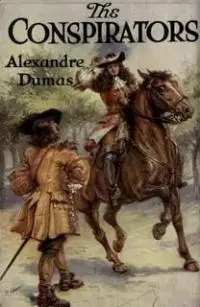
- Название:The Conspirators
- Автор:
- Издательство:epubBooks Classics
- Жанр:
- Год:2014
- ISBN:нет данных
- Рейтинг книги:3 / 5. Голосов: 1
-
Избранное:Добавить в избранное
- Отзывы:
-
Ваша оценка:
The Conspirators: краткое содержание, описание и аннотация
Предлагаем к чтению аннотацию, описание, краткое содержание или предисловие (зависит от того, что написал сам автор книги «The Conspirators»). Если вы не нашли необходимую информацию о книге — напишите в комментариях, мы постараемся отыскать её.
The Conspirators — читать онлайн бесплатно полную книгу (весь текст) целиком
Ниже представлен текст книги, разбитый по страницам. Система сохранения места последней прочитанной страницы, позволяет с удобством читать онлайн бесплатно книгу «The Conspirators», без необходимости каждый раз заново искать на чём Вы остановились. Поставьте закладку, и сможете в любой момент перейти на страницу, на которой закончили чтение.
Интервал:
Закладка:
D'Harmental perfectly understood the gravity of the situation, but his face exhibited the calmness which was habitual to him in moments of danger.
"Is that all?" he asked, quietly.
"All for the present; and, if you do not think it enough, you are difficult to satisfy."
"My dear abbe," said D'Harmental, "when we entered on this conspiracy, it was with almost equal chances of success and failure. Yesterday, our chances were ninety to a hundred; to–day they are only thirty; that is all."
"I am glad to see that you do not easily allow yourself to be discouraged," said Brigaud.
"My dear abbe," said D'Harmental, "at this moment I am a happy man, and I see everything on the bright side. If you had taken me in a moment of sadness, it would have been quite the reverse, and I should have replied 'Amen' to your 'De Profundis.'"
"And your opinion?"
"Is that the game is becoming perplexed, but is not yet lost. The Marshal de Villeroy is not of the conspiracy, does not even know the names of the conspirators. Philip V.'s letters—as far as I remember them—do not name anybody; and the only person really compromised is the Prince de Cellamare. The inviolability of his character protects him from any real danger. Besides, if our plan has reached the Cardinal Alberoni, Monsieur de Saint–Aignan must serve as hostage."
"There is truth in what you say."
"And from whom have you this news?" asked the chevalier.
"From Valef, who had it from Madame de Maine; who, on receipt of the news, went to the Prince of Cellamare himself."
"We must see Valef."
"I have appointed him to meet me here, and on my way I stopped at the Marquis de Pompadour's. I am astonished that he is not here before me."
"Raoul," said a voice on the staircase.
"Stay, it is he," cried D'Harmental, running to the door and opening it.
"Thank you," said Valef, "for your assistance, which is very seasonable, for I was just going away, convinced that Brigaud must have made a mistake, and that no Christian could live at such a height, and in such a pigeon–hole. I must certainly bring Madame de Maine here, that she may know what she owes you."
"God grant," said the Abbe Brigaud, "that we may not all be worse lodged a few days hence!"
"Ah! you mean the Bastille! It is possible, abbe; but at least one does not go to the Bastille of one's own accord; moreover, it is a royal lodging, which raises it a little, and makes it a place where a gentleman may live without degradation; but a place like this—fie, abbe!"
"If you knew what I have found here," said D'Harmental, a little piqued, "you would be as unwilling to leave it as I am."
"Ah, some little bourgeoise; some Madame Michelin, perhaps. Take care, D'Harmental; these things are only allowed to Richelieu. With you and me, who are perhaps worth as much as he is, but are unfortunately not quite so much in fashion, it will not do."
"Well," said the Abbe Brigaud, "although your conversation is somewhat frivolous, I hear it with pleasure, since it assures me that our affairs are not so bad as I thought."
"On the contrary, the conspiracy is gone to the devil."
"How so?"
"I scarcely thought they would leave me time to bring you the news."
"Were you nearly arrested then, Valef?" asked D'Harmental.
"I only escaped by a hair's breadth."
"How did it happen, baron?"
"You remember, abbe, that I left you to go to the Prince de Cellamare?"
"Yes."
"Well, I was there when they came to seize his papers."
"Have they seized the prince's papers?"
"All except what we burned, which unfortunately were the smaller number."
"Then we are all lost," said the abbe.
"Why, my dear abbe, how you throw the helve after the hatchet!"
"But, Valef, you have not told us how it happened," said D'Harmental.
"My dear chevalier, imagine the most ridiculous thing in the world. I wish you had been there: we should have laughed fit to kill ourselves. It would have enraged that fellow Dubois."
"What! was Dubois himself at the ambassador's?"
"In person, abbe. Imagine the Prince de Cellamare and I quietly sitting by the corner of the fire, taking out letters from a little casket, and burning those which seemed to deserve the honors of an auto–da–fé, when all at once his valet–de–chambre enters, and announces that the hotel of the embassy is invested by a body of musketeers, and that Dubois and Leblanc wish to speak to him. The object of this visit is not difficult to guess. The prince—without taking the trouble to choose—empties the caskets into the fire, pushes me into a dressing closet, and orders that they shall be admitted. The order was useless. Dubois and Leblanc were at the door. Fortunately, neither one nor the other had seen me."
"Well, I see nothing droll as yet," said Brigaud.
"This is just where it begins," replied Valef. "Remember that I was in the closet, seeing and hearing everything. Dubois entered, and stretching out his weasel's head to watch the Prince de Cellamare, who, wrapped in his dressing–gown, stood before the fire to give the papers time to burn.
"'Monsieur,' said the prince, in that phlegmatic manner you know he has, 'may I know to what event I owe the honor of this visit?'
"'Oh, mon Dieu, monseigneur!' said Dubois, 'to a very simple thing—a desire which Monsieur Leblanc and I had to learn a little of your papers, of which,' added he, showing the letters of Philip V., 'these two patterns have given us a foretaste.'"
"How!" said Brigaud, "these letters seized at ten o'clock at Versailles are in Dubois's hands at one o'clock!"
"As you say, abbe. You see that they traveled faster than if they had been put in the post."
"And what did the prince say then?" asked D'Harmental.
"Oh! the prince wished to carry it off with a high hand, by appealing to his rights as an envoy; but Dubois, who is not wanting in a certain logic, showed him that he had himself somewhat violated these rights, by covering the conspiracy with his ambassador's cloak. In short, as he was the weakest, he was obliged to submit to what he could not prevent. Besides, Leblanc, without asking permission, had already opened the desk, and examined its contents, while Dubois drew out the drawers of a bureau and rummaged in them. All at once Cellamare left his place, and stopping Leblanc, who had just taken a packet of papers tied with red ribbon—
"'Pardon, monsieur,' said he, 'to each one his prerogatives. These are ladies' letters.'
"'Thanks for your confidence,' said Dubois, not in the least disconcerted, but rising and taking the papers from the hand of Leblanc, 'I am accustomed to these sort of secrets, and yours shall be well kept.'
BUVAT FOUND HIMSELF IN A SORT OF LABORATORY, SITUATED ON THE GROUND–FLOOR.
"At this moment, looking toward the fire, he saw—in the midst of the burned letters—a paper still untouched, and darting toward it, he seized it just as the flames were reaching it. The movement was so rapid that the ambassador could not prevent it, and the paper was in Dubois's hands.
"'Peste!' said the prince, seeing Dubois shaking his fingers, 'I knew that the regent had skillful spies, but I did not know that they were brave enough to go in the fire.'
"'Ma foi! prince,' said Dubois, unfolding the paper, 'they are well rewarded for their bravery, see.'
"The prince cast his eyes over the paper; I do not know what it contained, but I know that the prince turned pale as death; and that, as Dubois burst out laughing, Cellamare broke in pieces a little marble statue which was near his hand.
"'I am glad it was not I,' said Dubois, coldly, and putting the paper in his pocket.
"'Every one in turn, monsieur; Heaven is just!' said the ambassador.
"'Meanwhile,' said Dubois, 'as we have got what we wanted, and have not much time to lose to–day, we will set about affixing the seals.'
Читать дальшеИнтервал:
Закладка:
Похожие книги на «The Conspirators»
Представляем Вашему вниманию похожие книги на «The Conspirators» списком для выбора. Мы отобрали схожую по названию и смыслу литературу в надежде предоставить читателям больше вариантов отыскать новые, интересные, ещё непрочитанные произведения.

Обсуждение, отзывы о книге «The Conspirators» и просто собственные мнения читателей. Оставьте ваши комментарии, напишите, что Вы думаете о произведении, его смысле или главных героях. Укажите что конкретно понравилось, а что нет, и почему Вы так считаете.