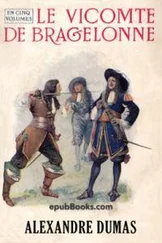
Александр Дюма - The Conspirators
Здесь есть возможность читать онлайн «Александр Дюма - The Conspirators» весь текст электронной книги совершенно бесплатно (целиком полную версию без сокращений). В некоторых случаях можно слушать аудио, скачать через торрент в формате fb2 и присутствует краткое содержание. Год выпуска: 2014, Издательство: epubBooks Classics, Жанр: Историческая проза, на английском языке. Описание произведения, (предисловие) а так же отзывы посетителей доступны на портале библиотеки ЛибКат.

- Название:The Conspirators
- Автор:
- Издательство:epubBooks Classics
- Жанр:
- Год:2014
- ISBN:нет данных
- Рейтинг книги:3 / 5. Голосов: 1
-
Избранное:Добавить в избранное
- Отзывы:
-
Ваша оценка:
The Conspirators: краткое содержание, описание и аннотация
Предлагаем к чтению аннотацию, описание, краткое содержание или предисловие (зависит от того, что написал сам автор книги «The Conspirators»). Если вы не нашли необходимую информацию о книге — напишите в комментариях, мы постараемся отыскать её.
The Conspirators — читать онлайн бесплатно полную книгу (весь текст) целиком
Ниже представлен текст книги, разбитый по страницам. Система сохранения места последней прочитанной страницы, позволяет с удобством читать онлайн бесплатно книгу «The Conspirators», без необходимости каждый раз заново искать на чём Вы остановились. Поставьте закладку, и сможете в любой момент перейти на страницу, на которой закончили чтение.
Интервал:
Закладка:
That evening it was D'Harmental who played, and Bathilde listened with all her soul to the melodious voice which spoke of love in the dead of night. Unluckily for the chevalier, who, seeing the shadow of the young girl behind the drapery, began to think that he was making a favorable impression on the other side of the street, he had been interrupted in his concert by the lodger on the third floor; but the most important thing was accomplished—there was already a point of sympathy between the two young people, and they already spoke that language of the heart, the most dangerous of all.
Moreover, Bathilde, who had dreamed all night about music, and a little about the musician, felt that something strange and unknown to her was going on, and, attracted as she was toward the window, she kept it scrupulously closed; from this resulted the movement of impatience, under the influence of which the chevalier had gone to breakfast with Madame Denis.
There he had learned one important piece of news, which was, that Bathilde was neither the daughter, the wife, nor the niece of Buvat; thus he went upstairs joyfully, and, finding the window open, he had put himself—in spite of the friendly advice of Boniface—in communication with Mirza, by means of bribing her with sugar. The unexpected return of Bathilde had interrupted this amusement; the chevalier, in his egotistical delicacy, had shut his window; but, before the window had been shut, a salute had been exchanged between the two young people. This was more than Bathilde had ever accorded to any man, not that she had not from time to time exchanged salutes with some acquaintance of Buvat's, but this was the first time she had blushed as she did so.
The next day Bathilde had seen the chevalier at his window, and, without being able to understand the action, had seen him nail a crimson ribbon to the outer wall; but what she had particularly remarked was the extraordinary animation visible on the face of the young man. Half an hour afterward she had seen with the chevalier a man perfectly unknown to her, but whose appearance was not re–assuring; this was Captain Roquefinette. Bathilde had also remarked, with a vague uneasiness, that, as soon as the man with the long sword had entered, the chevalier had fastened the door.
The chevalier, as is easy to understand, had a long conference with the captain; for they had to arrange all the preparations for the evening's expedition. The chevalier's window remained thus so long closed that Bathilde, thinking that he had gone out, had thought she might as well open hers.
Hardly was it open, however, when her neighbor's, which had seemed only to wait the moment to put itself in communication with her, opened in turn. Luckily for Bathilde, who would have been much embarrassed by this circumstance, she was in that part of the room where the chevalier could not see her. She determined, therefore, to remain where she was, and sat down near the second half of the window, which was still shut.
Mirza, however, who had not the same scruples as her mistress, hardly saw the chevalier before she ran to the window, placed her front paws on the sill, and began dancing on her hind ones. These attentions were rewarded, as she expected, by a first, then a second, then a third, lump of sugar; but this third bit, to the no small astonishment of Bathilde, was wrapped up in a piece of paper.
This piece of paper troubled Bathilde a great deal more than it did Mirza, who, accustomed to crackers and sucre de pomme, soon got the sugar out of its envelope by means of her paws; and, as she thought very much of the inside, and very little of the wrapper, she ate the sugar, and, leaving the paper, ran to the window; but the chevalier was gone; satisfied, no doubt, of Mirza's skill, he had retired into his room.
Bathilde was very much embarrassed; she had seen, at the first glance, that the paper contained three or four lines of writing; but, in spite of the sudden friendship which her neighbor seemed to have acquired for Mirza, it was evidently not to Mirza that he was writing letters—it must, therefore, be to her. What should she do? Go and tear it up? That would be noble and proper; but, even if it were possible to do such a thing, the paper in which the sugar had been wrapped might have been written on some time, and then the action would be ridiculous in the highest degree, and it would show, at any rate, that she thought about the letter. Bathilde resolved then, to leave things as they were. The chevalier could not know that she was at home, since he had not seen her; he could not, therefore, draw any deduction from the fact that the paper remained on the floor. She therefore continued to work, or rather to reflect, hidden behind her curtain, as the chevalier, probably, was behind his.
In about an hour, of which it must be confessed Bathilde passed three–quarters with her eyes fixed on the paper, Nanette entered. Bathilde, without moving, told her to shut the window—Nanette obeyed; but in returning she saw the paper.
"What is that?" asked she, stooping down to pick it up.
"Nothing," answered Bathilde quickly, forgetting that Nanette could not read, "only a paper which has fallen out of my pocket." Then, after an instant's pause, and with a visible effort, "and which you may throw on the fire," continued she.―"But perhaps it may be something important; see what it is, at all events, mademoiselle." And Nanette presented the letter to Bathilde.
The temptation was too strong to resist. Bathilde cast her eyes on the paper, affecting an air of indifference as well as she could, and read as follows:
"They say you are an orphan: I have no parents; we are, then, brother and sister before God. This evening I run a great danger; but I hope to come out of it safe and sound if my sister—Bathilde—will pray for her brother Raoul."
"You are right," said Bathilde, in a moved voice, and taking the paper from the hands of Nanette, "that paper is more important than I thought;" and she put D'Harmental's letter in the pocket of her apron. Five minutes after Nanette, who came in twenty times a day without any particular reason, went out as she had entered, and left Bathilde alone.
Bathilde had only just glanced at the letter, and it had seemed to dazzle her. As soon as Nanette was gone she read it a second time.
It would have been impossible to have said more in fewer words. If D'Harmental had taken a whole day to combine every word of the billet, instead of writing on the spur of the moment, he could not have done it better. Indeed, he established a similarity of position between himself and the orphan; he interested Bathilde in her neighbor's fate on account of a menacing danger, a danger which would appear all the greater to the young girl from her not knowing its nature; and, finally, the expression brother and sister, so skillfully glided in at the end, and to ask a simple prayer, excluded from these first advances all idea of love.
It followed, therefore, that, if at this moment Bathilde had found herself vis–a–vis with D'Harmental, instead of being embarrassed and blushing, as a young girl would who had just received her first love–letter, she would have taken him by the hand and said to him, smiling—"Be satisfied, I will pray for you." There remained, however, on the mind of Bathilde something more dangerous than all the declarations in the world, and that was the idea of the peril which her neighbor ran. By a sort of presentiment with which she had been seized on seeing him, with a face so different from his ordinary expression, nail the crimson ribbon to his window, and withdraw it directly the captain entered, she was almost sure that the danger was somehow connected with this new personage, whom she had never seen before. But how did this danger concern him? What was the nature of the danger itself? This was what she asked herself in vain. She thought of a duel, but to a man such as the chevalier appeared to be, a duel was not one of those dangers for which one asks the prayers of women; besides, the hour named was not suitable to duels. Bathilde lost herself in her conjectures; but, in losing herself, she thought of the chevalier, always of the chevalier, and of nothing but the chevalier; and, if he had calculated upon such an effect, it must be owned that his calculations were wofully true for poor Bathilde.
Читать дальшеИнтервал:
Закладка:
Похожие книги на «The Conspirators»
Представляем Вашему вниманию похожие книги на «The Conspirators» списком для выбора. Мы отобрали схожую по названию и смыслу литературу в надежде предоставить читателям больше вариантов отыскать новые, интересные, ещё непрочитанные произведения.


Обсуждение, отзывы о книге «The Conspirators» и просто собственные мнения читателей. Оставьте ваши комментарии, напишите, что Вы думаете о произведении, его смысле или главных героях. Укажите что конкретно понравилось, а что нет, и почему Вы так считаете.