Ken Follett - World Without End
Здесь есть возможность читать онлайн «Ken Follett - World Without End» весь текст электронной книги совершенно бесплатно (целиком полную версию без сокращений). В некоторых случаях можно слушать аудио, скачать через торрент в формате fb2 и присутствует краткое содержание. Жанр: Историческая проза, на английском языке. Описание произведения, (предисловие) а так же отзывы посетителей доступны на портале библиотеки ЛибКат.
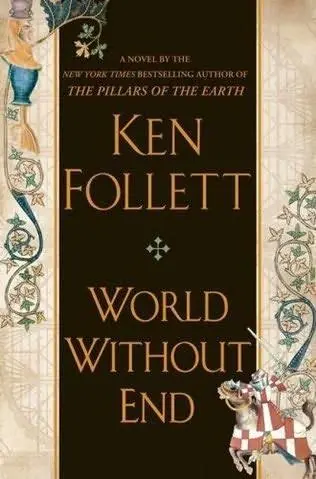
- Название:World Without End
- Автор:
- Жанр:
- Год:неизвестен
- ISBN:нет данных
- Рейтинг книги:5 / 5. Голосов: 1
-
Избранное:Добавить в избранное
- Отзывы:
-
Ваша оценка:
World Without End: краткое содержание, описание и аннотация
Предлагаем к чтению аннотацию, описание, краткое содержание или предисловие (зависит от того, что написал сам автор книги «World Without End»). Если вы не нашли необходимую информацию о книге — напишите в комментариях, мы постараемся отыскать её.
Ken Follett has 90 million readers worldwide. The Pillars of the Earth is his bestselling book of all time. Now, eighteen years after the publication of The Pillars of the Earth, Ken Follett has written the most-anticipated sequel of the year, World Without End.
In 1989 Ken Follett astonished the literary world with The Pillars of the Earth, a sweeping epic novel set in twelfth-century England centered on the building of a cathedral and many of the hundreds of lives it affected. Critics were overwhelmed-"it will hold you, fascinate you, surround you" (Chicago Tribune)-and readers everywhere hoped for a sequel.
World Without End takes place in the same town of Kingsbridge, two centuries after the townspeople finished building the exquisite Gothic cathedral that was at the heart of The Pillars of the Earth. The cathedral and the priory are again at the center of a web of love and hate, greed and pride, ambition and revenge, but this sequel stands on its own. This time the men and women of an extraordinary cast of characters find themselves at a crossroad of new ideas-about medicine, commerce, architecture, and justice. In a world where proponents of the old ways fiercely battle those with progressive minds, the intrigue and tension quickly reach a boiling point against the devastating backdrop of the greatest natural disaster ever to strike the human race-the Black Death.
Three years in the writing, and nearly eighteen years since its predecessor, World Without End breathes new life into the epic historical novel and once again shows that Ken Follett is a masterful author writing at the top of his craft.
World Without End — читать онлайн бесплатно полную книгу (весь текст) целиком
Ниже представлен текст книги, разбитый по страницам. Система сохранения места последней прочитанной страницы, позволяет с удобством читать онлайн бесплатно книгу «World Without End», без необходимости каждый раз заново искать на чём Вы остановились. Поставьте закладку, и сможете в любой момент перейти на страницу, на которой закончили чтение.
Интервал:
Закладка:
A man-at-arms wearing Earl Roland’s red-and-black livery came up carrying the lifeless body of a big man. Wulfric gasped again: it was his father.
Gwenda said: “Lay him here, next to his wife.”
Wulfric was stunned. He said nothing, seeming unable to take it in. Gwenda herself was bewildered. What could she say to the man she loved in these circumstances? Every phrase that came to mind seemed stupid. She was desperate to give him some kind of comfort, but she did not know how.
As Wulfric stared at the bodies of his mother and father, Gwenda looked across the church at his brother. David seemed very still. She walked quickly to his side. His eyes were staring up blindly, and he was no longer breathing. She felt his chest: no heartbeat.
How could Wulfric bear it?
She wiped tears from her own eyes and returned to him. There was no point in hiding the truth. “David is dead, too,” she said.
Wulfric looked blank, as if he did not understand. The dreadful thought occurred to Gwenda that the shock might have caused him to lose his mind.
But he spoke at last. “All of them,” he said in a whisper. “All three. All dead.” He looked at Gwenda, and she saw tears come to his eyes.
She put her arms around him, and felt his big body shake with helpless sobs. She squeezed him tightly. “Poor Wulfric,” she said. “Poor, beloved Wulfric.”
“Thank God I’ve still got Annet,” he said.
An hour later, the bodies of the dead and wounded covered most of the floor of the nave. Blind Carlus, the sub-prior, stood in the middle of it all with thin-faced Simeon, the treasurer, beside him to be his eyes. Carlus was in charge because Prior Anthony was missing. “Brother Theodoric, is that you?” he said, apparently recognizing the tread of the fair-skinned, blue-eyed monk who had just walked in. “Find the gravedigger. Tell him to get six strong men to help him. We’re going to need at least a hundred new graves, and in this season we don’t want to delay burial.”
“Right away, brother,” said Theodoric.
Caris was impressed by how effectively Carlus could organize things despite his blindness.
Caris had left Merthin efficiently managing the rescue of bodies from the water. She had made sure the nuns and monks were alerted to the disaster, then she had found Matthew Barber and Mattie Wise. Finally she had checked on her own family.
Only Uncle Anthony and Griselda had been on the bridge at the time of the collapse. She had found her father at the guild hall with Buonaventura Caroli. Edmund had said: “They’ll have to build a new bridge now!” Then he had gone limping down to the river bank to help pull people out of the water. The others were safe: Aunt Petranilla had been at home, cooking; Caris’s sister Alice had been with Elfric at the Bell inn; her cousin Godwyn had been in the cathedral, checking on the repairs to the south side of the chancel.
Griselda had now gone home to rest. Anthony was still unaccounted for. Caris was not fond of her uncle, but she would not wish him dead, and she looked anxiously for him every time a new body was brought into the nave from the river.
Mother Cecilia and the nuns were washing wounds, applying honey as an antiseptic, affixing bandages and giving out restorative cups of hot spiced ale. Matthew Barber, the briskly efficient battlefield surgeon, was working with a panting, overweight Mattie Wise, Mattie administering a calming medicine a few minutes before Matthew set the broken arms and legs.
Caris walked to the south transept. There, away from the noise, the bustle and the blood in the nave, the senior physician-monks were clustered around the still-unconscious figure of the earl of Shiring. His wet clothes had been removed, and he had been covered with a heavy blanket. “He’s alive,” said Brother Godwyn. “But his injury is very serious.” He pointed to the back of the head. “Part of his skull has shattered.”
Caris peered over Godwyn’s shoulder. She could see the skull, like a broken pie crust, stained with blood. Through the gaps she could see grey matter underneath. Surely nothing could be done for such a dreadful injury?
Brother Joseph, the oldest of the physicians, felt the same. He rubbed his large nose and spoke through a mouth full of bad teeth. “We must bring the relics of the saint,” he said, slurring his sibilants like a drunk, as always. “They are his best hope for recovery.”
Caris had little faith in the power of the bones of a long-dead saint to heal a living man’s broken head. She said nothing, of course: she knew she was peculiar in this respect, and she kept her views to herself most of the time.
The earl’s sons, Lord William and Bishop Richard, stood looking on. William, with his tall, soldierly figure and black hair, was a younger version of the unconscious man on the table. Richard was fairer and rounder. Merthin’s brother, Ralph, was with them. “I pulled the earl out of the water,” he said. It was the second time Caris had heard him say it.
“Yes, well done,” said William.
William’s wife, Philippa, was as dissatisfied as Caris with Brother Joseph’s pronouncement. “Isn’t there something you can do to help the earl?” she said.
Godwyn replied: “Prayer is the most effective cure.”
The relics were kept in a locked compartment under the high altar. As soon as Godwyn and Joseph left to fetch them, Matthew Barber bent over the earl, peering at the head wound. “It will never heal like that,” he said. “Not even with the help of the saint.”
William said sharply: “What do you mean?” Caris thought he sounded just like his father.
“The skull is a bone like any other,” Matthew answered. “It can mend itself, but the pieces need to be in the right place. Otherwise it will grow back crooked.”
“Do you think you know better than the monks?”
“My lord, the monks know how to call upon the help of the spirit world. I only set broken bones.”
“And where did you get this knowledge?”
“I was surgeon with the king’s armies for many years. I marched alongside your father, the earl, in the Scottish wars. I have seen broken heads before.”
“What would you do for my father now?”
Matthew was nervous under William’s aggressive questioning, Caris felt; but he seemed sure of what he was saying. “I would take the pieces of broken bone out of the brain, clean them, and try to fit them together again.”
Caris gasped. She could hardly imagine such a bold operation. How did Matthew have the nerve to propose it? And what if it went wrong?
William said: “And he would recover?”
“I don’t know,” Matthew replied. “Sometimes a head wound has strange effects, impairing a man’s ability to walk, or speak. All I can do is mend his skull. If you want miracles, ask the saint.”
“So you can’t promise success.”
“Only God is all-powerful. Men must do what they can and hope for the best. But I believe your father will die of this injury if it remains untreated.”
“But Joseph and Godwyn have read the books written by the ancient medical philosophers.”
“And I have seen wounded men die or recover on the battlefield. It’s for you to decide whom to trust.”
William looked at his wife. Philippa said: “Let the barber do what he can, and ask St Adolphus to help him.”
William nodded. “All right,” he said to Matthew. “Go ahead.”
“I want the earl lying on a table,” Matthew said decisively. “Near the window, where a strong light will fall on his injury.”
William snapped his fingers at two novice monks. “Do whatever this man asks,” he ordered.
Matthew said: “All I need is a bowl of warm wine.”
The monks brought a trestle table from the hospital and set it up below the big window in the south transept. Two squires lifted Earl Roland on to the table.
Читать дальшеИнтервал:
Закладка:
Похожие книги на «World Without End»
Представляем Вашему вниманию похожие книги на «World Without End» списком для выбора. Мы отобрали схожую по названию и смыслу литературу в надежде предоставить читателям больше вариантов отыскать новые, интересные, ещё непрочитанные произведения.







Обсуждение, отзывы о книге «World Without End» и просто собственные мнения читателей. Оставьте ваши комментарии, напишите, что Вы думаете о произведении, его смысле или главных героях. Укажите что конкретно понравилось, а что нет, и почему Вы так считаете.