Ken Follett - World Without End
Здесь есть возможность читать онлайн «Ken Follett - World Without End» весь текст электронной книги совершенно бесплатно (целиком полную версию без сокращений). В некоторых случаях можно слушать аудио, скачать через торрент в формате fb2 и присутствует краткое содержание. Жанр: Историческая проза, на английском языке. Описание произведения, (предисловие) а так же отзывы посетителей доступны на портале библиотеки ЛибКат.
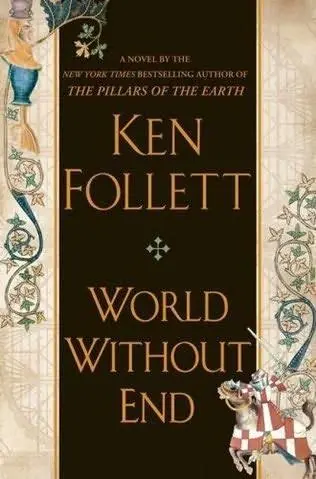
- Название:World Without End
- Автор:
- Жанр:
- Год:неизвестен
- ISBN:нет данных
- Рейтинг книги:5 / 5. Голосов: 1
-
Избранное:Добавить в избранное
- Отзывы:
-
Ваша оценка:
World Without End: краткое содержание, описание и аннотация
Предлагаем к чтению аннотацию, описание, краткое содержание или предисловие (зависит от того, что написал сам автор книги «World Without End»). Если вы не нашли необходимую информацию о книге — напишите в комментариях, мы постараемся отыскать её.
Ken Follett has 90 million readers worldwide. The Pillars of the Earth is his bestselling book of all time. Now, eighteen years after the publication of The Pillars of the Earth, Ken Follett has written the most-anticipated sequel of the year, World Without End.
In 1989 Ken Follett astonished the literary world with The Pillars of the Earth, a sweeping epic novel set in twelfth-century England centered on the building of a cathedral and many of the hundreds of lives it affected. Critics were overwhelmed-"it will hold you, fascinate you, surround you" (Chicago Tribune)-and readers everywhere hoped for a sequel.
World Without End takes place in the same town of Kingsbridge, two centuries after the townspeople finished building the exquisite Gothic cathedral that was at the heart of The Pillars of the Earth. The cathedral and the priory are again at the center of a web of love and hate, greed and pride, ambition and revenge, but this sequel stands on its own. This time the men and women of an extraordinary cast of characters find themselves at a crossroad of new ideas-about medicine, commerce, architecture, and justice. In a world where proponents of the old ways fiercely battle those with progressive minds, the intrigue and tension quickly reach a boiling point against the devastating backdrop of the greatest natural disaster ever to strike the human race-the Black Death.
Three years in the writing, and nearly eighteen years since its predecessor, World Without End breathes new life into the epic historical novel and once again shows that Ken Follett is a masterful author writing at the top of his craft.
World Without End — читать онлайн бесплатно полную книгу (весь текст) целиком
Ниже представлен текст книги, разбитый по страницам. Система сохранения места последней прочитанной страницы, позволяет с удобством читать онлайн бесплатно книгу «World Without End», без необходимости каждый раз заново искать на чём Вы остановились. Поставьте закладку, и сможете в любой момент перейти на страницу, на которой закончили чтение.
Интервал:
Закладка:
But when would Henri come? It was extraordinary for the bishop to miss the Christmas service in the cathedral. A letter from the efficient, unimaginative Archdeacon Lloyd had explained that Henri was busy appointing clergy to replace those who had died of the plague. Lloyd might be against Godwyn: he was Earl William’s man, owing his position to William’s late brother Richard; and the father of William and Richard, Earl Roland, had hated Godwyn. But Lloyd would not make the decision, Henri would. It was hard to know what might happen. Godwyn felt he had lost control. His career was threatened by Caris and his life was threatened by a remorseless plague.
A light snowfall began as the ceremony of consecration came to an end. Just beyond the cleared plot, seven funeral processions were at a standstill, waiting for the cemetery to be ready. At Godwyn’s signal, they moved forward. The first body was in a coffin, but the rest were in shrouds on biers. In the best of times coffins were a luxury for the prosperous, but now that timber had become expensive and coffin-makers were overworked it was only the very rich who could afford to be buried in a wooden casket.
At the head of the first procession was Merthin, with snowflakes caught in his copper-red hair and beard. He was carrying his little girl. The wealthy deceased in the coffin must be Bessie Bell, Godwyn deduced. Bessie had died without relatives and left the tavern to Merthin. Money sticks to that man like wet leaves, Godwyn thought sourly. Merthin already had Leper Island and the fortune he had made in Florence. Now he owned the busiest tavern in Kingsbridge.
Godwyn knew about Bessie’s will because the priory was entitled to an inheritance tax and had taken a fat percentage of the value of the place. Merthin had paid the money in gold florins without hesitation.
The one good consequence of the plague was that the priory suddenly had plenty of cash.
Godwyn conducted one burial service for all seven bodies. This was now the norm: one funeral in the morning and one in the afternoon, regardless of the number of dead. There were not enough priests in Kingsbridge to bury each person individually.
That thought renewed Godwyn’s feeling of dread. He stumbled over the words of the service, seeing himself in one of the graves; then he managed to take hold of himself and continue.
At last the service was over, and he led the procession of monks and nuns back to the cathedral. They entered the church and fell out of formation in the nave. The monks returned to their normal duties. A novice nun approached Godwyn nervously and said: “Father Prior, would you kindly come to the hospital?”
Godwyn did not like to receive bossy messages via novices. “What for?” he snapped.
“I’m sorry, father, I don’t know – I was just told to ask you.”
“I’ll come as soon as I can,” he said irritably. He did not have anything urgent to do, but just to make the point he delayed in the cathedral, speaking to Brother Eli about the monks’ robes.
A few minutes later he crossed the cloisters and entered the hospital.
Nuns were crowded around a bedstead that had been set up in front of the altar. They must have an important patient, he thought. He wondered who it was. One ol the attendant nuns turned to him. She wore a linen mask over her nose and mouth, but he recognized the gold-flecked green eyes that he and all his family shared: it was Caris. Although he could see so little of her face, he read an odd expression in her look. He expected dislike and contempt, but instead he saw compassion.
He moved closer to the bed with a feeling of trepidation. When the other nuns saw him they moved aside deferentially. A moment later, he saw the patient.
It was his mother.
Petranilla’s large head lay on a white pillow. She was sweating, and there was a steady trickle of blood from her nose. A nun was in the act of wiping it away, but it reappeared. Another nun offered the patient a cup of water. There was a rash of purple spots on the wrinkled skin of Petranilla’s throat.
Godwyn cried out as if he had been struck. He stared in horror. His mother gazed at him with suffering eyes. There was no room for doubt: she had fallen victim to the plague. “No!” he shouted. “No! No!” He felt an unbearable pain in his chest, as if he had been stabbed.
He heard Philemon, beside him, say in a frightened voice: “Try to stay calm, Father Prior,” but he could not. He opened his mouth to scream, but no sound came. He suddenly felt detached from his body, with no control over his movements. Then a black mist arose from the floor and engulfed him, gradually rising up his body until it covered his nose and mouth, so that he could not breathe, and then his eyes, so that he was blind; and at last he lost consciousness.
Godwyn was in bed for five days. He ate nothing and drank only when Philemon put a cup to his lips. He could not think straight. He could not move, for it seemed he had no way of deciding what to do. He sobbed, and slept, then woke up and sobbed again. He was vaguely aware of a monk feeling his forehead, taking a urine sample, diagnosing brain fever and bleeding him.
Then, on the last day of December, a scared-looking Philemon brought him the news that his mother was dead.
Godwyn got up. He had himself shaved, put on a new robe and went to the hospital.
The nuns had washed and dressed the body. Petranilla’s hair was brushed and she wore a dress of costly Italian wool. Seeing her like that, with the pallor of death on her face and her eyes forever closed, Godwyn felt a resurgence of the panic that had overwhelmed him; but this time he was able to fight it down. “Take her body to the cathedral,” he ordered. Normally the honour of lying in state in the cathedral was reserved for monks, nuns, senior clergymen and the aristocracy; but Godwyn knew that no one would dare to contradict him.
When she had been moved into the church and placed in front of the altar, he knelt beside her and prayed. Prayer helped him calm his terror, and gradually he figured out what to do. When at last he stood up, he ordered Philemon to call a meeting in the chapter house immediately.
He felt shaky, but he knew he had to pull himself together. He had always been blessed with the power of persuasion. Now he had to use it to the utmost.
When the monks had gathered, he read to them from the Book of Genesis. “And it came to pass after these things that God did tempt Abraham, and said unto him, Abraham: and he said, Behold, here I am. And he said, Take now thy son, thine only son Isaac, whom thou lovest, and get thee into the land of Moriah; and offer him there for a burnt offering upon one of the mountains which I will tell thee of. And Abraham rose up early in the morning, and saddled his ass, and took two of his young men with him, and Isaac his son, and clave the wood for the burnt offering, and rose up, and went unto the place of which God had told him.”
Godwyn looked up from the book. The monks were watching him intently. They all knew the story of Abraham and Isaac. They were more interested in him, Godwyn. They were alert, wary, wondering what would come next.
“What does the story of Abraham and Isaac teach us?” he asked rhetorically. “God tells Abraham to kill his son – not just his eldest son, but his only son, born when he was a hundred years old. Did Abraham protest? Did he plead for mercy? Did he argue with God? Did he point out that to kill Isaac would be murder, infanticide, a terrible sin?” Godwyn let the question hang for a moment, then looked down at the book and read: “And Abraham rose up early in the morning, and saddled his ass…”
He looked up again. “God may tempt us, too. He may order us to perform acts which seem wrong. Perhaps he will tell us to do something that appears to be a sin. When that happens, we must remember Abraham.”
Читать дальшеИнтервал:
Закладка:
Похожие книги на «World Without End»
Представляем Вашему вниманию похожие книги на «World Without End» списком для выбора. Мы отобрали схожую по названию и смыслу литературу в надежде предоставить читателям больше вариантов отыскать новые, интересные, ещё непрочитанные произведения.









Обсуждение, отзывы о книге «World Without End» и просто собственные мнения читателей. Оставьте ваши комментарии, напишите, что Вы думаете о произведении, его смысле или главных героях. Укажите что конкретно понравилось, а что нет, и почему Вы так считаете.