Ken Follett - World Without End
Здесь есть возможность читать онлайн «Ken Follett - World Without End» весь текст электронной книги совершенно бесплатно (целиком полную версию без сокращений). В некоторых случаях можно слушать аудио, скачать через торрент в формате fb2 и присутствует краткое содержание. Жанр: Историческая проза, на английском языке. Описание произведения, (предисловие) а так же отзывы посетителей доступны на портале библиотеки ЛибКат.
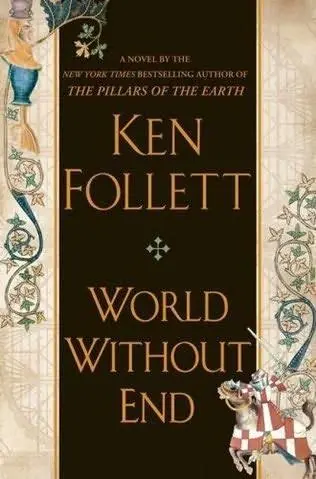
- Название:World Without End
- Автор:
- Жанр:
- Год:неизвестен
- ISBN:нет данных
- Рейтинг книги:5 / 5. Голосов: 1
-
Избранное:Добавить в избранное
- Отзывы:
-
Ваша оценка:
World Without End: краткое содержание, описание и аннотация
Предлагаем к чтению аннотацию, описание, краткое содержание или предисловие (зависит от того, что написал сам автор книги «World Without End»). Если вы не нашли необходимую информацию о книге — напишите в комментариях, мы постараемся отыскать её.
Ken Follett has 90 million readers worldwide. The Pillars of the Earth is his bestselling book of all time. Now, eighteen years after the publication of The Pillars of the Earth, Ken Follett has written the most-anticipated sequel of the year, World Without End.
In 1989 Ken Follett astonished the literary world with The Pillars of the Earth, a sweeping epic novel set in twelfth-century England centered on the building of a cathedral and many of the hundreds of lives it affected. Critics were overwhelmed-"it will hold you, fascinate you, surround you" (Chicago Tribune)-and readers everywhere hoped for a sequel.
World Without End takes place in the same town of Kingsbridge, two centuries after the townspeople finished building the exquisite Gothic cathedral that was at the heart of The Pillars of the Earth. The cathedral and the priory are again at the center of a web of love and hate, greed and pride, ambition and revenge, but this sequel stands on its own. This time the men and women of an extraordinary cast of characters find themselves at a crossroad of new ideas-about medicine, commerce, architecture, and justice. In a world where proponents of the old ways fiercely battle those with progressive minds, the intrigue and tension quickly reach a boiling point against the devastating backdrop of the greatest natural disaster ever to strike the human race-the Black Death.
Three years in the writing, and nearly eighteen years since its predecessor, World Without End breathes new life into the epic historical novel and once again shows that Ken Follett is a masterful author writing at the top of his craft.
World Without End — читать онлайн бесплатно полную книгу (весь текст) целиком
Ниже представлен текст книги, разбитый по страницам. Система сохранения места последней прочитанной страницы, позволяет с удобством читать онлайн бесплатно книгу «World Without End», без необходимости каждый раз заново искать на чём Вы остановились. Поставьте закладку, и сможете в любой момент перейти на страницу, на которой закончили чтение.
Интервал:
Закладка:
But Gregory’s approach took them all completely by surprise.
He stepped forward and said to the judge: “Sir, Kingsbridge is not a chartered borough.” He stopped there, as if that was all he had to say.
It was true, technically. Most towns had a royal charter giving them the freedom to trade and hold markets without obligations to the local earl or baron. Their citizens were free men, owing allegiance to no one but the king. However, a few towns such as Kingsbridge remained the property of an overlord, usually a bishop or a prior: St Albans and Bury St Edmunds were examples. Their status was less clear.
The judge said: “That makes a difference. Only free men can appeal to the royal court. What do you have to say to that, Francis Bookman? Are your clients serfs?”
Francis turned to Edmund. In a low, urgent voice he said: “Have the townspeople appealed to the royal court before?”
“No. The prior has-”
“But not the parish guild? Even before your time?”
“There’s no record of it-”
“So we can’t argue from precedent. Damn.” Francis turned back to the judge. His face changed from worried to confident in a flash, and he spoke as if condescending to deal with something trivial. “Sir, the townspeople are free. They enjoy burgess tenure.”
Gregory said quickly: “There is no universal pattern of burgess tenure. It means different things in different places.”
The judge said: “Is there a written statement of customs?”
Francis looked at Edmund, who shook his head. “No prior would ever agree to such things being written down,” he muttered.
Francis turned back to the judge, “There is no written statement, sir, but clearly-”
“Then this court must decide whether or not you are free men,” the judge said.
Edmund spoke directly to the judge. “Sir, the citizens have the freedom to buy and sell their homes.” This was an important right not granted to serfs, who needed their lord’s permission.
Gregory said: “But you have feudal obligations. You must use the prior’s mills and fishponds.”
Sir Wilbert said: “Forget fishponds. The key factor is the citizens’ relationship to the system of royal justice. Does the town freely admit the king’s sheriff?”
Gregory answered that. “No, he must ask permission to enter the town.”
Edmund said indignantly: “That is the prior’s decision, not ours!”
Sir Wilbert said: “Very well. Do the citizens serve on royal juries, or claim exemption?”
Edmund hesitated. Godwyn looked exultant. Serving on juries was a time-consuming chore that everyone avoided if they could. After a pause, Edmund said: “We claim exemption.”
“Then that settles the matter,” the judge said. “If you refuse that duty on the grounds that you are serfs, you cannot appeal over the head of your landlord to the king’s justice.”
Gregory said triumphantly: “In the light of that, I beg you to dismiss the townspeople’s application.”
“So ruled,” said the judge.
Francis appeared outraged. “Sir, may I speak?”
“Certainly not,” said the judge.
“But, sir-”
“Another word and I’ll hold you in contempt.”
Francis closed his mouth and bowed his head.
Sir Wilbert said: “Next case.”
Another lawyer began to speak.
Caris was dazed.
Francis addressed her and her father in tones of protest. “You should have told me you were serfs!”
“We’re not.”
“The judge has just ruled that you are. I can’t win cases on partial information.”
She decided not to squabble with him. He was the type of young man who cannot admit a mistake.
Godwyn was so pleased with himself that he looked as if he might burst. As he left, he could not resist a parting shot. He wagged a finger at Edmund and Caris. “I hope that, in future, you’ll see the wisdom of submitting to the will of God,” he said solemnly.
Caris said: “Oh, piss off,” and turned her back.
She spoke to her father. “This makes us completely powerless! We proved we had the right to use the fulling mill free, but Godwyn can still withhold that right!”
“So it seems,” he said.
She turned to Francis. “There must be something we can do,” she said angrily.
“Well,” he said, “you could get Kingsbridge made into a proper borough, with a royal charter setting out your rights and freedoms. Then you would have access to the royal court.”
Caris saw a glimmer of hope. “How do we go about that?”
“You apply to the king.”
“Would he grant it?”
“If you argued that you need this to be able to pay your taxes, he would certainly listen.”
“Then we must try.”
Edmund warned: “Godwyn will be furious.”
“Let him,” Caris said grimly.
“Don’t underestimate the challenge,” her father persisted. “You know how ruthless he is, even over small disputes. Something like this will lead to total war.”
“So be it,” said Caris bleakly. “Total war.”
“Oh, Ralph, how could you do it?” said his mother.
Merthin studied his brother’s face in the dim light of their parents’ home. Ralph appeared torn between outright denial and self-justification.
In the end, Ralph said: “She led me on.”
Maud was distressed more than angry. “But, Ralph, she is another man’s wife!”
“A peasant’s wife.”
“Even so.”
“Don’t worry, Mother, they’ll never convict a lord on the word of a serf.”
Merthin was not so sure. Ralph was a minor lord, and it seemed he had incurred the enmity of William of Caster. There was no telling how the trial would come out.
Their father said sternly: “Even if they don’t convict you – which I pray for – just think of the shame of it! You’re the son of a knight – how could you forget that?”
Merthin was horrified and upset, but not surprised. That streak of violence had always been in Ralph’s nature. In their boyhood he had ever been ready for a fight, and Merthin had often steered him away from fisticuffs, deflating a confrontation with a conciliatory word or a joke. Had anyone other than his brother committed this horrible rape, Merthin would have been hoping to see the man hang.
Ralph kept glancing at Merthin. He was worried about Merthin’s disapproval – perhaps more so than his mother’s. He had always looked up to his older brother. Merthin just wished there was some way Ralph could be shackled to prevent his attacking people, now that he no longer had Merthin nearby to keep him out of trouble.
The discussion with their distraught parents was set to go on for some time, but there was a knock at the door of the modest house and Caris came in. She smiled at Gerald and Maud, though her face changed when she saw Ralph.
Merthin guessed she wanted him. He stood up. “I didn’t know you were back from London,” he said.
“Just arrived,” she replied. “Can we have a few words?”
He pulled a cloak around his shoulders and stepped outside with her into the dim grey light of a cold December day. It was a year since she had terminated their love affair. He knew that her pregnancy had ended in the hospital, and he guessed she had somehow brought on the abortion deliberately. Twice in the following few weeks he had asked her to come back to him, but she had refused. It was bewildering: he sensed that she still loved him, but she was adamant. He had given up hope, and assumed that in time he would cease to grieve. So far, that had not happened. His heart still beat faster when he saw her, and he was happier talking to her than doing anything else in the world.
They walked to the main street and turned into the Bell. In the late afternoon the tavern was quiet. They ordered hot spiced wine.
Читать дальшеИнтервал:
Закладка:
Похожие книги на «World Without End»
Представляем Вашему вниманию похожие книги на «World Without End» списком для выбора. Мы отобрали схожую по названию и смыслу литературу в надежде предоставить читателям больше вариантов отыскать новые, интересные, ещё непрочитанные произведения.




Обсуждение, отзывы о книге «World Without End» и просто собственные мнения читателей. Оставьте ваши комментарии, напишите, что Вы думаете о произведении, его смысле или главных героях. Укажите что конкретно понравилось, а что нет, и почему Вы так считаете.