Shan Sa - Empress
Здесь есть возможность читать онлайн «Shan Sa - Empress» весь текст электронной книги совершенно бесплатно (целиком полную версию без сокращений). В некоторых случаях можно слушать аудио, скачать через торрент в формате fb2 и присутствует краткое содержание. Жанр: Историческая проза, на английском языке. Описание произведения, (предисловие) а так же отзывы посетителей доступны на портале библиотеки ЛибКат.
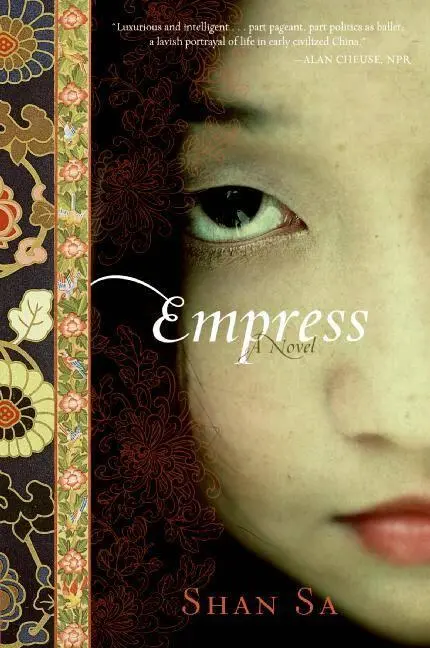
- Название:Empress
- Автор:
- Жанр:
- Год:неизвестен
- ISBN:нет данных
- Рейтинг книги:5 / 5. Голосов: 1
-
Избранное:Добавить в избранное
- Отзывы:
-
Ваша оценка:
Empress: краткое содержание, описание и аннотация
Предлагаем к чтению аннотацию, описание, краткое содержание или предисловие (зависит от того, что написал сам автор книги «Empress»). Если вы не нашли необходимую информацию о книге — напишите в комментариях, мы постараемся отыскать её.
Empress — читать онлайн бесплатно полную книгу (весь текст) целиком
Ниже представлен текст книги, разбитый по страницам. Система сохранения места последней прочитанной страницы, позволяет с удобством читать онлайн бесплатно книгу «Empress», без необходимости каждый раз заново искать на чём Вы остановились. Поставьте закладку, и сможете в любой момент перейти на страницу, на которой закончили чтение.
Интервал:
Закладка:
A second delegation went to join the first, and they confirmed the prognosis: The mists that rose up from the vegetation on Liang Mountain were the breath of the dragon. It dominated this earthly world and drew on the energies of the sky. It would be a glorious site for a tomb and a guarantee for the Empire’s eternal prosperity. I summoned the Great Astrologer Li Chun Feng to my palace and asked him to proceed with the verification. As I would join my husband later, once I was dead, the time and place of our births were converted into numbers and added to those of our children and our ancestors, then divided between the Five Elements, and combined with the twenty-four astral houses and the twelve terrestrial branches. The mathematical calculations lasted three days and three nights, and the results proved to be in agreement with the ideal suggested by the geomancy experts.
The work started as soon the thaw began. Every evening my soul flew westward to a subterranean palace that was growing in the belly of Liang Mountain. The dark, dank galleries grew longer, making their way slowly and painfully to the center of the Earth. The imperial chamber was positioned in the unfathomable depths of life, in the heart of a labyrinth of corridors set with trap doors, arrows and poisons to steer looters toward the false tombs. Frescoes were drawn: Gold, silver, ochre, violet, faces, bodies, and gowns appeared along the whitewashed corridors. I ordered a fresco representing the imperial parade with its thousands and thousands of men and horses. Along the way to the celestial kingdom, even my sister and my niece found their places behind my retinue.
Ramparts were built around the mountain-tomb. A scale model of Long Peace was built district by district with, right in the centre, a sacred citadel dedicated to religion and offerings. The sovereign’s personal bed clothes were transported to a palace identical to the one he had occupied in his lifetime, recreated at the top of the mountain. All along the Divine Way, the central axis of the funeral town, I positioned statues of lions, winged horses, and ministers accompanied by our sixty-one vassal kings.
I disobeyed the ancestral tradition of erecting a commemorative stela for a sovereign, and I built a granite monument on which craftsmen engraved an epitaph of eight thousand characters, a long poem in which I spoke of my celestial husband’s life and glorious reign.
On the fifteenth day of the fifth month, the imperial procession set off for the west, led by my son, Future. All along the way, dignitaries, merchants, craftsmen, and peasants set up altars. There was an endless succession of paper houses decorated with gold leaf. White flags, ribbons of hemp, and funeral money fluttered in the wind and blotted out the sky.
The horses had no plumes, and princesses went without their jewels. The musicians played funeral airs as they walked. My husband’s hearse, covered in a white sheet and drawn by one thousand soldiers in mourning, moved away in a cloud of dust.
I ordered the annalists to compose the Book of Events, depicting his reign, transcribing his audiences and conversations, narrating his hunting expeditions, and describing how he harangued his warriors. For posterity, they drew up the portrait of a great sovereign.
I closed the residential palaces-the Palace of Ten thousand Sources, the Palace of the Fragrant Cinnamon Tree, and the Palace of Celestial Offerings-they were only so many wonders, so many painful memories, and worthless luxuries.
Who had Little Phoenix been? Eternity would not have been long enough for me to find an answer. He was the motionless core of a vast world, staying still while life spun slowly round him. When I thought I had grasped the flame within him, seen into it, possessed it, it was already far away, glimmering, extinguished.
EIGHT
Future ascended to the throne and inaugurated a new reign. He awarded the august deceased the posthumous title of Lordly Ancestor, appointed his first wife’s eldest son as Supreme Son and took up residence in the Inner Court. To make space for him, I had to send Little Phoenix’s concubines to monasteries, scores of middle-aged women prostrating themselves on the steps of my palace before leaving in tears.
The bustle of these upheavals broke the silence that had enveloped the Forbidden City since its master’s death. The austerity of mourning gave way before these women who were eager to display their youth and beauty. The First Lady, who was now Empress, made her stamp as an arrogant mistress. She attempted to prove that my time had passed, and it was her turn to shine. She was impatient to play the same role I had had alongside the previous emperor.
I pretended not to hear Emerald and Ruby criticizing the intrusion: “The Empress is competing with the imperial concubines for the most sumptuous gowns.” I turned a deaf ear to reports that the Empress had driven out my old female officials and recruited girls in their prime. I became furious when I discovered that she was fond of women and had made overtures to Gentleness. Her game of love disguised a plot. By seducing my secretary, she attempted to discover my secrets.
My anger was compounded by my despair at my son’s mediocre abilities in the Outer Court. Through my husband’s death, I had been elevated to the position of Supreme Empress, and, as Mother Regent, I now had it in my power to issue decrees. My presence during audiences guaranteed some continuity in political orientation and ensured that the make-up of the government remained stable. The two thrones had now been reversed throughout the Forbidden City: I now occupied the seat of honor. The very first day after the period of mourning ended, the Emperor tried to demonstrate his independence. In the Council meeting, he reeled off a series of grandiose ideas that made the Great Ministers blench in horror. We had to send troops to the western border and exterminate the nomadic tribes to preempt their attacks; the rebellious state of Korea must be made to bow before the Empire-three hundred thousand troops should be sent there! The palaces of Luoyang were too confined-the Forbidden City needed expanding, and two polo grounds should be built!
I sat on my throne, silenced by my shame. The Great Ministers openly refuted these impetuous suggestions. After the floods, the earthquake, and the epidemic, the north was reduced to terrible poverty. In some regions, people had resorted to cannibalism. Military expeditions should only be carried out by professional troops. Any major works had to be delayed, not to say cancelled. Piqued by these harsh words, the Emperor turned to me: “These men are deliberately contradicting me. Supreme Majesty, you don’t need me here to govern; I’m leaving!”
My third son had had a very difficult birth. For ten whole days, I had battled with the pain, refusing the doctors’ advice that I should sacrifice him. It was only thanks to the prayers of the peripatetik monk Xuan Zhang, who had brought us the Great Sutras from India, that this seventh prince of the imperial household had come into the world. Just one year after he was born, Future had received the crown of the Kingdom of Zhou and the seal of the Great Governor of the province of Luo, which included the eastern capital. At twenty, he had become King of Ying and Great Governor of the province of Yong that surrounded the town of Long Peace. For many years, he had attracted attention on the polo ground wearing his floppy hat at a jaunty angle, with his sleeves rolled up and shrieking at the top of his lungs, or at imperial banquets where he would dance gracefully to the tune of The Snows of Early Spring. He was a fervent enthusiast of cock fighting and organized tournaments with his brothers, provoking my celestial husband’s anger because the latter saw a perverse hint of fratricide in this cruel sport. After Splendor’s premature death and Wisdom’s dismissal three year’s before the Emperor’s death, the title of Supreme Son had fallen on this boy who had grown up in the shadow of his two elder brothers. Men reveal their true qualities once they have risen or fallen. Emperor Yang of the previous dynasty, for example, had been a humble and thrifty heir, but had proved to be a despotic and extravagant sovereign. Future had once been a naive, enthusiastic child, but now that he had been crowned, he was revealing his appalling nature as a pretentious and impulsive man.
Читать дальшеИнтервал:
Закладка:
Похожие книги на «Empress»
Представляем Вашему вниманию похожие книги на «Empress» списком для выбора. Мы отобрали схожую по названию и смыслу литературу в надежде предоставить читателям больше вариантов отыскать новые, интересные, ещё непрочитанные произведения.

Обсуждение, отзывы о книге «Empress» и просто собственные мнения читателей. Оставьте ваши комментарии, напишите, что Вы думаете о произведении, его смысле или главных героях. Укажите что конкретно понравилось, а что нет, и почему Вы так считаете.