Shan Sa - Empress
Здесь есть возможность читать онлайн «Shan Sa - Empress» весь текст электронной книги совершенно бесплатно (целиком полную версию без сокращений). В некоторых случаях можно слушать аудио, скачать через торрент в формате fb2 и присутствует краткое содержание. Жанр: Историческая проза, на английском языке. Описание произведения, (предисловие) а так же отзывы посетителей доступны на портале библиотеки ЛибКат.
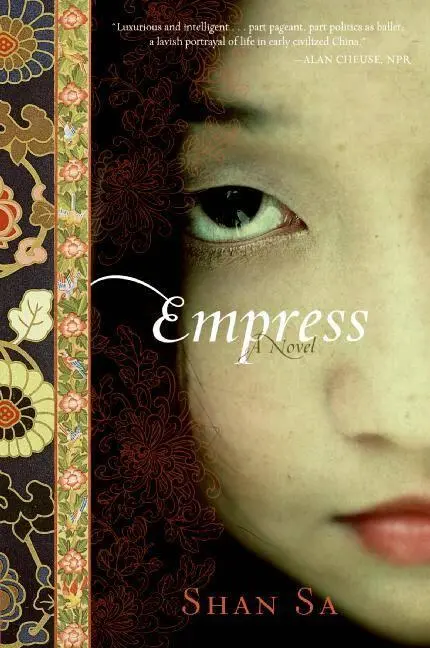
- Название:Empress
- Автор:
- Жанр:
- Год:неизвестен
- ISBN:нет данных
- Рейтинг книги:5 / 5. Голосов: 1
-
Избранное:Добавить в избранное
- Отзывы:
-
Ваша оценка:
Empress: краткое содержание, описание и аннотация
Предлагаем к чтению аннотацию, описание, краткое содержание или предисловие (зависит от того, что написал сам автор книги «Empress»). Если вы не нашли необходимую информацию о книге — напишите в комментариях, мы постараемся отыскать её.
Empress — читать онлайн бесплатно полную книгу (весь текст) целиком
Ниже представлен текст книги, разбитый по страницам. Система сохранения места последней прочитанной страницы, позволяет с удобством читать онлайн бесплатно книгу «Empress», без необходимости каждый раз заново искать на чём Вы остановились. Поставьте закладку, и сможете в любой момент перейти на страницу, на которой закончили чтение.
Интервал:
Закладка:
Now our empire was evolving: Demographic growth and increasing wealth in the towns meant we needed an efficient administrative system and well-supported imperial authority. Finely dressed noblemen who could quote the Classics and hold metaphysical conversations were living in a world far removed from reality. How could they give judicious advice to a sovereign who would never set foot outside the Forbidden City?
My reform received Little Phoenix’s approval; he had a taste for overturning customs. A decree was published ordering the ministers and provincial governors to recommend capable men to the Court, regardless to their origins. Soon the sovereign followed my advice and encouraged widespread competition for the mandarinate by honoring the final exam with his sacred presence.
Sitting behind the throne, surrounded by curtains of mauve gauze, I watched the scholars in contention for the title. They knelt before their writing desks where the paper, quills, and ink had been prepared for them by eunuchs; some shook with fear, and others struggled to keep their calm. I remembered my own anguish and feverish excitement when I was presented to the Eternal Ancestor for the first time. Unlike the previous sovereign who had not known how to choose among his ten thousand beauties, I vowed to myself never to ignore any man who might some day become a pillar of the Empire.
The Court finally opened its doors wide. A son of a Great Name would consider his nomination to be rightfully his whereas an ennobled Minor Name would show gratitude to his benefactor. The number of commoner-born ministers increased as the sovereign’s authority grew. Life was no longer fated. Education offered those of lowly birth an opportunity to rise. Now, through competition, thousands could aspire to a better lot.
THE STARS HAD foretold glory.
For four consecutive years, the sun, rain, and snow lavished Chinese soil with their generosity. From the heart of the imperial city to the four horizons, the old society perished, and a new world was born. Fields impregnated with the sweat of toiling peasants undulated voluptuously beneath the sky. Silks and brocades slithered off the looms, each a loving whisper from its weaver. Outlying lands became populated, and smoke from kitchen fires spiraled up into the sky in every direction. Every five lis another cockerel crowed, and another flock of sheep bleated. New barns were raised in the provinces to store the exceptional harvests; bolts of silk accumulated in the imperial storehouses. The price of rice fell to five sapeks per bushel.
Emperor Yang of the overthrown dynasty had had ostentatious tastes: His court and his dignitaries, following his example, had been carried away in a whirlwind of spending on pointless pleasures. Art and poetry in his time had predicted decline: Poets, calligraphers, and painters had been prisoners of a world full of refined form but devoid of content. Their affected sentiments and vapid pomposity betrayed their impotence. Under my husband’s reign, our Tang dynasty shook off this decadent style. A person’s energy was now more important than their aesthetic learning, and appearances reflected inner depths and breadth of spirit. By wearing dresses that were worn and darned, I imposed a more sober fashion on the Court, and by using calligraphy stripped of any superfluous frills, I communicated my preference for the essential to Court officials. I myself read the papers written by the candidates in imperial competitions, and I selected those whose writing impressed me. The mannerist poets disappeared from Court: Their superficial moaning was replaced by powerful verses with simple rhythms full of vibrant emotion.
Our empire was an earthly oasis, a grain-store for the heavens, and it became the envy of the many nomadic tribes whose constant travels were dictated by pasture and water sources. Since the dawn of time, the Chinese people had been living with this fear: stampeding archers appearing out of the desert and closing in on our villages, throwing our harvests and our women onto their horses’ backs, and leaving our fields devastated and our houses burned to the ground.
Unlike the Emperor Eternal Ancestor who had tried to keep us safe by conquering them and occupying their unworkable land from the steppes of Mongolia to the Gobi desert, I forced my husband to give these wild regions their autonomy and to appoint the local dignitaries as governors. The previous emperor had secured the obedience of these unstable regions with brutal bloodshed, but I bought it with the gold that my people gave willingly to avoid war. In a few years, the revolts had dwindled, but I knew that this period of calm was deceptive. The nomadic peoples had a predatory streak and a longing for freedom that no violence or gentleness would ever quell. My only fear was that they might unite against us. Thanks to the loose tongues of Chinese arms traders, I succeeded in maintaining the discord between the different tribes and in kindling hatred between their leaders. I prolonged the peace by alternating military repression and secret agreements.
When an empire embarks on a cycle of growth, it instills spirit and courage in its warriors. In the fifth year of Dazzling Prosperity, our vessels were called to the kingdom of Sinra, which was in danger once again; they vanquished the Paiktchei invaders and captured their royal family. Our generals offered the latter to Long Peace as victory trophies, and they prostrated themselves at the sovereign’s feet and begged for his clemency. Against the advice of our ministers, who wanted them to be executed, I took the initiative of recognizing the prince and heir as governor and sent him home with supplies to feed his people who were starving in the aftermath of war.
Now isolated, the kingdom of Korea lived its final hour of arrogance. My husband still hoped to have revenge for his father’s defeat. Exalted by their successive victories and carried by a sense of their own invincibility, our soldiers broke the defenses of a ferocious army, laid siege to the capital Ping yang, and forced the Korean court to recognize the suzerainty of our empire.
Emperor Yang of the previous dynasty had raised an army of a million soldiers against Korea three times, and three times his expeditions had failed. His dogged determination had exhausted the people and had cost him the crown. Emperor Eternal Ancestor, the conqueror blessed by the gods, had in turn failed to subjugate this little kingdom. He had come home sickened by his failure, and the regret had killed him. Our victory erased the dark pages of the past and drew out the thorn deep in the flesh of our history. The people saw our military successes as a celebration of their power, while my husband-who had suffered for being the son of a great sovereign-saw it as proof of his own power and virility. He who had never wanted to govern, he who loathed politics, was beginning to believe what I told him every day: His reign was still more glorious than his father’s.
Euphoria spread through the country and reached its apotheosis when dragons appeared in the southern provinces. The honorable sages of Antiquity said that these kings of the River and the Ocean only manifested themselves when peace and happiness reigned on Earth. The erudite scholars of the government’s astrology department interpreted this extraordinary phenomenon as a sign of approval from Heaven addressed to its Son. Our ministers felt they were living in the most enlightened Court of all time, and this filled them with pride and audacity. Several of them begged the sovereign to undertake a pilgrimage to Tai Mountain to make an oblation to Heaven and Earth.
According to the Book of Rites, this ancient celebration was carried out by emperors who had accomplished some extraordinary earthly feat. The Annals recorded that-after the Yellow Emperor and the mythical sovereigns-only two emperors had dared take the steep path up Tai Mountain and aspired to saluting the skies: the First Emperor, who had unified China, and the Martial Emperor of the Han dynasty, who had conquered the Barbarians and extended our territories as far as the setting sun.
Читать дальшеИнтервал:
Закладка:
Похожие книги на «Empress»
Представляем Вашему вниманию похожие книги на «Empress» списком для выбора. Мы отобрали схожую по названию и смыслу литературу в надежде предоставить читателям больше вариантов отыскать новые, интересные, ещё непрочитанные произведения.

Обсуждение, отзывы о книге «Empress» и просто собственные мнения читателей. Оставьте ваши комментарии, напишите, что Вы думаете о произведении, его смысле или главных героях. Укажите что конкретно понравилось, а что нет, и почему Вы так считаете.