Philippa Gregory - Virgin Earth
Здесь есть возможность читать онлайн «Philippa Gregory - Virgin Earth» — ознакомительный отрывок электронной книги совершенно бесплатно, а после прочтения отрывка купить полную версию. В некоторых случаях можно слушать аудио, скачать через торрент в формате fb2 и присутствует краткое содержание. Жанр: Историческая проза, на английском языке. Описание произведения, (предисловие) а так же отзывы посетителей доступны на портале библиотеки ЛибКат.
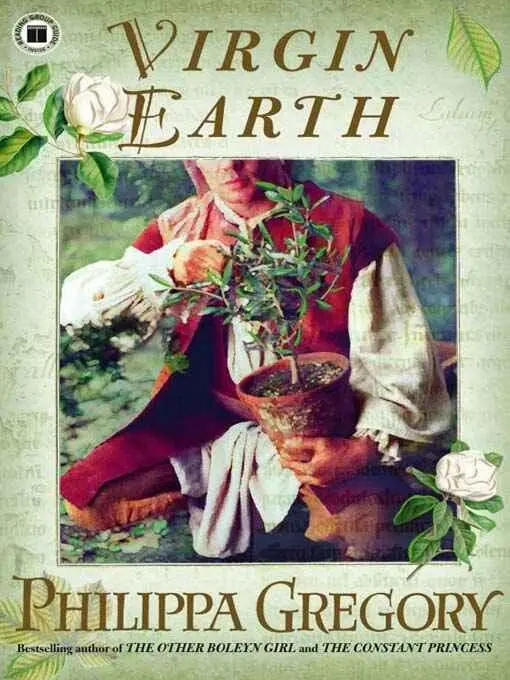
- Название:Virgin Earth
- Автор:
- Жанр:
- Год:неизвестен
- ISBN:нет данных
- Рейтинг книги:4 / 5. Голосов: 1
-
Избранное:Добавить в избранное
- Отзывы:
-
Ваша оценка:
Virgin Earth: краткое содержание, описание и аннотация
Предлагаем к чтению аннотацию, описание, краткое содержание или предисловие (зависит от того, что написал сам автор книги «Virgin Earth»). Если вы не нашли необходимую информацию о книге — напишите в комментариях, мы постараемся отыскать её.
Virgin Earth — читать онлайн ознакомительный отрывок
Ниже представлен текст книги, разбитый по страницам. Система сохранения места последней прочитанной страницы, позволяет с удобством читать онлайн бесплатно книгу «Virgin Earth», без необходимости каждый раз заново искать на чём Вы остановились. Поставьте закладку, и сможете в любой момент перейти на страницу, на которой закончили чтение.
Интервал:
Закладка:
“He does what he has to do,” Johnnie said staunchly.
Once they had rescued the pick of the specimens, and rummaged in the cold soil of the courts for forgotten bulbs, they declared a general sale of plants in Weybridge. The town crier called out the news and it spread from one manor garden to another, from one cottage to another, until everyone in Surrey wanted a flower from the king’s garden.
On Saturday John set up a stall on the very front door of the palace and let people come with their own spades to choose, and then dig up their choice. He and Johnnie inspected the booty and set an instant knockdown price on the trees which marched past them, on the little pots of pansies and herbs, on the trailing creepers, torn from the walls, on the endless scarlet-budding roses.
It was a melancholy business to see the garden walking away down the drive, as if even the plants had gone into exile, and John was sorry that he had exposed his son to the sight. He had thought that the work would have given them a project to complete together, that Johnnie would see that the garden was finished, that the palace was destroyed, that the king and kingship were gone forever. But instead there was a powerful sense of loss invoked by the sale. More than one man or woman stopped at John’s table, gestured to their purchase and asked reverently: “He did love these, didn’t he? Can you remember if he ever picked a flower from it? Did he touch it?”
John realized that only half of the people were buying plants cheaply; the other half were buying relics, honoring the memory of a dead king, planting a little bit of his martyrdom in their own gardens.
All the cold gray day Johnnie priced, took money, answered questions with endless easy patience. But John, watching him, saw how his head drooped as the light faded from the sky.
“You’re tired,” he said gruffly at five o’clock as the winter twilight closed around them. “And chilled too. I know I am. Let’s go down to the ale house and get ourselves a good dinner. I’d like to leave the money in the goldsmith’s keeping anyway. I don’t want to keep it here.”
Johnnie’s face was pale. “Yes.”
“Are you sick?” John asked.
Johnnie shook his head. “Weary,” he said. “I wasn’t born to be a huckster. I hate it. How they do go on, don’t they? And the smaller the plant the more ado they make about the price.”
John laughed eagerly. “Yes. It’s been a long business. But tomorrow we’ll go.”
“And then they’ll pull it down and it will be as if it was never here,” Johnnie said dreamily.
John tied the string of the purse and slipped it into his deep pocket. “Come on,” he said cheerfully. “Before we are completely benighted.”
He marched briskly down the avenue with Johnnie keeping step beside him. They were warm by the time they saw the yellow light of the ale house and smelled the mixture of woodsmoke and frying bacon.
“You go on,” John said. “I’ll take this purse and put it in the goldsmith’s vault.”
Johnnie nodded and went ahead of his father. John stood back and watched his son walk away. “Johnnie!” he suddenly called.
The young man hesitated and turned, his face a pale blur in the twilight.
“It’s being rid of the old to prepare for the new,” John said. “A baptism. Not a funeral, you know.”
It was a melancholy business the next morning, for all of John’s forced brightness. They loaded the cart with leftover tools and the pots which they had filled with the rescued plants during their stay, and then they went round the garden and orchard and orangery in one final tour to see what had been overlooked.
The rose garden was a desert of pitted holes, like the face of a beloved woman pocked with scars. The very shape of the garden had gone, the trees which had given it a structure had been uprooted, the trellised arbors which had been pulled down as people cut off the climbing roses were left as smashed wood in the mud. The lavender borders were ragged, some plants missing, some trodden down. A few snowdrops which had struggled up at the base of the wall in the queen’s court had been crushed by someone in their haste to cut down a creeper. A pot had been dropped and smashed and the shards left where they lay, cluttering up the path. The whole palace, once so rosy in pink brick and so immaculately gardened, with smooth lawns and sculpted arbors, was now a tangle of overgrown hedging and churned mud. Even the bowling green, which had been John’s great pride, was pocked with weeds and the richer green of winter moss shone in moist patches among the paler green of weak winter grass.
It had started to rain, an icy, penetrating drizzle, and the clouds sat heavily on the roof of the palace. The glass had been stolen long ago from the windows, or smashed by the successive troops quartered in the palace, and the smell of damp plaster and decay seeped into the courts from the derelict building.
“Let’s go,” John said. “Everything is finished here.”
Johnnie nodded in silence and followed his father to the cart. He climbed onto the box and took the reins of the horse which should have been his war horse, to drive away from the palace which should have been the king’s. The avenue was long gone, felled for timber. They drove between pale stumps where grand trees had once shaded the road.
“That was a miserable task,” John said heartily, hoping that Johnnie would agree and that they might share the sadness and then put it behind them.
“It was burying him and his hopes all over again,” Johnnie said somberly; and then said nothing more.
Summer 1651
Johnnie did not forget the melon bed at Wimbledon. Of the consignment he had sent north to Charles Stuart he had kept one fruit back and from it he had another batch of seeds which he insisted on planting in the Lambeth seed bed, and, when they were grown, insisted on taking to Wimbledon.
“You could grow them here now,” Hester remarked to him reasonably when she saw him loading the earthenware pots into a carrying basket. “There’s no point in taking them all that way.”
“Of course I must plant them at Wimbledon,” he said passionately. “It was his request.”
“The garden must be overgrown.”
“It’s running to seed,” he said, “and the glass has been stolen from the windows of the house. But you can see it was a lovely place, you can tell it was one of our gardens. Every now and then I come across some special flower struggling through the weeds. Father’s Virginian foxgloves, and grandfather’s chestnuts in a little avenue in one of the courts.”
“We can’t do anything about it,” she said. “We have to leave the old places behind us. Your father gardened for years at Hatfield and after he left he never went back and it was the same at New Hall. Oatlands will be nothing more than a name in a year or two, in a few years no one will even remember where it was.”
“I know that,” he said. “I just plant the melons. I don’t deny that everything is changed for the moment.”
“You don’t change,” she observed.
For a moment his melancholy lifted. He shot her a small, roguish smile as if he hardly dared to trust her with the hope that he kept hidden. “Well, everything might change back again one day, mightn’t it? And then I will be glad that I kept faith.”
Johnnie had good cause to suggest that everything could change once again. The defeat at Dunbar was not the last battle fought in Scotland, the Scots army did not flee in a rout but in a retreat; and the shaky alliance between the Kirk and the dissolute prince did not completely collapse. Instead, the prince’s stature grew and the Scots warmed to him. All through the year, reports of a continuing campaign filtered back to London telling of Cromwell, ill-supported and in a mostly hostile country, trying to gain a decisive victory. Then in midsummer the Scots army, with Charles at their head, did the unthinkable. They broke out of Scotland and crossed the border.
Читать дальшеИнтервал:
Закладка:
Похожие книги на «Virgin Earth»
Представляем Вашему вниманию похожие книги на «Virgin Earth» списком для выбора. Мы отобрали схожую по названию и смыслу литературу в надежде предоставить читателям больше вариантов отыскать новые, интересные, ещё непрочитанные произведения.
Обсуждение, отзывы о книге «Virgin Earth» и просто собственные мнения читателей. Оставьте ваши комментарии, напишите, что Вы думаете о произведении, его смысле или главных героях. Укажите что конкретно понравилось, а что нет, и почему Вы так считаете.