Philippa Gregory - Virgin Earth
Здесь есть возможность читать онлайн «Philippa Gregory - Virgin Earth» — ознакомительный отрывок электронной книги совершенно бесплатно, а после прочтения отрывка купить полную версию. В некоторых случаях можно слушать аудио, скачать через торрент в формате fb2 и присутствует краткое содержание. Жанр: Историческая проза, на английском языке. Описание произведения, (предисловие) а так же отзывы посетителей доступны на портале библиотеки ЛибКат.
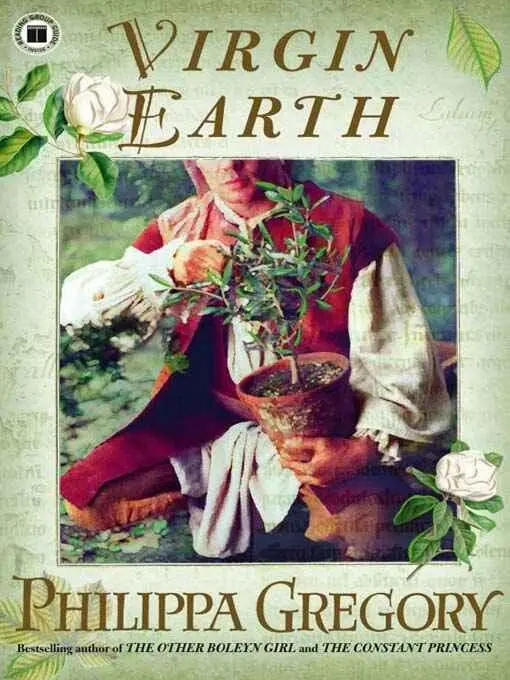
- Название:Virgin Earth
- Автор:
- Жанр:
- Год:неизвестен
- ISBN:нет данных
- Рейтинг книги:4 / 5. Голосов: 1
-
Избранное:Добавить в избранное
- Отзывы:
-
Ваша оценка:
Virgin Earth: краткое содержание, описание и аннотация
Предлагаем к чтению аннотацию, описание, краткое содержание или предисловие (зависит от того, что написал сам автор книги «Virgin Earth»). Если вы не нашли необходимую информацию о книге — напишите в комментариях, мы постараемся отыскать её.
Virgin Earth — читать онлайн ознакомительный отрывок
Ниже представлен текст книги, разбитый по страницам. Система сохранения места последней прочитанной страницы, позволяет с удобством читать онлайн бесплатно книгу «Virgin Earth», без необходимости каждый раз заново искать на чём Вы остановились. Поставьте закладку, и сможете в любой момент перейти на страницу, на которой закончили чтение.
Интервал:
Закладка:
“Why don’t you go to Wimbledon today?” she asked him gently. “Your next crop of melons must be nearly ready to pick.”
“What should I do with the fruit?” he asked miserably.
Hester glanced toward John for help and saw the smallest shrug. “Why don’t you pack them up,” she suggested. “And send them to Charles Stuart in Edinburgh. Don’t put your name inside,” she stipulated cautiously. “But you could at least send them to him. Then you would know that you had served him as you should serve him. You’re not a soldier, Johnnie, you’re a gardener. You could send him the fruit you have grown for him. That’s how you serve him. That’s how your father served his father, and your grandfather served King James himself.”
Johnnie hesitated for only a moment then he looked to his father. “May I go?” he asked hopefully.
“Yes,” John said in relief. “Of course you can go. It’s a very good thing to do.”
Spring 1651
In the cold, dark days of February John was glad to go to London and stay with Frances, or with Philip Harding, or Paul Quigley, and join the men in their discussions. Sometimes one of the physicians would conduct an experiment and summon the gentlemen to watch so that they might comment on his findings. John attended an evening in which one of the alchemists attempted to fire a new glaze for porcelain.
“John should be the judge,” one of the gentlemen said. “You have some porcelain in your collection, haven’t you, John?”
“I have some china dishes,” John said. “They range in size from as big as a trencher to so small that a mouse could dine off it.”
“Very fine?” the man asked. “You can see light through them, can’t you?”
“Yes,” John said. “But strong. I’ve never seen the like in this country. I think we don’t have china clay which is fine enough.”
“It’s the glaze,” said another man.
“The heat of the furnace,” suggested another.
“Wait,” said the alchemist. “Wait until the furnace is cooled enough and you shall see it.”
“A drink while we wait?” someone suggested and the maidservant brought a bottle of Canary wine and glasses, and they drew up high stools to sit companionably around the alchemist’s working bench.
“Have you heard that Oatlands Palace is to be taken down?” one of the men asked John. “You planted the gardens there, didn’t you?”
John checked in the act of drinking. “Taken down?” he repeated.
Another man nodded. “They can’t sell it. It’s too big for a private residence, and it needs too much work done. It’s to be destroyed.”
“But – the gardens?” John stammered.
“You should petition Parliament,” one of the mathematicians recommended. “Ask them if you may uproot your plants before they start to knock the whole thing down. You have some rarities there, don’t you?”
“Indeed I have,” John said, astounded. “There are some very precious things in the royal courts.” He shook his head. “Every day there is something new but I would never have thought that they would raze Oatlands.”
John raised the matter of Oatlands’ gardens with a Parliament man who visited the Ark to see the rarities and in a few days he received a commission to supervise the selling of the specimen plants from the garden before the demolition of the house. He might take a tithe of the profit and any plants he chose as payment for his trouble, and he was ordered to sell the rest.
“I’ll stay there for a week or so, until the work is done,” he told Hester.
“I shall miss our little house there,” she said. “I liked knowing we had a place out of the city, a refuge.”
“Such a waste,” John said. “All that work in the gardens, all that beauty in the house. And the new orangery and the silkworm house! All for nothing.”
“Shall you take Johnnie with you?” Hester asked. “It might do him good to have a change of scene.”
“Yes,” John said. “I’ll take the cart too. I’ll bring back some of the chestnut trees if any have survived this winter. And there were some handsome climbers as well which I might be able to cut back from the walls and transplant.”
They harnessed Caesar, Johnnie’s warhorse, to the cart and John thought that the handsome animal pulling a gardener’s cart to a palace which was to be demolished could have served as an illustration for a chapbook entitled: “How the mighty are fallen.” A warhorse harnessed to pull a cart did not seem to him to be a symbol of peace and prosperity when his son sat beside him on the driving seat with his eyes deep-set and dark. Even the horse drooped its head at the unfamiliar weight dragging at its shoulders. It seemed as if both boy and horse should be released from drudgery, should be set free to ride off in some romance of their own devising. The times were too small and too mean for both of them. They were beautiful creatures, they should have been freed to go their own ways.
John thought that hard work might restore some of Johnnie’s spirits, and set him to cutting back and lifting the roses out of the rose garden. There was no time to be troubled with any but the most precious plants in the garden, and the trees in the orchards. The great richness of the nine acres and the terraced courts could not be uprooted and saved in the short February days.
John worked from memory, powerful, evocative memories of planting for the king and queen, remembering what plant was in his hand when she stopped by him on the path, what precious bulbs were stored in the nets hung up high in the roofs of the sheds.
In the evenings they planned the work for the next day and Johnnie would ask over and over again whether the queen had chosen this plant, or that; whether the king had eaten fruit from this very tree. Despite himself, John found that he was remembering with affection the beauty of the garden and the rich frivolity of the court. Despite his own skepticism he drew a picture of a golden time, gardening in summer for a king and a queen who spent money like rain and who walked lovingly arm-in-arm along well-tended paths from one exquisite court and terrace to another.
John and his son spent a week lifting the rarest and most precious plants and potting them up and loading them into the cart. Every other day they drove the cart down to the river and transferred the pots on to a ferry to send to the Ark at Lambeth.
“Hester won’t be best pleased,” John remarked as yet another boatload of plants set off downstream. “She and Joseph will be doing nothing but unloading and watering pots this week.”
“We have to do it,” Johnnie said passionately. “We’re his gardeners. We have to save as much of his garden as we can.”
Something in the desperate note in his voice warned John. He put his hand on his son’s arm. “We’re doing this for the plants, not for the king,” he said. “Some of these are of the best quality, some of these are rare and precious. I couldn’t let them go to waste. This work is for the plants and for the Ark.”
Johnnie looked at his father. “These are the king’s plants,” he said with suppressed emotion. “We’re gardening for him now as we always have done. Once it was our duty to put the plants in and safeguard them. Now it’s our duty to save them for him. When he comes to his own again he can sit underneath his own father’s cherry tree, he can pick roses for his mother from her favorite tree. They’ve crowned him king in Scotland, haven’t they? They’ve declared him to be their king though they once called his father a prisoner and handed him over to his death. But Charles is an anointed king once more, in a kingdom which acknowledges him?”
“At such a price,” John muttered. “He agreed to every demand the Scots put to him, and betrayed men who had fought for him in the Highlands for years. Your old hero, Montrose, was captured and executed, and the king dining with the Kirk, his old enemies, looked out of the window and saw Montrose’s hand nailed to the door. He said nothing. He went on with his dinner.”
Читать дальшеИнтервал:
Закладка:
Похожие книги на «Virgin Earth»
Представляем Вашему вниманию похожие книги на «Virgin Earth» списком для выбора. Мы отобрали схожую по названию и смыслу литературу в надежде предоставить читателям больше вариантов отыскать новые, интересные, ещё непрочитанные произведения.
Обсуждение, отзывы о книге «Virgin Earth» и просто собственные мнения читателей. Оставьте ваши комментарии, напишите, что Вы думаете о произведении, его смысле или главных героях. Укажите что конкретно понравилось, а что нет, и почему Вы так считаете.