Philippa Gregory - Virgin Earth
Здесь есть возможность читать онлайн «Philippa Gregory - Virgin Earth» — ознакомительный отрывок электронной книги совершенно бесплатно, а после прочтения отрывка купить полную версию. В некоторых случаях можно слушать аудио, скачать через торрент в формате fb2 и присутствует краткое содержание. Жанр: Историческая проза, на английском языке. Описание произведения, (предисловие) а так же отзывы посетителей доступны на портале библиотеки ЛибКат.
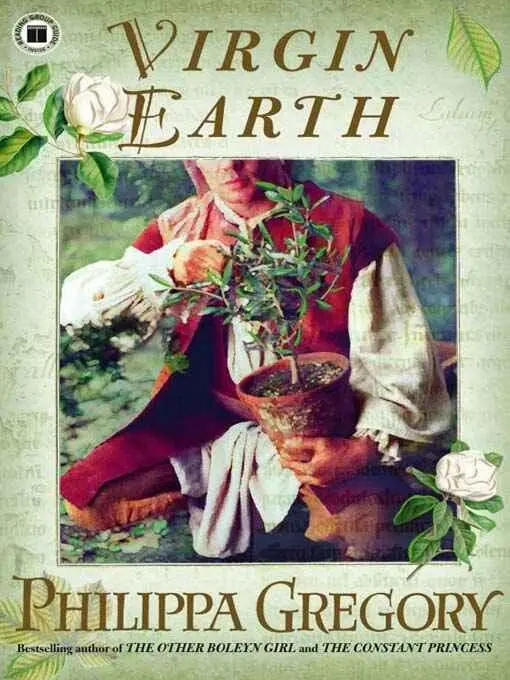
- Название:Virgin Earth
- Автор:
- Жанр:
- Год:неизвестен
- ISBN:нет данных
- Рейтинг книги:4 / 5. Голосов: 1
-
Избранное:Добавить в избранное
- Отзывы:
-
Ваша оценка:
Virgin Earth: краткое содержание, описание и аннотация
Предлагаем к чтению аннотацию, описание, краткое содержание или предисловие (зависит от того, что написал сам автор книги «Virgin Earth»). Если вы не нашли необходимую информацию о книге — напишите в комментариях, мы постараемся отыскать её.
Virgin Earth — читать онлайн ознакомительный отрывок
Ниже представлен текст книги, разбитый по страницам. Система сохранения места последней прочитанной страницы, позволяет с удобством читать онлайн бесплатно книгу «Virgin Earth», без необходимости каждый раз заново искать на чём Вы остановились. Поставьте закладку, и сможете в любой момент перейти на страницу, на которой закончили чтение.
Интервал:
Закладка:
“What does it mean?” he asked Alexander. “Will they sentence him without another word?”
“If they decide that his silence means guilt then he cannot speak,” Alexander said. “Once sentence is pronounced he’ll just be taken out. That’s how all the courts work. There’s nothing more to say.”
John nodded in silence, his face dark.
There was a sympathetic murmur as the guards brought the king into court. John could see traces of strain in his face, especially around his dark, solemn eyes. But he looked at the commissioners as if he despised them and he dropped into his chair as if it were his convenience to be seated before them.
John Bradshaw, the man with the hardest task in England, pulled the brim of his hat down to his eyebrows and looked at the king as if he were not far off begging him to see reason. He spoke quietly, reminding the king that the court was asking him, once more, to answer the charges.
The king looked up from turning a ring on his finger. “When I was here yesterday I was interrupted,” he said sulkily.
“You can make the best defense you can,” Bradshaw promised him. “But only after you have given a positive answer to the charges.”
It was opening a door for the king; at once he soared into grandeur. “For the charges I care not a rush…” he started.
“Just plead not guilty,” John whispered to himself. “Just deny tyranny and treason.”
He could have shouted his advice out loud, nothing would have stopped the king. Bradshaw himself tried to interrupt.
“By your favor you ought not to interrupt me. How I came here I know not; there’s no law to make your king your prisoner.”
“But-” Bradshaw started.
The king’s outflung hand meant that Bradshaw should be silenced. The Lord President of the court tried again against the king’s torrent of speech. He gave up and nodded to the clerk of the court to read the charge.
John looked over to where Cromwell was sitting, his chin in his hands, watching the king dominating his own trial, his face grim.
The clerk read the long, wordy charge again. John heard his voice tremble at the embarrassment of being forced to read over and over again to a man who ignored him.
“You are before a court of justice,” Bradshaw asserted.
“I see I am before a power,” the king said provocatively. He rose to his feet and made that little gesture with his hand again which was a cue for a servant to bow and go. John recognized it at once but did not think that any other man in the court would realize that they had been dismissed. The king did not care to stay any longer.
“Answer the charges,” John whispered soundlessly as the guards closed around him and the king walked from the court.
Wednesday, 24 January 1649
John spent Wednesday idling at the little house in the Minories with Frances. The court was not sitting.
“What are they doing then?” Frances asked. She was kneading dough at the kitchen table, John seated on a stool at a safe distance from the spreading circle of flour. Frances had learned her domestic skills from Hester, so she would always be a competent cook; but her style was more enthusiastic than accurate and Alexander occasionally had to send out for their dinner after a catastrophe in the bread oven or a burned-out pot.
“They’re hearing witnesses,” John said. “It’s to put the gloss of legality on it. Everyone knows he raised the standard at Nottingham. We hardly need witness accounts on oath.”
“They won’t call you?” she asked.
He shook his head. “They’re seeking the smallest of trifles. They’re calling the man who painted the standard pole. And for the battles they’re using the evidence of men who fought all the way through. I was there only at the very beginning, remember. I was there at Hull which everyone has forgotten now. I never saw proper fighting.”
“Are you sorry now?” she asked, with her stepmother’s directness. “Do you wish you had stayed by him?”
John shook his head. “I hate to see it come to this, but it was a bad road wherever it led,” he said honestly. “We would be in a far worse case today if he had succeeded, Frances. I do know that.”
“Because of the Papists?” she asked.
John hesitated. “Yes, I do think so. If he is not a Papist himself then the queen certainly is and half the court with her. The children – almost bound to be. So Prince Charles may be, and then his son after him, and then the door open again to the Pope and the priests and the monasteries and the convents and the whole burden of a faith that is ordered on you by your masters.”
“But you don’t even pray,” she reminded him.
John grinned. “Yes. And I like to not pray in my own way. I don’t want to not pray in a Papist way.” He broke off at her chuckle. “I have traveled too far and seen too much to believe in anything very readily. You know that. I have lived with people who prayed very faithfully to the Great Hare and I prayed alongside them and sometimes thought my prayers were answered. I can’t see only one way anymore. I always see a dozen ways.” He sighed. “It makes me uncomfortable with myself, it makes me a poor husband and father, and God knows it makes me a poor Christian and bad servant.”
Frances paused in her work and looked at him with love. “I don’t think you’re a bad father,” she said. “It’s as you say – you have seen too much to have one simple view and one simple belief. Nobody could have lived as you did, so far from your own people, and not come home feeling a little uneasy.”
“My father traveled farther and saw stranger sights but he loved his masters till the day of his death,” John said. “I never saw him have a single doubt.”
She shook her head. “Those were different times,” she said He went far as a traveler. But you lived with the people in Virginia. You ate their bread. Of course you see two ways to live. You have lived two ways. And in this country everything changed the moment the king took up arms against his people. Before then there were no choices to be made. Now you, and many others, see a dozen ways because there are a dozen ways. Your father had only one way: and that was to follow his master. Now you could follow the king, or follow Cromwell, or follow Parliament, or follow the army, or become a Leveler and call for a new earth for us all, or a Clubman and fight only to defend your own village, or turn your back on them all and emigrate, or shut the door of your garden and have nothing more to do with any of them.”
“And what would you do?” John asked, secretly rather impressed by his daughter’s political acumen.
“I don’t have to choose,” she said smugly with a sly little sideways smile. “That’s why I married Alexander.”
“And which side does he serve?”
She laughed outright. “He serves the master who pays the bills,” she said. “As do most people. You know that.”
Thursday, 25 January 1649
The High Court was sitting in the Painted Chamber in the Palace of Westminster. John knew the room from his days in royal service and guided Alexander through the maze of lobbies and waiting rooms and retiring rooms until they could slip in by a side door. The day was given over to reading out the signed depositions of witnesses who had spoken before the commissioners the previous day. There was little of interest – the halting accounts of the king on horseback riding through the wounded without caring for their condition. Accusations that royalist officers had permitted the looting of dead men’s weapons, and rifling the pockets of wounded men.
“That’s very bad,” Alexander said softly to John. “That’s one thing Cromwell’s very strict on. He won’t have looting. That’ll count against the king.”
Читать дальшеИнтервал:
Закладка:
Похожие книги на «Virgin Earth»
Представляем Вашему вниманию похожие книги на «Virgin Earth» списком для выбора. Мы отобрали схожую по названию и смыслу литературу в надежде предоставить читателям больше вариантов отыскать новые, интересные, ещё непрочитанные произведения.
Обсуждение, отзывы о книге «Virgin Earth» и просто собственные мнения читателей. Оставьте ваши комментарии, напишите, что Вы думаете о произведении, его смысле или главных героях. Укажите что конкретно понравилось, а что нет, и почему Вы так считаете.