Philippa Gregory - Virgin Earth
Здесь есть возможность читать онлайн «Philippa Gregory - Virgin Earth» — ознакомительный отрывок электронной книги совершенно бесплатно, а после прочтения отрывка купить полную версию. В некоторых случаях можно слушать аудио, скачать через торрент в формате fb2 и присутствует краткое содержание. Жанр: Историческая проза, на английском языке. Описание произведения, (предисловие) а так же отзывы посетителей доступны на портале библиотеки ЛибКат.
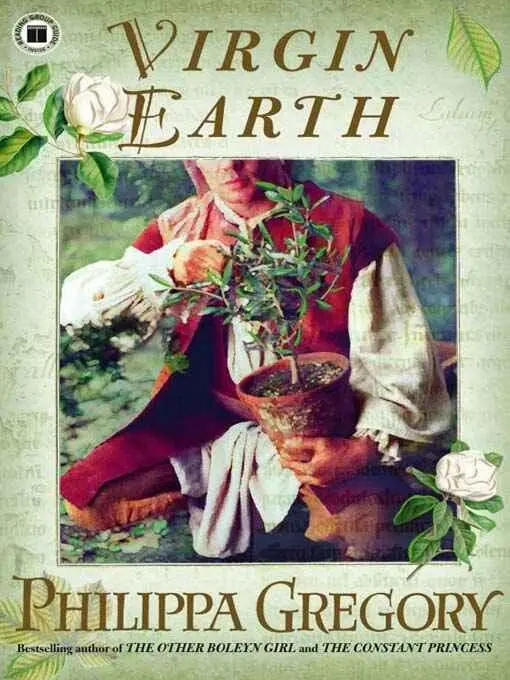
- Название:Virgin Earth
- Автор:
- Жанр:
- Год:неизвестен
- ISBN:нет данных
- Рейтинг книги:4 / 5. Голосов: 1
-
Избранное:Добавить в избранное
- Отзывы:
-
Ваша оценка:
Virgin Earth: краткое содержание, описание и аннотация
Предлагаем к чтению аннотацию, описание, краткое содержание или предисловие (зависит от того, что написал сам автор книги «Virgin Earth»). Если вы не нашли необходимую информацию о книге — напишите в комментариях, мы постараемся отыскать её.
Virgin Earth — читать онлайн ознакомительный отрывок
Ниже представлен текст книги, разбитый по страницам. Система сохранения места последней прочитанной страницы, позволяет с удобством читать онлайн бесплатно книгу «Virgin Earth», без необходимости каждый раз заново искать на чём Вы остановились. Поставьте закладку, и сможете в любой момент перейти на страницу, на которой закончили чтение.
Интервал:
Закладка:
“Like being in the pit at the theater,” Alexander complained as they were jostled and pushed.
The galleries started to fill at midday, and then there was a furious scrum in the hall when latecomers tried to push to the front. Tradescant and Alexander battled to keep their places and the pushing was about to generate into an out-and-out fight when the doors opened and the judges entered.
The sword and the mace were brought in first, then the Lord President Bradshaw took his place, a commissioner for advice on the law on either side of him. His big black hat was crammed over his ears. Alexander Norman nudged John.
“He had it lined with iron plates,” he whispered. “That hat. He is afraid that some royalist will shoot him where he sits.”
John snorted with laughter and glanced across to where Cromwell entered, bare-headed, his face grim. “You have to admire the man,” he said. “If anyone was going to be shot it would be him.”
The charge was read, Bradshaw nodded for the prisoner to be brought before the court. John felt the heat and the press of the crowd.
“Are you well?” Alexander asked. “You’ve gone white.”
John nodded, his eyes never leaving the south door.
The soldiers came in and pushed back the crowd to make a passageway to the red velvet chair placed before the judges. Then the king came in. He was dressed all in the richest black – black waistcoat, breeches, and cloak, on his shoulder was the dazzling silver star of the Order of the Garter. He did not look at the crowd, he barely glanced at his judges. He walked through the crowd, his head high, dramatically regal, his jeweled heels tapping on the floorboards, his cane held in his hand. He took his seat in the red velvet chair with his back to the audience and his hat firmly on his head, as if he were about to watch a play at Oatlands Palace.
John breathed out and realized that his soft susurration was part of a sigh, almost a moan, from the crowd, as the king took his place, before the men who could condemn him to death.
Bradshaw squashed his armored hat firmly down on his head, took up the paper and read the charge naming the king as the accused. John Cook, the barrister leading the prosecution, rose to his feet to read the accusations.
“Hold a little,” the king said quietly.
“My Lord, on behalf of the Commons of England and all the people thereof I do accuse Charles Stuart here present of high treason and high misdemeanors-”
The king lifted his cane and tapped John Cook on his arm.
John, hidden in the crowd, said softly: “Oh no.”
Cook ignored the king completely and continued to read the charge, raising his voice as if to overcome the distraction of the tapping cane and his own sense of bewilderment that an accused man should behave in such a way.
The king reached forward and struck the wing of Cook’s gown a vigorous thwack with his cane. There was a gasp from the crowd. Cook abruptly stopped reading. The silver head of the cane fell off and noisily rolled along the uncarpeted boards before coming to rest a few feet from the king’s chair. Charles looked around for a servant to pick it up for him. Not a man moved. It took him a long moment to realize that no one was going to do it; then he shrugged, as if he was indifferent to the slight, and bent and picked it up himself.
John felt his shoulders hunching as if he were ashamed.
Bradshaw, the president of the court, took command of the situation. “Sir, the court commands the charge be read; if you have anything to say afterward you may be heard.”
John knew that the king would take any restriction on his speech as an insult. Once, it would have been treason. Surprisingly, the king was silent and Cook started to read the charges from the roll.
After all the rumors and accusations it was odd to hear the charges put so simply. John found he was straining to listen to every word, one hand over his eyes, trying to concentrate. The king was accused of trying to overthrow the rights and liberties of the people by making himself a tyrant. They accused him of making war against his own people and listed the battles where he had been personally in command. Then they accused him of plotting against the kingdom with foreign powers. There was nothing of interest, it was all a matter of fact. The king had undoubtedly done all these things.
The king turned in his chair, as if the long reading of his crimes was not of much interest to him, and looked up at the galleries at the many faces he knew, and out at the body of the court. John raised his head; the king’s gaze flicked over him with its usual indifference. John had to fight a desire to call out – and knew also that he had no words to call out.
Cook’s accusation went on to what seemed, to most, the worst crime of all – the renewing of the war after the king’s defeat. There was a soft groan at that point, many men and women had thought the battles were finished and a peace in the making last year. None of them would forgive Charles for his final throw of the dice that had cost so many more lives and had taught the fighting men a new savagery.
“My God,” whispered Alexander. “They want to kill him. They are impeaching him for treason.”
John nodded. As soon as he had seen the king dressed as a martyr in black with that dazzling burst of diamonds on his shoulder he had known that this was the greatest masque Charles had ever played. This was no lighthearted interlude, it was full tragedy, and both the king and the court would play it to the full.
“For these reasons,” Cook concluded, “on behalf of the people of England, I impeach the said Charles Stuart as a tyrant, traitor and murderer, and a public and implacable enemy to the Commonwealth of England.”
There was a dead silence in the court as the people absorbed the accusation and understood that Cromwell and his court were demanding the ultimate punishment: the beheading of the king. The silence was broken by a peal of completely convincing laughter. The king was shaking in his chair, laughing as if at some delightful, ridiculous jest. He threw back his head and shook his curls. The laughter went on, horribly on, prolonged beyond any real amusement, the hard noise of a man defying his own fear.
“Sir,” Bradshaw said steadily. “You have now heard your charge and the court expects your answer.”
The whole body of people in the court leaned forward. The fans of ladies in the galleries were frozen still. Everyone listened to hear what the king would say.
“I would know by what power I am called hither?” he asked. “I would know by what authority – I mean lawful ?”
The rest of his answer was drowned by an upsurge of voices. “He’s going to challenge them every step of the way,” Alexander shouted over the noise to John.
“God no! If he would just agree, if he would just ask for mercy…”
The king was still speaking but he could not be heard above the shouting.
Bradshaw hammered for order and replied to the king. John saw the king shake his head and speak again.
Bradshaw made a gesture: the king should be taken from the court. As he rose to leave the soldiers in the court suddenly shouted “Justice! Justice!” and John saw the king start back for a moment, and knew that he feared a brawl and death in a struggle more than anything else.
“He wants the scaffold,” John said, suddenly seeing it all. “So that he can hand the crown entire to Prince Charles. So he can die as a man who was martyred for his beliefs. He’s not staking for his own life now, but the condition of kingship itself.”
Charles paused before the table of judges. “You have shown no lawful authority to satisfy any reasonable man,” he said sternly to Bradshaw.
“We are satisfied.”
Читать дальшеИнтервал:
Закладка:
Похожие книги на «Virgin Earth»
Представляем Вашему вниманию похожие книги на «Virgin Earth» списком для выбора. Мы отобрали схожую по названию и смыслу литературу в надежде предоставить читателям больше вариантов отыскать новые, интересные, ещё непрочитанные произведения.
Обсуждение, отзывы о книге «Virgin Earth» и просто собственные мнения читателей. Оставьте ваши комментарии, напишите, что Вы думаете о произведении, его смысле или главных героях. Укажите что конкретно понравилось, а что нет, и почему Вы так считаете.