Philippa Gregory - Earthly Joys
Здесь есть возможность читать онлайн «Philippa Gregory - Earthly Joys» — ознакомительный отрывок электронной книги совершенно бесплатно, а после прочтения отрывка купить полную версию. В некоторых случаях можно слушать аудио, скачать через торрент в формате fb2 и присутствует краткое содержание. Жанр: Историческая проза, на английском языке. Описание произведения, (предисловие) а так же отзывы посетителей доступны на портале библиотеки ЛибКат.
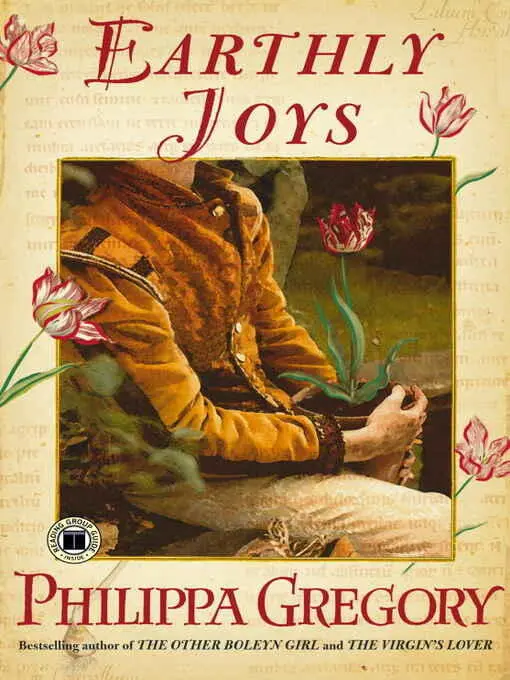
- Название:Earthly Joys
- Автор:
- Жанр:
- Год:неизвестен
- ISBN:нет данных
- Рейтинг книги:3 / 5. Голосов: 1
-
Избранное:Добавить в избранное
- Отзывы:
-
Ваша оценка:
Earthly Joys: краткое содержание, описание и аннотация
Предлагаем к чтению аннотацию, описание, краткое содержание или предисловие (зависит от того, что написал сам автор книги «Earthly Joys»). Если вы не нашли необходимую информацию о книге — напишите в комментариях, мы постараемся отыскать её.
Earthly Joys — читать онлайн ознакомительный отрывок
Ниже представлен текст книги, разбитый по страницам. Система сохранения места последней прочитанной страницы, позволяет с удобством читать онлайн бесплатно книгу «Earthly Joys», без необходимости каждый раз заново искать на чём Вы остановились. Поставьте закладку, и сможете в любой момент перейти на страницу, на которой закончили чтение.
Интервал:
Закладка:
And the hot heads among my congregation are asking what will it take to teach this king to deal with his fellow men with respect?
At all events, he is to have the money he desires, and your husband’s master, the duke, is to take another campaign to Rhé…”
“What?” John said suddenly, interrupting Jane’s reading.
“He is to take another campaign to Rhé,” she repeated.
Elizabeth glanced at her husband. “You will never go! Not again, John. Not again, to there! Not even if he summons you.”
He jumped up from his chair and turned away from the circle of firelight and candlelight. She could see his hands, his whole body was trembling, but he spoke steadily. “If he summons me I will have to go.”
“It will be the death of you!” Elizabeth exclaimed passionately. “You cannot be so lucky every time!”
“It will be the death of thousands,” he said darkly. “Whether we take the island or lose it, it will be the death of thousands. I cannot face that place again. That tiny island is like a graveyard… I cannot bear it!”
Abruptly he turned back to Jane. “Does your father say why any man would want to go back there? What the duke is hoping for?”
She was pale, looking from John to Elizabeth. She thought she had never seen him in such distress before. It was as if he feared being press-ganged into Hell. “I will read you the rest of the letter,” she replied, smoothing it on her lap.
“…the duke is to take another campaign to Rhé to wipe out the disgrace of failure and to show the French that we mean to be masters. No men are volunteering, but the press-gangs are making the streets unsafe for everyone except for those actually dying of the plague. Everyone else is taken up and sent to Portsmouth and they are cursing the duke’s name.
These are hard times for us all. I pray that your husband and your father-in-law are spared the duke’s demands. I have today lost my apprentice boy George, whom I loved like a son. He will never survive a campaign; he has a weak chest and coughs all the winter long. Why take a lad of sixteen who will be dead before they reach their destination? Why take a boy who only knows about cotton, linen and silk?
I am going to Portsmouth myself to see if I can find him and bring him back but your mother says, rightly, that we must tell his parents that he is as good as dead and pray for his immortal soul.
It is a bitter thing that a country which could be at peace is constantly at war, and that a country which could be prosperous is never well-fed.
I am sorry to send you such bad news, my blessings on you all, Josiah Hurte.”
“I will go in your stead,” J said steadily. “When he sends for you.”
“He may not send…,” Elizabeth suggested.
“He always sends for my father when it is work that needs a trustworthy man,” J said swiftly. “When it is dangerous or difficult, when he needs a man who loves him above everything else. A man to do work that no one else would do.”
John shot him a look.
“It’s true,” J maintained. “And he will send for you again.”
“You cannot go,” Elizabeth breathed. “The mission is bound to fail again and you will risk your life for nothing.”
“My John can’t go,” Jane said suddenly. She made a small betraying movement, her hand to her belly. “I need him here.” She flushed. “We need him here. He is to be a father.”
“Oh, my dear!” Elizabeth stretched across the fire and held Jane’s hands in her own. “I am so glad! What a blessing.”
The two women remained clasped for a moment, and Elizabeth closed her eyes in a swift silent prayer. John watched them with a weary sense of exclusion from the world of small joys. “I am glad for you,” he said levelly. “And Jane is right, J cannot go with a baby on the way. If he sends for me, it will have to be me.”
The little family was silent for a moment. “Perhaps he will not send for you?” Jane asked.
John shook his head. “I think he will. And I have promised to go whenever he calls me.”
“To your death?” J demanded passionately.
John raised a weary face to his son. “Those were the very words of my oath,” he said slowly.
Summer 1628
The message came in the middle of June, one of the best months of the year for a gardener. John had started his day’s work in the rose garden, dead-heading the blowsy blooms and tossing the petals into a basket for the still room. They would be dried and used in pomanders, or for scattering in the linen cupboards to scent the duke’s sheets. Or they might be claimed by the cooks and candied to decorate the duke’s sweetmeats. Everything in the garden, from drowsily humming bees to falling rosy pale petals, was the duke’s and grew for his pleasure. Except he was not here to see them.
At midday John went around to the front of the house to see the young limes, planted in the long, gently curving double avenue. He had a thought that they might grow better-shaped if their lower branches were pruned, and he had a small axe and a saw for the purpose, and a lad coming behind with a ladder. But before he had done more than whistle to the lad to set the ladder before the first tree, he heard hoofbeats.
John turned, raised his hand to shield his eyes and saw, like a dream, like a long-awaited vision, the single rider still a mile off, his lathered horse going from gray to black as it passed from brilliant sunlight into deep green shadow down the drive. John stepped out from the shade of the trees on to the broad sunny road, waiting in the hot light for the messenger, knowing that it would be his summons, knowing that he must obey. He felt for a moment that it was Death himself, with his scythe over his shoulder, riding between the trees with the drunken bees buzzing wildly and the leaves dripping with nectar and pollen.
John felt a darkness within himself as if the shade of the limes had cast a deep green into his very blood, and a coldness which he thought must be fear. He had never known fear before in this bleak premonitory way. He understood now, for the first time, why the pressed men had whispered to him as he went through the ranks: “Ask him to send us home, Mr. Tradescant, ask him to turn back.” Now he felt as slavish as they, as unmanned as they.
The rider came slowly toward him and Tradescant put up his hand for the letter as if he were warding off a blow from a knife.
“How did you know it was for you?” the messenger asked, sliding from his horse’s back and loosening the girth.
“I have been waiting for it since I heard he was returning to Rhé,” John said.
“Then you will be the only willing recruit,” the man said cheerfully. “There were riots outside his house when the sailors heard he was taking them back there. His carriage is stoned every time he takes it out. They are saying that the expedition is cursed and that it will fall into a whirlpool which stretches down to Hell itself. They drink to his death in the ale houses; they pray for his downfall in the chapels.”
“That’s enough,” John said roughly. “Go and take your horse to the stable. I won’t hear the duke traduced on his own land by his own servant.”
The man shrugged and twitched the reins over his horse’s head. “I’ve left his service. I am on my way to my own home.”
“You have work to go to?”
“No,” he said. “But I’d rather beg from door to door than go with the duke to the Island of Rue. I’m not a fool. I know how it will be commanded, and how it will be paid, and what the risks will be.”
John nodded, his face betraying nothing. Then he turned away and walked from the avenue, across the grass lawn to the lake. He made his way down the pretty little path to the landing stage opposite the boathouse where Buckingham used to row out on summer evenings, sometimes with his wife Kate in the stern, sometimes alone with a rod and line. John sat on the landing stage and looked across the water. The yellow flag irises were in flower as he had promised his master they would be; the fountain they had designed together played into the warm silent air of the afternoon. The water lilies he had planted bobbed gently as the wind breathed across the smooth surface of the lake, their buds just splitting to show cream and white petals. The ducks had had a second brood of ducklings and they came and quacked around him, hoping for corn. John held the letter in his hand, looking at the heavy seal on the fold of the thick cream notepaper. For a moment he did not break it, he did not shatter the impress of Buckingham’s ring; for a moment he sat in the sunshine and thought what he would be feeling if this was a letter from a master who loved him, from a man who loved as an equal. How it would be for him now, if Buckingham was his lover as well as his lord.
Читать дальшеИнтервал:
Закладка:
Похожие книги на «Earthly Joys»
Представляем Вашему вниманию похожие книги на «Earthly Joys» списком для выбора. Мы отобрали схожую по названию и смыслу литературу в надежде предоставить читателям больше вариантов отыскать новые, интересные, ещё непрочитанные произведения.

Обсуждение, отзывы о книге «Earthly Joys» и просто собственные мнения читателей. Оставьте ваши комментарии, напишите, что Вы думаете о произведении, его смысле или главных героях. Укажите что конкретно понравилось, а что нет, и почему Вы так считаете.